
Business Leaders interview: Alana Buckley
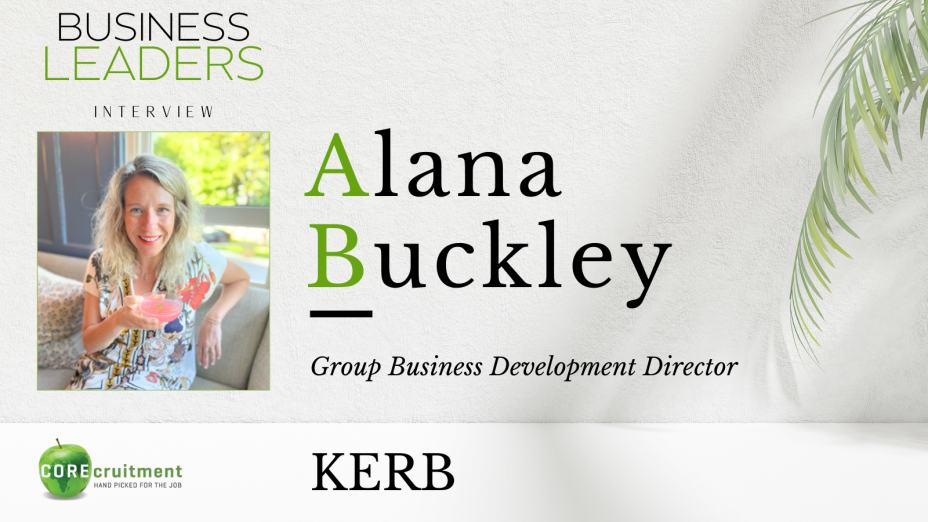
What motivates you in your work and what do you find most fulfilling about being a business leader?
KERB’s clearly defined mission - to be the most impactful hospitality business in the world. It’s genuine and it’s a contrast to other places I’ve worked where it’s ultimately been about lining the pockets of others.
I’m lucky that in every role I’ve been in at KERB it’s been something new - so I’ve had the personal impact of driving business strategy, creating new products and changing how we do things.
How did you develop your leadership skills and how would you define your leadership style?
Trial and error. I’ve done all of the jobs of the people I have then managed which led me to have a style that is empathetic.
That sometimes held me back in my own development as I struggled to give myself more distance from the team. In my current role l have fewer people to manage and more distance from the day to day. I think this has made my leadership stronger - I feel much more strategic and able to see the bigger picture.
Innovating is crucial in our very diverse industry. How do you stay ahead of trends and incorporate them into your global strategy?
I’m really passionate about making sure as a business we are aware of what’s happening in the wider hospitality space and translating that into how we develop our products. I think that’s why we’ve had so much success with KERB Events. We recognised the gap between the plethora of incredibly diverse food that the average worker in Central London experiences and the very little that was being offered by caterers at events.
How do you approach identifying areas for improvement within a company's operations?
Not being afraid to ask questions, especially of clients. We have to be bold because we have a very unique product, but it only works if it is operating at a top level.
Where do you think the most promising investments should be focusing on and/or made on?
People - specifically developing soft skills. I’m really passionate about providing mentorship in areas that are often overlooked: public speaking, how to network and even just talking on the phone! I used to go outside to talk to a client as I didn’t have that confidence. Ultimately, I want people who work at KERB to look back later in their careers at their time here as where they learned all of these vital transferable skills.
What is or are your biggest career achievement(s)?
The creation of KERB Events. This summer alone we’ve fed and watered an incredible number of people at places like Wimbledon, The National Theatre, Silverstone, Somerset House, Kia Oval and so much more. It’s growing rapidly and it’s allowing us to funnel more money into the vital work that our social enterprise, KERB+, is doing to support people from disadvantaged backgrounds, remove barriers to employment & entrepreneurship, and accelerate the growth of new food businesses.
Do you have examples where your leadership made a difference? If so, what were they?
My devotion and advocacy for KERB Events gave the business the investment it needed as well as the buy-in from street food traders who weren’t originally easy to get on board. After all, KERB was already a very successful operator of markets and food halls, so getting the buy-in from traders was key to make KERB Events successful.
What’s the most important leadership lesson you’ve learned?
You must have confidence in your team - you cannot look forward if you are stuck in the weeds.
Have you achieved everything you wanted in your career so far?
No!
How do you prioritise tasks when everything feels like a priority?
Trying hard to not prioritise what you enjoy the most.
I like meetings & answering emails - but I force myself to do the brain work first. If you can get that strategy document or a task you really don’t want to do completed at the beginning of the day - everything else becomes a lot easier.
What was the hardest decision you have taken as a leader?
Knowing when to give up a fight you aren’t going to win.
What does success mean for you as a business leader?
People looking to me as a model of the right behaviour; for a long time, I probably wasn’t because I worked too hard and was too invested emotionally and physically. I thought that was good leadership at the time, but I’ve learned to show people that success is balance - a job, a social life, a family - rather than working 80 hours a week, burning out, and not taking care of yourself.
Author
Date Published: 27th August 2024
