
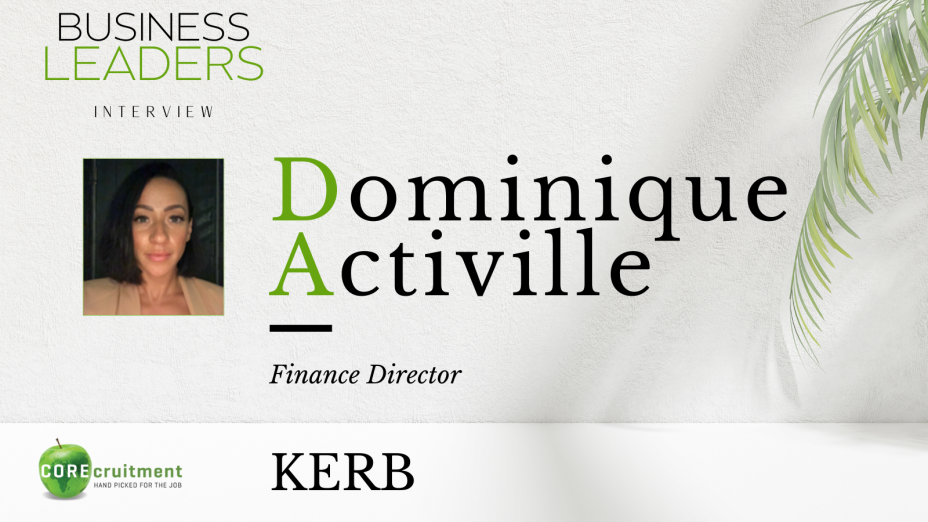
Business Leaders interview: Dominique Activille
What motivates you in your work and what do you find most fulfilling about being a business leader?
A key motivator for me is being able to strategically support founders and CEOs to deliver their business mission and achieve commercial success.
Commercial success is a byproduct of many contributing factors, however having a great product, listening to your audience, innovation and continuous development are key elements to creating a brand and business that will stand the test of time.
Since COVID the world of hospitality has experienced a number of changes; and although these presented a number of challenges across our sector, it has also enabled some smaller businesses to pivot and capture a wider market share.
Exceptional food, drink and customer experience is back at the forefront for hospitality venues and is key to retaining customer loyalty. Being able to deliver this as well as commercial success is a triumph.
How did you develop your leadership skills and how would you define your leadership style?
Being a woman and from a mixed heritage background, I have encountered a number of obstacles throughout my career that have helped shape the person I am today.
I believe that each obstacle or challenge presented over my career to date has been an opportunity to learn from and grow. Although at the moment it can be hard, they have all helped to develop and underpin the foundation of resilience, which is needed in business at all levels.
This resilience and the beauty my children show me every day, have been key drivers in the development of my leadership skills. I want to encourage, challenge, support, develop and mentor; to ultimately enable those around me to thrive.
My first job was that of an Accounts Assistant, and my second was being a mother.
These two early roles have formed an everlasting impact on my leadership style that is: analytical and methodical, nurturing and empathetic, but also delivery and detail oriented.
Innovating is crucial in our very diverse industry. How do you stay ahead of trends and incorporate them into your global strategy?
KERBs foundation was built on inclusivity and innovation, so it has been great to work for an organisation where these elements have always been at the forefront of conversations.
As an international food and beverage service business, we need to stay abreast of all key topics that relate to F&B, including food trends, beverage trends, consumer habits, economic landscape; and how these topics differ by territory.
As the leading experts in event catering and food halls, we pride ourselves on having a team who lead on this, working with local producers / suppliers to support operational delivery; to ensure the best possible authentic hospitality experience to all our customers, at every location.
Where do you think the most promising investments should be focusing on and/or made on?
Technology is an obvious area all businesses should be focusing on. Capabilities are constantly being updated which is having a material impact on the finance function and our role in supporting businesses. These technological advancements and integrations mean that AI is able to better support the day-to-day administrative tasks and provide analytical insights, which finance teams now need to be able to digest and use to support management decision making.
Although AI is changing some roles and how businesses operate, I believe people still remain the main cost for most businesses and an integral element of commercial success, especially in hospitality. Having a clear people strategy to ensure you have a well-trained, engaged and enthused workforce is paramount to retaining and recruiting great talent.
What is or are your biggest career achievement(s)?
I never thought I’d be in the position I am today, being asked to contribute to something like this is a milestone and never thought was a possibility when I started my career.
So, thank you CORE.
Do you have examples where your leadership made a difference? If so, what were they?
Paying it forward is something I believe all leaders should do, to help support others into leadership roles and provide a platform for informative communication
As a passionate leader in finance, I have always supported pathways that enable the industry to be more inclusive.
Many years ago, a young apprentice joined the company I was working for, unsure of her career options or what she wanted to do. I identified key attributes that I associated with success and in turn became her mentor. 10 years on, she is now a successful Finance Manager for a large company, providing financial insights to support business decisions.
Her success was because of her hard work, but I believe I provided a nurturing hand to show her anything was possible.
What’s the most important leadership lesson you’ve learned?
Effective communication is so important and often overlooked.
Sometimes people think they are communicating, however if you do not understand your audience, you're most likely not.
This applies to everything; from presenting financial information to communicating deliverables to team members. Clear communication is critical.
How did you identify and seize opportunities for advancement in your career?
I never let someone else’s opinions or perceptions deter me from what I know I am able to achieve.
We all have wobbles every now and then, we are human! This is why it is so important to have a network of friends, family and mentors to help guide and challenge you in a proactive way; and not try to bring you down or dim your light!
My network of supporters has held me accountable to my goals, which has ultimately enabled me to have the clarity needed when seizing opportunities and confidence in my ability to deliver.
Have you achieved everything you wanted in your career so far?
No. I believe there is always more to learn, and life is a project of constant evolution.
Curiosity is an important characteristic that helps us all be innovators and supports business in an ever-changing landscape. It is also something I always lean into when I look to set my personal goals every year.
How do you prioritise tasks when everything feels like a priority?
Prioritisation is definitely a skill that you need to master, and I think many people get too focused on the ‘task list’ rather than reviewing which elements are business critical.
I don’t think any of us actually get everything ticked off our list, so it’s really important to understand ‘what’ you are trying to achieve and ‘why’, and through that I have always been able to refocus my output based on critical deliverables.
Communication also plays a key part. It is really important to ensure that there is clear communication between all key stakeholders, so if there is any reshuffle of priorities, all are aligned and aware.
What does success mean for you as a business leader?
There are a few things that indicate success to me…
Personally, a sustainable work life balance. Being a mum, business leader, mentor, colleague, wife and friend. It is important to me to be present in all facets of my life and is something I constantly review. It can at times be a challenge to get the balance right, which is why it's also really important that I have a strong support network to help me.
In my career, success is driven by creating shareholder value; supporting founders and CEOs in achieving their mission and goals, whilst being considerate to the values that the business is built upon.
Finally as a woman, I truly believe in equity in the workplace and strive to work with and support other women to achieve their goals, while also helping young people navigate the corporate worlds. In many instances, some communities don’t have access to the same level of business insights or connections as others, so I take part in mentorship programmes to support upcoming talent. As I believe the only way we will truly be able to deliver change is to have more representation at all levels of management.
Author
Date Published: 27th August 2024
