
Business Leaders interview: Elliott Moore
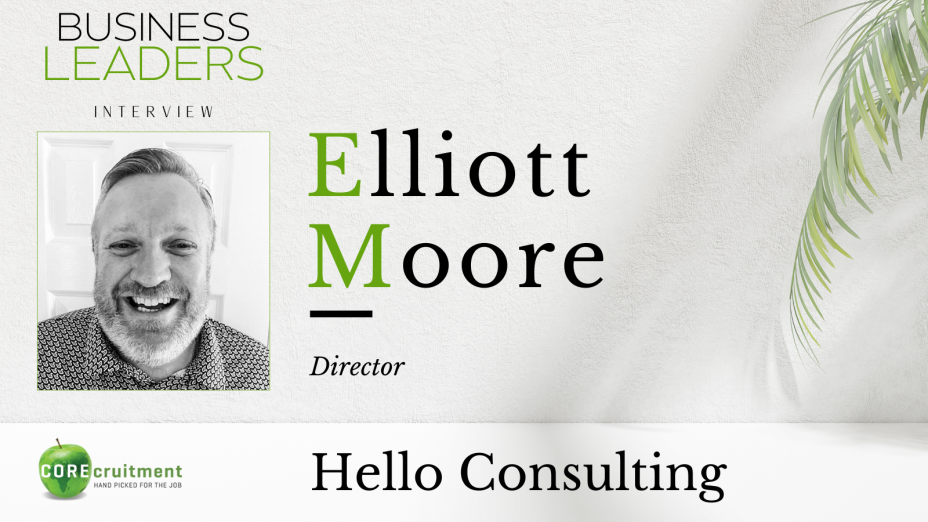
Tell us a little about yourself and your business.
I am Elliott Moore, the co-founder of Hello Consulting, a consultancy dedicated to elevating standards in the hospitality and catering industry. With over 30 years of experience gained initially as an apprentice with the Thistle Hotel group and then in contract catering specialising in sports, arenas, and stadiums, I have always been enthusiastic about helping businesses optimise their operations, enhance customer experiences, and drive growth. Hello Consulting specialises in strategic planning, operational efficiency, and innovation, ensuring our clients remain competitive in a rapidly evolving industry.
What motivates you in your work and what do you find most fulfilling about being a business leader?
What drives me is the opportunity to make a tangible impact on businesses, helping them realise their potential. I find it incredibly fulfilling to see people & clients thrive, knowing that our strategies have contributed to their success. As a business leader, the most rewarding aspect is empowering people and clients to innovate and adapt, fostering a culture of continuous improvement.
How did you develop your leadership skills and how would you define your leadership style?
My leadership skills have been honed through firsthand experience, continuous learning, and having good mentors and managers throughout the years. I have faced numerous challenges that required adaptive thinking and resilience. I would define my leadership style as collaborative and transformative; I believe in leading by example, fostering open communication, and encouraging creative solutions. I want my team to be brave and know that they are empowered to make decisions and manage their departments.
Innovating is crucial in our very diverse industry. How do you stay ahead of trends and incorporate them into your global strategy?
Staying ahead of trends requires a combination of market research, attending industry events, and maintaining a robust network of industry professionals. I also like continuous learning—whether through formal education or simply staying curious. Sharing these learnings with clients and staff is extremely important so that strategies can be aligned and carried out in unison.
What do you consider to be the key component(s) of effective business operational development?
Effective business operational development hinges on a clear understanding of the company’s goals, a deep dive into data, and a commitment to continuous improvement. Communication, agility, and a customer-centric approach are also essential. I focus on aligning operations with the company’s long-term vision while ensuring that every process, product, training session, recruitment drive or event planning contributes to enhancing customer satisfaction and profitability.
How do you approach identifying areas for improvement within a company's operations?
I start with a comprehensive review of the business and its operations, which includes analysing current processes, gathering feedback from stakeholders, staff and guests and benchmarking against industry standards. I then identify gaps and inefficiencies, prioritise them based on impact, and develop strategies to address these areas. My approach is collaborative, involving clients, stakeholders, and staff at every stage to ensure the solutions are both practical and sustainable.
Where do you think the most promising investments should be focusing on and/or made on?
In the hospitality and catering industry, the most promising investments should focus on technology, sustainable practices, and talent development. Technology can streamline operations and enhance customer experiences, while sustainability is becoming increasingly crucial for brand reputation and customer loyalty. Investing in talent ensures that businesses have the skilled workforce needed to thrive in a competitive market.
What is or are your biggest career achievement(s)?
My proudest career achievement is playing a key leadership role in the planning, implementation, and mobilisation of the O2 Arena, which marked Levy Restaurants' first major contract in the UK. The challenges and opportunities this project presented were immense, but the experience was incredibly rewarding. I will never forget the pride I felt when the doors first opened to guests—it was truly a humbling moment. The O2 has since become one of the most iconic venues in the world, and I am honoured to have contributed to its success during my five years with the organisation.
Do you have examples where your leadership made a difference? If so, what were they?
At a previous business I worked in as a leader, I led a team that needed to overhaul and change their service delivery model for their concessions business, this resulted in an increase in customer satisfaction and a significant boost in revenue for the business and the client. My leadership was key in fostering a culture of innovation and accountability, which empowered the team to execute the changes whilst ensuring they owned the business and products as if it were their own.
What is the most important leadership lesson you have learned?
The most important leadership lesson I have learned is the value of listening. Understanding the perspectives of your team, clients, and stakeholders allows you to make informed decisions that are more likely to succeed. It also builds trust and fosters a collaborative environment. It is also important to know that you can only control the controllables, sometimes things are simply out of your control, its how you react as a leader to challenges that counts!
How did you identify and seize opportunities for advancement in your career?
I have always kept an eye on emerging industry trends and sought out roles or projects that allowed me to explore these areas. Networking has also played a crucial role; many opportunities came from connections who have recognised my expertise and passion for the industry we work in. Being initiative-taking and open to new challenges has been key to my career progression. In the early days I adopted a mantra of always saying yes to opportunities, training courses or requests for support and this has held me in good stead with colleagues and bosses over the years.
Have you achieved everything you wanted in your career so far?
While I have achieved many of my career goals, I believe there's always room for growth and new challenges. I am constantly setting new objectives for both me and Hello Consulting, aiming to push the boundaries of what we can achieve in the hospitality and catering industry. The industry is always evolving and will always present new challenges and I will never get bored of it!!
How important is personal development to your success, and how do you approach it?
Personal development is important to my success. I approach it through continuous learning, whether it is formal education, attending industry networking events, or simply reading industry publications. I also seek feedback from peers and mentors to identify areas for improvement and ensure that I am always evolving.
How do you prioritise tasks when everything feels like a priority?
I often use the Eisenhower Matrix which was presented to me during a Franklin Covey course I recently took, this method of planning, helps to distinguish between what is urgent and what is important. Delegation is also key; empowering my team to take ownership of tasks ensures that we can tackle multiple priorities at the same time.
What was the hardest decision you have taken as a leader?
One of the hardest decisions was downsizing my team during and after the COVID pandemic to ensure the help ensure the survival of the business during this extremely challenging time. There were some tough choices and decisions to be made, but necessary for the long-term health of the business.
What steps do you take to measure your own performance?
I set clear, measurable goals at the beginning of each year and regularly review my progress against these objectives. I also solicit feedback from clients, team members, and mentors. Additionally, I evaluate the success of our projects and use these outcomes as benchmarks for my performance.
What does success mean for you as a business leader?
Success, for me, is about making a positive impact—on my clients, my team, and the industry at large. It is about driving growth while upholding standards and fostering a culture of innovation. Success means achieving sustainable, long-term results that benefit all stakeholders involved. Seeing people and team members grow and develop and go on to have a career in our industry also means success for me, people are the heartbeat of what we do.
Author
Date Published: 4th September 2024
