
Business Leaders interview: Pius Furlong
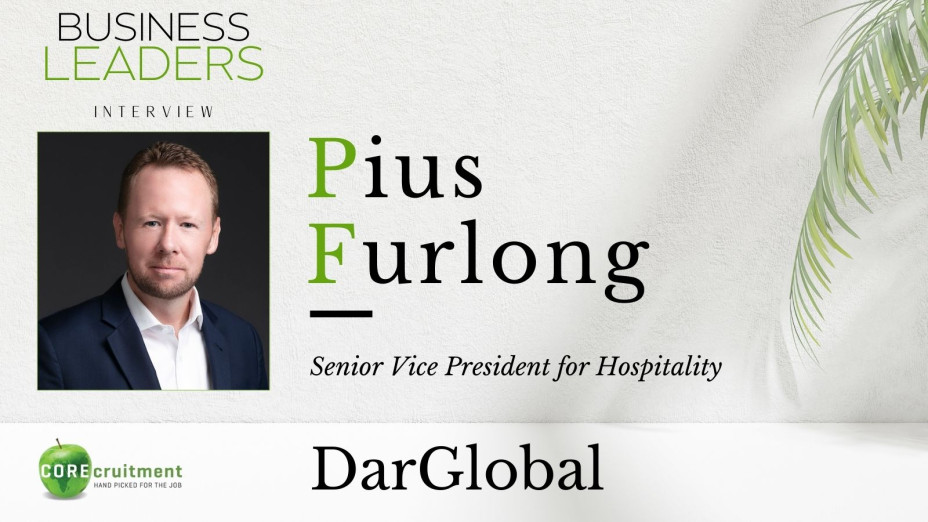
Tell us a little about yourself and your business.
I’m Pius, and I currently work as the Senior Vice President for Hospitality at DarGlobal, a company that develops luxury hospitality projects, globally. At DarGlobal, we partner with top-tier brands, for developments that redefine high-end luxury. Our projects range from major residential and hospitality ventures in the UAE to co-branded lifestyle resorts throughout Europe, the US, the Maldives, and beyond, making the work challenging, exciting, and impactful on a global scale.
What motivates you in your work and what do you find most fulfilling about being a business leader?
One of my core motivations is the transformative potential of luxury hospitality, as our industry has the power to shape a city’s culture, enhance local economies, and create unforgettable experiences. Leading such efforts gives me a great sense of purpose. As a business leader, what I find most fulfilling is building strong, passionate teams and watching them thrive. Seeing team members grow and develop into leaders themselves is immensely satisfying. Equally, it’s about innovation: continuously pushing the boundaries in hospitality, whether through design, digital integration, or sustainability, and knowing our work leaves a legacy that goes beyond profits.
How did you develop your leadership skills, and how would you define your leadership style?
My leadership development has been shaped by a combination of formal education and on-the-ground experience. Early in my career, I learned the importance of operational excellence by working hands-on in all areas, from front-of-house operations to back-end finance. Over time, I supplemented this practical experience with targeted leadership courses and most recently, an Executive MBA at Les Roches. My leadership style is strategic, and people focused. I believe in setting a clear vision, empowering my team to make their own decisions, and supporting them with the tools and guidance they need. I also emphasize accountability, ensuring that we learn from every success and setback.
Innovating is crucial in our very diverse industry. How do you stay ahead of trends and incorporate them into your global strategy?
The hospitality industry evolves rapidly, driven by shifts in technology, guest expectations, and market demands. I stay ahead by continuously engaging with global industry forums, trend reports, and networking with thought leaders. I also make a point of mentoring and being mentored—having a mix of perspectives keeps me in tune with both emerging trends and timeless fundamentals. Integrating these insights into our strategy means being flexible and open to experimentation. We rigorously test and adapt trends to our brand’s DNA, ensuring they add genuine value for our clients.
What do you consider to be the key component(s) of effective business operational development?
Effective business operational development is built on a foundation of strategic clarity and a deep understanding of market needs. The ability to align the operational objectives with the company’s broader vision is key. I also believe that scalable processes and data-driven insights are fundamental—whether it’s through predictive analytics for demand forecasting or KPIs that allow us to track quality in real time. Lastly, team buy-in is essential; when teams understand the “why” behind operational strategies, they engage more fully and contribute meaningfully to the business’s success.
How do you approach identifying areas for improvement within a company’s operations?
I approach this systematically by first assessing performance metrics across all departments. However, data is just one piece of the puzzle. I spend a considerable amount of time on the ground with teams to get firsthand insights, listening to frontline staff and managers. Often, they identify inefficiencies and opportunities that data alone doesn’t reveal. Additionally, I believe in gathering client feedback, as that is the ultimate measure of operational effectiveness. Finally, benchmarking against industry best practices and analysing competitors provides a holistic view of where improvements can be made.
Where do you think the most promising investments should be focusing on and/or made on?
I see substantial potential in technology-driven guest personalization and sustainable luxury development. The shift toward more environmentally conscious luxury experiences is not only a guest preference but a responsibility for our industry. Investment in energy-efficient architecture, eco-friendly amenities, and sustainable operational practices are crucial. Additionally, as digital experiences increasingly influence physical experiences, investments in tech innovations—such as AI-driven guest service enhancements, VR previews, and mobile-driven convenience features—allow us to create a seamless, customized experience that resonates with today’s luxury travellers.
What is or are your biggest career achievement(s)?
Working with DarGlobal, working with the CEO Ziad El Chaar, inspirational leadership and working on the many exciting projects, such as the AIDA Master Development in Oman, a sprawling project near UNESCO World Heritage sites, has been a pinnacle achievement. Additionally, developing the first-ever Dolce & Gabbana Resort in the Maldives has been a highlight, positioning our brand among the top echelon of global luxury hospitality. Each of these projects required not only operational and strategic expertise but also a commitment to aligning with unique brand values and delivering an exceptional guest experience.
Do you have examples where your leadership made a difference? If so, what were they?
Though some 15 years ago, when I was Multi Property General Manager, of two IHG properties, I led a significant transformation in practices that resulted in better team engagement and operational efficiencies. This cultural shift improved brand reputation. Moreover, during the launch of the Marriott project at DarGlobal, my leadership in setting clear objectives and fostering cross-functional collaboration helped us navigate complex regulatory requirements and secure successful partnerships that strengthened our position in the market.
What’s the most important leadership lesson you’ve learned?
The most vital lesson is that leadership is a continuous journey of learning and adaptation. A leader must remain humble and open to change because each situation demands a slightly different approach. No matter how much experience you have, there is always more to learn—especially from your team. This openness fosters respect and cultivates a work environment where innovation thrives.
How did you identify and seize opportunities for advancement in your career?
Opportunities often came disguised as challenging projects that required stepping out of my comfort zone. Whether it was managing multiple properties or spearheading international collaborations, I sought out roles that demanded growth and adaptability. Additionally, I cultivated -and still do, as mentioned earlier- an invaluable network of industry friends, who always help each other for advancement when opportunities arise.
Have you achieved everything you wanted in your career so far?
I’m proud of the milestones I’ve achieved, but I view my career as an evolving journey. There’s always more I aim to contribute to the industry, particularly in leadership roles that enable me to make a broader impact.
How important is personal development to your success, and how do you approach it?
Personal development is foundational to anyone’s success. In my case, I approach it as a lifelong commitment. I am currently completing an Executive MBA at Les Roches, which is giving me new insights into global management practices. Beyond formal education, I actively seek out thought leaders to continuously challenge and expand my perspectives. It’s about staying curious and adaptable.
How do you prioritize tasks when everything feels like a priority?
Prioritizing requires a clear understanding of both immediate goals and long-term objectives. I categorize tasks based on their potential impact on strategic outcomes, focusing first on high-stakes, high-impact activities. I also delegate effectively, empowering my team to take ownership of responsibilities and ensuring we’re aligned in meeting our goals.
What was the hardest decision you have taken as a leader?
One of the toughest decisions I’ve faced was implementing a restructuring plan at a previous organization. It involved difficult personnel decisions but was necessary for the company’s health and long-term success. Balancing empathy with business needs was challenging, yet it taught me the importance of transparent communication and resilient leadership.
What steps do you take to measure your own performance?
I regularly set measurable goals and evaluate my performance against key outcomes, such as project timelines, financial targets, and team development goals. I also solicit feedback from peers and my team to gain insights into areas where I can improve. My personal KPIs include continuous learning, maintaining a strategic focus, and consistently delivering on promises.
What does success mean for you as a business leader?
Success is about creating lasting, positive impact. It’s achieving financial growth while also leaving a legacy that reflects quality, innovation, and ethical responsibility. True success means our work enriches the lives of guests, empowers team members, and sets new benchmarks in the industry.
Author
Date Published: 1st November 2024
