
Business Leaders interview: Saleem Khatiabeh
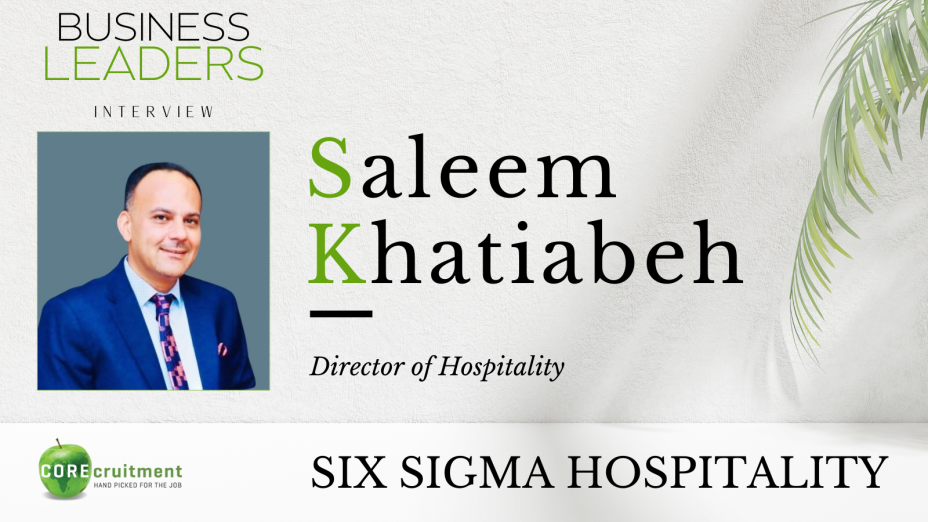
Tell us a little about yourself and your business.
I am a seasoned executive with over 20 years of experience in the hospitality sector, having led international brands such as IHG, Marriott, Choice International, and Wyndham as a Cluster General Manager. I hold an MBA from California University and an Executive Leadership Certificate from Cornell. Throughout my career, I’ve had the privilege of working with various ownership groups and leading diverse teams in Canada and the Middle East. Currently, I own Six Sigma Hospitality, a management company based in Alberta, Canada.
What motivates you in your work and what do you find most fulfilling about being a business leader?
What motivates me most in my work is the opportunity to create meaningful experiences for our guests, team members and our Owners. I find fulfillment in fostering a positive work environment where diverse talent can thrive and contribute to a shared vision.
As a business leader, seeing my team succeed and grow is incredibly rewarding. I love implementing strategies that not only enhance operational efficiency but also elevate the guest experience. The dynamic nature of the hospitality industry keeps me engaged, and the ability to make a lasting impact motivates me to continuously innovate and improve.
How did you develop your leadership skills and how would you define your leadership style?
I developed my leadership skills through a combination of experience, education, and mentorship. Over the years, I’ve learned the importance of adaptability and resilience while managing diverse teams across different cultures. My experience and education provided me with valuable frameworks and strategies that I apply in real-world situations.
I would define my leadership style as collaborative and empowering. I believe in fostering open communication and creating an inclusive environment where team members feel valued and motivated to contribute. I focus on building strong relationships, encouraging feedback, and supporting my team’s professional growth. This approach not only drives performance but also cultivates a sense of ownership and accountability among team members.
Innovating is crucial in our very diverse industry. How do you stay ahead of trends and incorporate them into your global strategy?
Staying ahead of trends in the diverse hospitality industry requires a proactive and multi-faceted approach. I prioritize continuous learning by attending industry conferences, networking with peers, and engaging with thought leaders. This helps me stay informed about emerging trends and best practices.
Additionally, I closely monitor guest feedback and market research to identify evolving customer preferences. Incorporating technology, such as data analytics and social media insights, allows me to anticipate changes and tailor our offerings accordingly.
When developing our global strategy, I ensure that innovation is at the forefront by fostering a culture of creativity within my team. We regularly brainstorm new ideas and assess their potential impact. By being flexible and responsive, I can seamlessly integrate these innovations into our operations, enhancing the guest experience and maintaining a competitive edge.
What do you consider to be the key component(s) of effective business operational development?
In my approach to business operational development, I prioritize several key components:
Clear Vision and Goals: I believe in establishing a well-defined vision and setting specific, measurable goals to align my team and guide our decision-making.
Data-Driven Decision Making: I leverage analytics and key performance indicators (KPIs) to identify trends and inform strategic adjustments, ensuring we stay ahead in a competitive landscape.
Process Optimization: I continuously evaluate and refine our operational processes to enhance efficiency, reduce costs, and improve service delivery.
Strong Leadership and Team Empowerment: I foster a supportive environment that encourages my team to take ownership and contribute innovative ideas, which leads to greater accountability and engagement.
Customer-Centric Approach: I focus on understanding and anticipating customer needs, ensuring that our services remain relevant and aligned with market demands.
Adaptability: I emphasize the importance of being flexible and responsive to changes, allowing us to pivot quickly and seize new opportunities.
How do you approach identifying areas for improvement within a company's operations?
My approach to identifying areas for improvement within a company’s operations involves several key steps:
Data Analysis: I start by analyzing key performance metrics and operational data to pinpoint inefficiencies or trends. This quantitative approach helps me understand where improvements are needed.
Feedback Gathering: I actively seek feedback from team members at all levels. Their insights often reveal challenges that may not be visible through data alone, and this collaborative input is invaluable.
Process Mapping: I map out existing processes to visualize workflows and identify bottlenecks or redundancies. This helps in understanding how different parts of the operation interact and where changes can be made.
Benchmarking: I compare our operations against industry standards and best practices. This helps identify gaps and opportunities for enhancement by learning from successful strategies employed by others.
Customer Insights: I prioritize gathering customer feedback through surveys, reviews, and direct communication. Understanding their experiences helps identify areas where we can improve service delivery.
Regular Reviews: I establish a routine for conducting operational reviews, ensuring that we continuously assess our performance and adapt to changing market conditions.
Pilot Programs: When identifying potential improvements, I often implement pilot programs to test new strategies on a smaller scale before rolling them out company wide. This allows for adjustments based on real-world feedback.
Where do you think the most promising investments should be focusing on and/or made on?
I believe that prioritizing investment in people is the essential first step toward success in the hospitality industry. By fostering our team’s development and well-being, we cultivate a motivated workforce that provides outstanding guest experiences.
Next, investing in technology is crucial. Implementing advanced tools not only enhances the guest experience but also streamlines operations. Furthermore, concentrating on sales and marketing strategies, along with effective revenue management, is vital for maximizing profitability and reaching our target audience. Together, these investments create a strong foundation for sustainable growth and success.
What is or are your biggest career achievement(s)?
One of my biggest career achievements has been successfully leading a multi-property team to achieve a significant increase in guest satisfaction scores across all locations. By implementing targeted training programs and fostering a culture of excellence, we saw measurable improvements that boosted both guest loyalty and revenue.
Another notable achievement was spearheading a major operational overhaul for a hotel cluster, which resulted in a 20% reduction in operational costs without compromising service quality. This project involved streamlining processes, enhancing team collaboration, and leveraging technology, which ultimately led to improved efficiency and profitability.
Additionally, I take pride in establishing my own hospitality management company, Six Sigma Hospitality, where I’ve had the opportunity to apply my experience and vision to create tailored solutions for diverse clients in the industry.
Do you have examples where your leadership made a difference? If so, what were they?
Certainly! Here are a couple of examples where my leadership made a significant difference:
Team Transformation: At one of the hotels I managed, I noticed that employee engagement was low, which impacted guest satisfaction. I initiated a comprehensive training program focused on both skill development and team building. By fostering open communication and recognizing individual contributions, we transformed the workplace culture. As a result, employee satisfaction scores increased significantly, and this translated into improved guest feedback and a marked increase in our overall ratings.
Crisis Management: During a challenging period caused by external market disruptions, I led my team through a strategic pivot. We analyzed our operations and identified cost-saving measures while maintaining quality. I encouraged innovative thinking and empowered team members to propose solutions. This collaborative approach not only helped us navigate the crisis effectively but also resulted in a new revenue stream that strengthened our position in the market.
Diversity and Inclusion Initiatives: Recognizing the importance of diversity, I implemented initiatives aimed at promoting inclusivity within my teams. This involved creating mentorship programs and ensuring diverse hiring practices. The result was a more dynamic and creative workforce, which enhanced our service offerings and appealed to a broader guest demographic.
What’s the most important leadership lesson you’ve learned?
The most important leadership lesson I’ve learned is the value of active listening. Taking the time to truly understand the perspectives and concerns of team members fosters trust and collaboration. When people feel heard and valued, they’re more engaged and motivated to contribute their best.
This lesson has taught me that leadership is not just about directing; it’s about building relationships and creating an environment where everyone feels empowered to share their ideas. By embracing diverse viewpoints, I’ve been able to make more informed decisions and drive positive change within my teams and organizations. Ultimately, effective leadership is rooted in empathy and open communication.
How did you identify and seize opportunities for advancement in your career?
I identified and seized opportunities for advancement in my career through a combination of proactive networking, continuous learning, and a willingness to take on challenges
Have you achieved everything you wanted in your career so far?
The limit is the sky. I’m always seeking new challenges and opportunities to learn. Whether it's exploring innovative practices in the industry or mentoring the next generation of leaders, I remain committed to evolving and making a positive impact. Each achievement has opened new pathways and goals, and I look forward to what’s next in my journey.
How important is personal development to your success, and how do you approach it?
Personal development is crucial to my success. I believe that continuous growth not only enhances my skills but also strengthens my leadership abilities and adaptability in an ever-changing industry. Here’s how I approach personal development:
Setting Clear Goals: I regularly set specific, measurable goals for my personal and professional growth. This helps me stay focused and motivated as I work toward achieving them.
Lifelong Learning: I actively seek out educational opportunities, whether through formal courses, workshops, or self-directed study. Staying updated on industry trends and best practices is essential.
Seeking Feedback: I value constructive feedback from colleagues and mentors. This input provides insights into my strengths and areas for improvement, guiding my development efforts.
Networking: Engaging with peers and industry leaders allows me to share experiences, gain new perspectives, and learn from others' successes and challenges.
How do you prioritise tasks when everything feels like a priority?
I prioritize tasks by assessing their urgency and importance, categorizing them into urgent and important, routine tasks, and those that can be scheduled for later. Breaking larger tasks into smaller, manageable steps helps me maintain clarity and progress. When feasible, I delegate responsibilities to team members, empowering them while also easing my workload. This structured approach keeps me organized and ensures that critical tasks are handled efficiently."
What was the hardest decision you have taken as a leader?
The hardest decision I’ve made as a leader involved restructuring a team to improve overall performance. It was a challenging process because it meant evaluating each team member’s strengths and weaknesses, and unfortunately, it resulted in some difficult conversations about role changes and layoffs.
I approached this decision by first assessing the organization’s needs and identifying gaps in skills and performance. I knew that the changes would impact lives and morale, so I communicated openly with the team about the reasons behind the restructuring. I made sure to provide support and resources for those affected, including career coaching and job placement assistance.
Ultimately, while it was a tough decision, it was necessary for the long-term health of the organization. The restructuring allowed us to build a more effective team, and over time, we saw significant improvements in productivity and employee engagement. This experience reinforced the importance of empathy and transparency in leadership, especially during difficult times.
What steps do you take to measure your own performance?
I do measure my own performance; I take the following steps:
Set Clear Objectives: I establish specific, measurable goals aligned with my role and the organization’s objectives. This provides a clear benchmark for assessing my progress.
Regular Self-Reflection: I engage in regular self-reflection to evaluate my achievements and areas for improvement. This helps me understand what’s working and what needs adjustment.
Solicit Feedback: I actively seek feedback from peers, team members, and supervisors. Their insights offer valuable perspectives on my leadership style and effectiveness.
Track Key Performance Indicators (KPIs): I monitor relevant KPIs related to my responsibilities, such as team performance metrics, guest satisfaction scores, and financial targets. This quantitative data provides a concrete measure of my impact.
Conduct Periodic Reviews: I schedule periodic reviews—monthly or quarterly—to assess my performance against the goals I set. This helps me stay accountable and make necessary adjustments.
What does success mean for you as a business leader?
Success is about achieving a balance: delivering exceptional service while also driving sustainable growth and innovation. It’s the ability to adapt to changing circumstances and continue to inspire others along the way.
Author
Date Published: 23rd September 2024
