
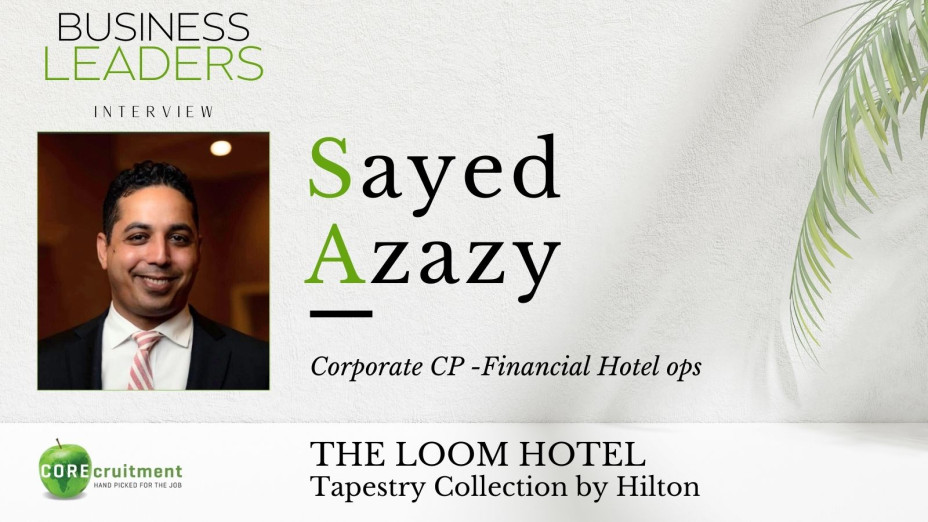
Business Leaders interview: Sayed Azazy
Tell us a little about yourself and your business.
I’m Sayed Azazy, the General Manager of The Loom Hotel, Tapestry Collection by Hilton. I’m excited to lead a highly motivated team to introduce our elevated lifestyle hotel launching in Rhode Island, where we focus on unique and personalized guest service. Growing up in Egypt, hospitality is in my blood; we don’t just welcome visitors, we host guests. With over two decades of experience in hotel management across the Middle East, England, and various locations in the U.S.—including the Midwest, West Coast, East Coast, and Wyoming—my background is primarily in luxury hospitality with Four Seasons Hotels and Resorts, along with experience at prestigious brands like Marriott, Wyndham, and Aimbridge Hospitality.
What motivates you in your work and what do you find most fulfilling about being a business leader?
What motivates me in my role is the opportunity to impact the lives of both our guests and team members. By creating a positive environment, I orchestrate the team to perform at their best, driving execution and delivering outstanding results that enhance guest experiences and improve customer loyalty. I find great fulfillment in engaging with customers from all backgrounds. As a hotel leader, I prioritize empowering a talented team by providing career opportunities and development paths. Supporting those who take care of our guests is essential. My commitment to aggressive hospitality inspires us to exceed expectations and create memorable experiences for everyone who walks through our doors.
How did you develop your leadership skills and how would you define your leadership style?
I’ve developed my leadership skills through a variety of experiences living on four different continents, which has broadened my perspective immensely. Working alongside and learning from great leaders throughout my career has taught me the importance of adaptability and innovation in our industry. I stay current by reading every book or article I can get my hands on. I define my leadership style as collaborative and supportive. I believe in leading by example and adhere to the principle that 'leaders eat last.' My open-door policy ensures that every team member feels valued and heard, and I treat my team as my internal customers. My leadership style is also adaptable to the situation at hand.
Innovating is crucial in our very diverse industry. How do you stay ahead of trends and incorporate them into your global strategy?
In the hospitality industry, innovation is crucial due to its dynamic nature. To stay ahead of trends, I prioritize continuous learning by attending conferences and industry events, which help me grasp emerging developments. Embracing technology is essential to ensure our service remains distinguished and competitive. I believe in actively listening to team members and guests, using their feedback to enhance our services. I follow Stephen Covey’s principle from The 7 Habits of Highly Effective People: 'Seek first to understand, then to be understood.' Each destination we operate in is unique, so I focus on incorporating local culture into our offerings. By thinking like a guest and acting like an owner, we ensure that our hotels tell a story about their distinct character while adhering to global brand standards.
What do you consider to be the key component(s) of effective business operational development?
When it comes to effective hotel operation, I believe the key components can be summed up by the 'three Ps'—People, Product, and Profit—often referred to as the three-legged stool of the business. In hospitality, I firmly believe that people are the most important asset. It’s a 'people’s business,' and a motivated, well-trained team makes all the difference. They enhance the guest experience and drive the overall success of the hotel. Quality, personalized service is paramount, while profit is essential for sustainability and growth. Balancing these three components is crucial for creating a thriving hotel operation that stands out in the competitive hospitality industry.
How do you approach identifying areas for improvement within a company's operations?
I emphasize the importance of anticipatory service, as understanding guest preferences and recognizing special occasions significantly enhances the overall experience. Routine audits help us evaluate our processes and service standards, while a focus on preventative maintenance ensures we uphold the highest quality. Guest feedback plays a crucial role in this assessment. Open communication with staff is vital, as they provide valuable perspectives on daily operations. Regularly reviewing performance metrics enables us to pinpoint trends and identify areas needing attention.
Where do you think the most promising investments should be focusing on and/or made on?
I believe the most promising investments should focus on several key areas. Investing in the team is crucial, happy employees’ equal happy guests. Employee morale directly impacts service quality, so celebrating successes is essential for fostering a positive work environment. Technology and innovation are also vital for staying competitive. Embracing new tools can enhance operational efficiency and improve guest interactions. Finally, engaging with the local community is key. I haven’t seen any business truly succeed without actively involving itself in the community. Building strong local relationships not only boosts our brand but also creates a supportive network that benefits everyone.
What is or are your biggest career achievement(s)?
Amongst multiple achievements throughout the years, some of my career highlights include winning the 'Unsung Hotel Hero Award,' presented by the Hotel Council of San Francisco, for hoteliers who exemplify exceptional hospitality through their dedication to their hotels and guests. I’m also proud to have received the 'Most Improved GOP and RevPAR Awards,' highlighting my team’s success in both profitability and revenue efficiency.
Do you have examples where your leadership made a difference? If so, what were they?
My leadership during various hotel openings and relaunching has significantly improved guest satisfaction and operational efficiency. One of my happiest moments comes from receiving calls from former colleagues who express how my mentorship has positively impacted their careers over the years. It’s rewarding to see the lasting effects of leadership.
What’s the most important leadership lesson you’ve learned?
The most vital lesson is that true leadership is defined by serving others. By investing in my team’s growth and adhering to the golden rule—treating others as you would like to be treated—I foster a culture of trust and respect that leads to greater success.
How did you identify and seize opportunities for advancement in your career?
I actively sought mentorship and embraced diverse roles to broaden my skills. Each experience, whether in luxury resorts or city hotels, has helped me understand different facets of the industry and identify opportunities for growth. Staying informed through industry publications and media has also been instrumental.
Have you achieved everything you wanted in your career so far?
While I’ve accomplished many goals, I believe the sky is the limit. There’s always more to learn and achieve. My experiences have shaped my growth, both professionally and personally, allowing me to contribute positively to the global hospitality landscape. I’m committed to continuous improvement and passionate about mentoring the next generation of hospitality leaders. Giving back to the industry is very important to me.
How important is personal development to your success, and how do you approach it?
Personal development is crucial to my success. I prioritize ongoing education through workshops and training, and I encourage my team to pursue their own growth as well. Even at this stage in my career, I set aside time each day to learn something new, ensuring I remain relevant and effective. I find that on-the-job training is particularly effective—after all, practice makes perfect. Additionally, I believe learning is a two-way communication; I’ve learned to answer my team’s questions by asking them questions, helping them figure out the answers for themselves. Ultimately, I believe success is intentional—it requires a commitment to growth and development.
How do you prioritize tasks when everything feels like a priority?
I utilize Stephen Covey’s Time Management Matrix to assess urgency and impact. This approach helps direct my attention to the most important tasks for both the company and my personal development. Clear communication with my team is essential, as it aligns our focus on what supports our strategic goals. I always make a list of tasks, including due dates, to determine which are the most critical. From there, I sort them by importance and arrange them in the appropriate quadrant of the matrix.
Delegation is also an important skill; it allows us to manage competing priorities effectively and ensures that we’re all working toward our goals efficiently.
What was the hardest decision you have taken as a leader?
One of my toughest decisions involved restructuring our team for improved efficiency. Balancing operational needs with my team’s well-being is always a challenge, but it’s a necessary one. I prioritize ensuring that any change benefits the overall team dynamic. I believe in coaching my team before implementing changes, fostering understanding and support throughout the process.
What steps do you take to measure your own performance?
I establish clear goals and regularly review my progress against them. I create written action plans to assess results comprehensively. Setting metrics and maintaining a consistent review schedule are essential, and if I see areas lagging, I identify actions for improvement.
Increasing self-awareness is crucial, as is recognizing the importance of preventing burnout—knowing when to step back is vital. I also compare my results to my initial wish list to evaluate what went right and what didn’t.
What does success mean for you as a business leader?
For me, success means cultivating a thriving team that consistently delivers exceptional guest experiences while meeting our business objectives. It’s about making a positive impact on both employees and guests, as I believe that employees are the true keepers of the brand. A key aspect of success is helping others succeed, fostering an environment where everyone can grow. Ultimately, success is a journey defined by living gratefully and giving generously.
Author
Date Published: 30th October 2024
