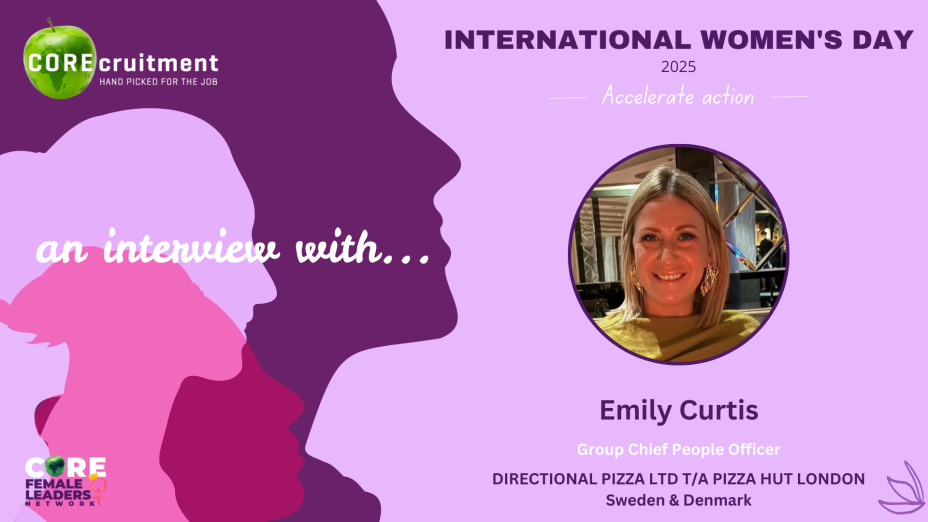
IWD 2025 - an interview with: Emily Curtis
Tell us a little about your career journey leading to where you are now.
My HR career started by accident, really. While studying at Aston University, I had the chance to do a sandwich year placement, and I was deciding between moving to London for an advertising internship or staying local for a role at The Carphone Warehouse. After losing my grandmother, I decided to stay closer to home and joined Carphone Warehouse as a Resourcing Assistant. It was a great intro to corporate life and HR, where I quickly got involved in recruitment, employee engagement, and learning the ropes of Employee Relations.
After returning to university to finish my degree, I went full-time at CPW, which set me up for my first official HR role. From there, I moved to the NHS, where I supported both corporate and medical teams, which was eye-opening and humbling. But after a while, I returned to Telecomms, joining Phones 4u for four years, where I worked with an amazing coach, Nicky Walsh, and learned a ton about retail HR and the fast-paced retail environment.
Following that, I worked at Amazon as an HR Business Partner, where I was exposed to a global operation that taught me about the importance of structure and processes. I then moved to Argos, supporting a fully automated site, where I gained experience with trade unions, influencing, and negotiating.
Next, I took on a role at a Starbucks franchisee, where I had the opportunity to shape processes for growth and gain valuable exposure to the financial side of the business. It was there I met Misty Reich, a brilliant HR leader from KFC, who broadened my perspective on leadership.
After four years, I joined Pizza Hut as the UK Culture and Capability Partner, working closely with franchisees. I learned a lot from my coach, Katie Gibson, who helped me develop as a heart-led leader. I led the UK’s social purpose program and even organized a 500-person conference to launch the brand's future strategy.
In July 2024, I was approached by Directional Capital LLC to become their European Chief People Officer. In just six months, I helped grow the business from two people to over 5,000, managing acquisitions and navigating employment laws across Europe. It’s been tough at times, but I’m proud of everything I’ve accomplished.
What does the International Women’s Day slogan “accelerate action” mean to you?
"Accelerate action" is about speeding up gender equality. Almost 100 years after the Representation of the People Act, many women still don't have equal rights. Only 14 countries offer full gender equality, and the UK isn’t one of them. The inequality women face globally—lack of access to contraception, domestic violence, forced mutilation—is disgraceful. In the UK, during my time leading the Pizza Hut social purpose work, I learned that less than 1% of new business investment goes to women, and even less to those from underrepresented backgrounds. We need to do better, and as a woman, I’m tired of being labelled as “an angry feminist” for demanding change. We must partner with men, too, to accelerate gender equality.
How important is it for women to lift each other up?
It’s vital. I’ve seen women push others up the ladder, even when they’re not ready. I try to do the same, role-modelling strong leadership. I believe in treating others with respect, but amplifying our voices on special occasions like IWD isn’t enough—consistent action is key.
How important is diversity in senior leadership?
Diversity in leadership is crucial for performance. Without different perspectives, we risk getting stuck in one narrow view. But it’s also about access to opportunities from the beginning—ensuring that everyone, regardless of background, has the chance to rise. The decisions we make now will impact the workforce for generations, so we need to make them count.
What do the statistics about female leadership represent to you?
These numbers reflect a history of systemic barriers. Women, especially those balancing family responsibilities, have faced limitations in their career progress. It’s not about women being less capable, but about the structures in place that have historically kept them from advancing. We have the chance now to change that, but it requires bolder action to support women in our industries.
How can leaders accelerate action toward closing the gender gap?
Leaders need to learn from the past. Every leader should think about how their decisions will impact future generations of women—daughters, granddaughters, nieces. We need to listen to female workers about their experiences, tackle biases in performance reviews, and ensure workplace practices are truly inclusive. It’s not about “empowering” women but creating cultures of respect where women feel heard and valued.
Top tips for success in leadership?
I’m not sure about “top tips,” but here’s what works for me: I’ve learned to say “I don’t know” rather than pretending to have all the answers. Hiring people with the right attitude and willingness to learn is crucial, and never standing still is key. If something doesn’t feel right, address it. Say yes to things that scare you because that’s where growth happens. And if you fail, fail fast and move on.
HR is a long game, and there’s so much to learn. Don’t rush to get to the next role or title; focus on building a deep understanding of the business, the people, and the needs of the company. Take the time to listen, observe, and learn from the experiences of others, especially mentors and leaders you admire.
Also, don’t be afraid to make mistakes. It’s natural, and it’s how we grow. The key is to learn from them and always strive to improve. HR isn’t just about fixing problems; it’s about being proactive and shaping the organization’s future. Stay curious, ask questions, and always be open to evolving your approach.
Advice for a woman starting a career at leadership level?
Ask lots of questions and never be afraid to disagree. Be the person who brings fresh ideas, not just someone who agrees with everything. Go out into the industry, learn from competitors, and understand their operations. Most importantly, don’t tolerate disrespect. If you’re not being heard, call it out. And find someone you trust to be your sounding board.
Have any role models shaped your leadership style?
I didn’t have a specific role model, but my experiences shaped me. High school was tough—being bullied by other girls severely impacted my confidence. But when I switched to an all-girls school, I found a supportive, ambitious group of friends. That shift gave me the confidence to pursue university and take on new challenges. It was quite possibly one of the best decisions I made, and this I feel – makes me realise that when you get the balance right where women really do support each other, it can make the world of difference.
Author
Date Published: 19th February 2025
