IWD 2026 - Interview with Gemma Hampton-Stone
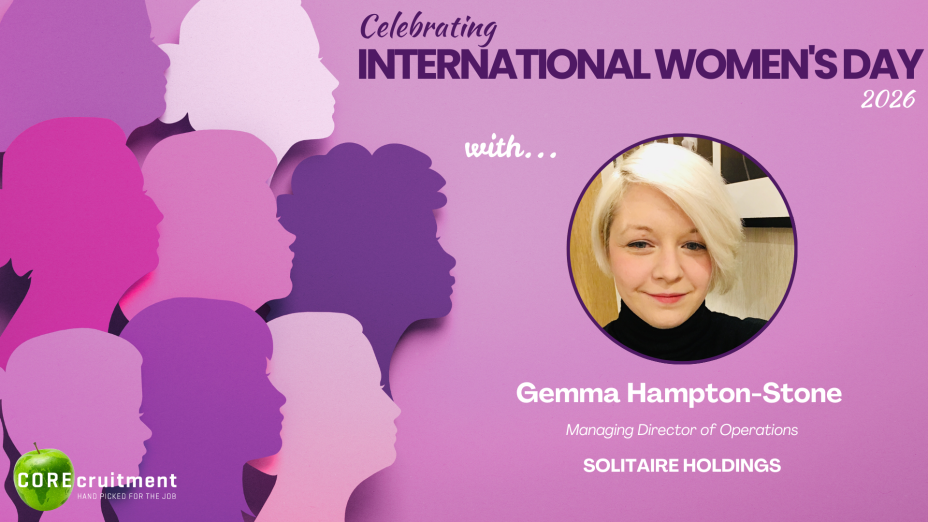
- The CORE International Women’s Day Interview Series examines how giving-first leadership strengthens industries and communities alike.
We are here talking to Gemma Hampton-Stone, Managing Director of Operations - Solitaire Holdings, a unique portfolio of hotels, restaurants, pubs, "cool" bars & music venues.
Could you share a brief overview of yourself, your career journey and how it has brought you to your current role?
I’m a publican’s daughter, and hospitality has always been part of my life. My mother raised me as a single parent while running successful pubs, and in many ways, I was raised by the pub too. My playground was quite literally the bar, the kitchen pass, the carpark... I grew up surrounded by the rhythm of customer service and the people who made it happen.
My mother’s inner circle was a carefully chosen group of strong and generous women and they all played a part in shaping who I am. Watching them work, support one another and get through long, demanding days taught me a strong work ethic, resilience and a quiet sense of drive that has stayed with me throughout my career.
I started on the floor and worked my way up through demanding operational roles; late nights, new openings, big teams and high-pressure environments where you learn quickly or you don’t last. Over time, that experience led me into senior leadership across pubs, restaurants, hotels and cultural spaces, often during periods of growth and/or change.
Today, I hold a dual role as Managing Director and Operations lead at Solitaire, within a complex, shareholder-led independent group. The way I lead now is shaped as much by that upbringing as by experience…staying close to the work, backing people properly, and remembering that hospitality is ultimately about community.
What does the International Women's Day slogan "give to gain" mean for you personally, and how does it translate into your approach to leadership?
For me, give to gain feels very personal. I grew up watching women give their time, energy and care freely, not because they expected something back, but because that’s how good teams and communities are built. That mindset stayed with me.
In leadership, it means being generous with time, trust and opportunity. Listening properly, sharing context, and backing people when things feel uncomfortable or uncertain. I’ve learned that when people feel supported and believed in, they step up, and what you gain in return are stronger teams, deeper loyalty and a culture that actually holds together when things get tough.
How important is it for you to actively sponsor (not just mentor) each other, and what does that active support look like in practice?
Active sponsorship is really important to me, particularly as I’ve moved into more senior roles. Throughout my career, I’ve seen how often confidence, visibility or timing (rather than ability) can hold people back.
After my early General Manager roles, I haven’t personally experienced much sponsorship, largely because I haven’t often been surrounded by female leadership at senior level. That absence has made the impact of genuine sponsorship even clearer to me.
For me, sponsorship now means being intentional with influence. It’s putting someone forward for an opportunity before they feel fully ready, backing them in senior discussions, and giving them space to grow while knowing they’re supported. I try to do this in a very practical way, particularly for women in operational roles, because having someone advocate for you at the right moment can genuinely change the course of a career.
Can you share a specific instance where you have given your time, resources, or influence to help other women advance in their career, and what you "gained" from that experience?
When I joined Solitaire, there was a clear lack of diversity within the senior leadership team, and moving that forward mattered to me. One way I’ve done that is by being intentional about who I back and develop.
Today, 8 of my 12 direct reports are women, not because of gender, but because of capability and potential. I’ll only ever hire or promote on that basis. I’ve yet to regret sponsoring a woman who is hungry for the next step, even when she didn’t initially believe she’d be given the chance.
Sponsoring people also means shouldering the risk; being prepared to defend the process, learn from setbacks, and not be shaken when progress takes a more scenic route. What I’ve gained in return is stronger leadership around me, creative decision makers, and a more balanced, thoughtful senior team.
Workforce: 53.1%, Top Level Leadership: 28.8%, Gender Pay Gap: 20% Worldwide, (12% - 18% Europe & North America, 16%-19% UAE, 5% New Zealand…) What do these numbers represent to you?
To me, these numbers highlight the disconnect between where women sit in the workforce and how underrepresented they still are in senior leadership. It isn’t about capability; it’s about access, visibility and how confidently organisations commit to developing talent over time.
Recently, I’ve had recruiters say to me, “the board really wants a woman.” On the surface, that sounds positive, but it also reveals something deeper. Wanting a woman isn’t the same as being ready to support one properly. Representation without intent, clarity or backing doesn’t lead to real change.
These figures remind me that progress only happens when leadership teams move beyond optics and take responsibility for fair processes, long-term development and genuine inclusion. Otherwise, the numbers may shift slightly, but the experience underneath them won’t.
What trends do you see shaping the future of leadership for women in business?
I think we’ll see a shift away from performative inclusion and towards real readiness. That means organisations being clear on what leadership actually requires, and then putting the support, trust and flexibility in place to make it work.
I also see leadership becoming less about presence and more about impact. Women have always operated this way, particularly in operational roles, balancing people, performance and complexity, and that skill set is finally being recognised as leadership strength, not a compromise.
The businesses that will move fastest are the ones prepared to challenge old models, share power more openly, and judge leadership by outcomes rather than optics.
As a successful leader, what is your top tip for fostering a workplace culture where employees feel encouraged to give feedback, share knowledge, and gain growth opportunities?
Create consistency and trust, not theatre. People speak up when they know feedback will be taken seriously and won’t be used against them later.
One piece of feedback from a junior manager that’s really stuck with me was that they always knew what was expected of them and could see a clear path for themselves ahead. I’ve always tended to throw my team into tasks, share my own learnings openly, and let people learn by doing, with support rather than perfection expected.
Selfishly, that approach has also allowed me to stretch myself and step into roles and responsibilities I wasn’t always fully ready for either. I think growth works best when it’s shared, honest and a little uncomfortable at times.
Have you had mentors or role models who influenced your career? How did they help?
I haven’t had many formal mentors, and if I’m honest, some of my biggest learnings have come from leaders I didn’t agree with rather than from best practice or advice. Watching what didn’t sit right with me, how people behaved under pressure, how decisions were made, or how teams were treated, helped shape the kind of leader I wanted to be.
That experience taught me to trust my own judgement, take what works, and leave the rest behind. In many ways, those contrasts have been just as influential as positive role models, and they’ve stayed with me throughout my career.
That said, I’m very much still learning and would still happily welcome a mentor. If anyone fancies offering perspective, challenge or a well-timed nudge, I’m always up for the conversation.
What legacy do you hope to leave for the next generation of women leaders?
I hope I leave behind teams who feel confident in their own judgement and clear about their path. If more women feel able to step forward, take up space and back themselves without needing permission, that would matter to me.
I’d also like to think I’ve helped create environments where progression feels possible without having to change who you are to fit in.
What is one piece of advice you would give your younger self at the start of your career?
You don’t need to wait until you feel ready. Most of the roles that shaped me came before I felt fully prepared for them.
I’d also tell myself that having a heart doesn’t make you weak. When it’s applied properly, empathy is a real strength, it helps you build trust, make better decisions and lead in a way that people actually want to follow.
What is a misconception about women in senior leadership that you’ve personally encountered?
That we must choose between being capable and being caring. I’ve felt that tension throughout my career; that if you lead with empathy, it can be mistaken for softness, and if you’re clear or decisive, you risk being labelled difficult.
What I’ve learned is that this isn’t a contradiction, it’s a strength. The ability to hold people to account while genuinely caring about them is what good leadership looks like, especially in operational environments. Being emotionally aware doesn’t dilute authority - it strengthens it.
I’ve stopped trying to fit a version of leadership that makes others comfortable. The most effective leaders I know are the ones who bring their full selves to the role and lead with both heart and backbone.
On IWD, what has been the hardest part of your leadership journey, and what has it taught you?
The hardest part has been carrying responsibility without always having certainty. Making decisions that affect people’s livelihoods, backing long-term choices when short-term answers are expected, and staying steady when progress isn’t immediately visible.
What it’s taught me is the importance of consistency and belief; in yourself and in others. Change doesn’t always come from big moments; it often comes from showing up, backing your judgement, and creating room for more voices over time. On IWD, that feels like an important reminder: progress is happening, even when it’s gradual, and every step forward matters.
Author
Date Published: 24th February 2026
