
Leadership Interview Series: Dinos Syrichas
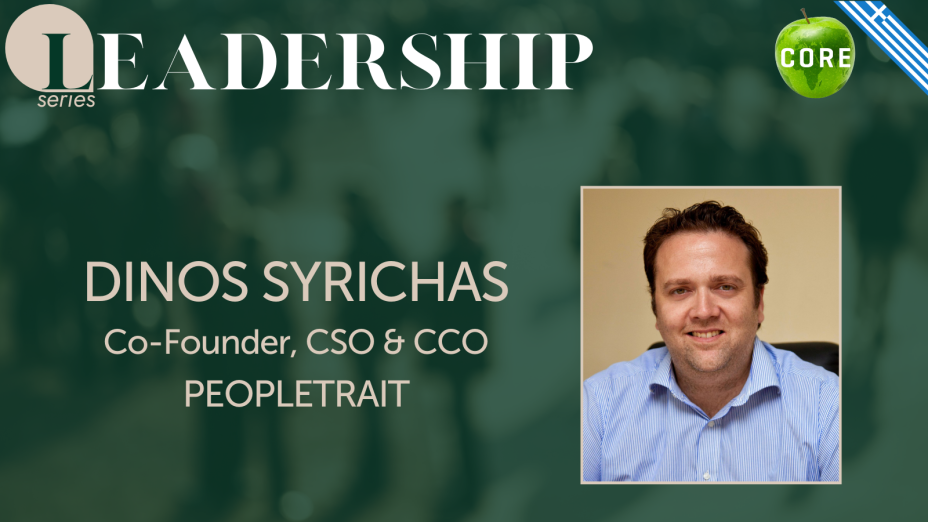
Could you briefly introduce yourself, your role and the core mission of your organisation within the UK hospitality landscape?
I am part of founding team at PeopleTrait, a Human Capital Growth System backed by AI. Our mission is to help organisations deeply understand, motivate, and grow their people. We provide the tools to identify what drives individual performance, growth trajectory, and personal fulfilment—both today and in the future. By combining data-driven insights with practical strategies, we empower leaders to make informed decisions, nurture talent, and build high-performing teams that thrive in a rapidly evolving industry, such as the UK hospitality industry.
What initially inspired you or sparked your interest to pursue this career?
My interest didn’t come from a single moment, but from a recurring pattern I kept seeing throughout my career. I was repeatedly exposed to talented, capable people who were underperforming, disengaged, or stuck — not because they lacked skills, but because no one truly understood what drove them, how they thought, or what they needed to grow. At the same time, organizations were investing heavily in tools, processes, and development programs, yet the human side of performance was often reduced to generic assessments or one-off interventions. There was a clear gap between intention and impact. That disconnect sparked my interest in human development, behavioural science, and coaching. I became increasingly convinced that sustainable performance comes from self-awareness, meaning, and alignment — not control or standardization. Pursuing this path felt like a natural way to bring structure, insight, and humanity together, and ultimately led to the creation of PeopleTrait.
What motivates you in your work and what do you find most fulfilling about being a business leader?
What motivates me most is the moment when clarity replaces confusion — when individuals or teams begin to understand themselves better and, as a result, make more intentional decisions. Seeing people reconnect with their strengths, regain confidence, or unlock potential they didn’t realize they had been incredibly energizing. As a business leader, what I find most fulfilling is creating environments where growth is possible — not just in terms of performance, but in mindset, self-awareness, and purpose. Leadership, to me, isn’t about having answers; it’s about building systems and cultures that allow people to ask better questions of themselves and each other. When work becomes a platform for learning and development rather than pressure and survival, both people and organizations thrive. Being able to contribute to that shift is what keeps me deeply engaged in what I do.
How do you stay updated on industry trends, customer expectations and regulatory changes?
I try to stay close to the reality of the market rather than relying solely on reports or forecasts. A large part of that comes from continuous conversations with leaders, HR teams, and professionals across different sectors, who are dealing with these challenges in real time. Those insights are often more revealing than any single trend analysis. I also make a point of following a mix of behavioural science, leadership research, and industry-specific commentary, which helps me connect macro trends with how they actually show up in organisations. Regulatory and policy developments are important, but I’m particularly interested in how they affect people’s day-to-day experience at work — because that’s where impact is ultimately felt. Finally, building and running PeopleTrait itself is a constant feedback loop. Observing how individuals engage with development journeys, what questions they ask, and where organisations struggle provides a very real-time understanding of changing expectations. Staying curious and listening closely has proven to be the most reliable way to stay relevant.
Where do you think the most promising investments should be focusing on and/or made on?
The most promising investments are those that strengthen an organisation’s long-term human capability rather than simply optimising short-term output. In an environment marked by uncertainty, talent shortages, and rapid change, the real differentiator is no longer access to capital or technology, but the quality, adaptability, and engagement of people. This means investing in leadership development, self-awareness, and systems that help organisations understand what truly drives performance and retention. Technology plays an important role, but only when it is used to enable better decision-making and more personalised development — not to replace human judgment. Equally important is investment in cultures that support learning, psychological safety, and sustainable performance. Organisations that allocate resources toward developing people, building trust, and creating meaningful growth pathways are far more likely to attract talent, retain customers, and remain resilient over time.
If you could influence one thing about the future of hospitality in the UK (policy, regulation, social trend, business model…) what would it be, and why?
If I could influence one thing, it would be a shift in how we collectively value and develop the people who work in hospitality. The sector has always been built on human connection, yet too often roles are viewed as short-term or transactional rather than as meaningful careers with growth and progression. This mindset has implications across policy, business models, and culture. When people feel seen, supported, and developed, retention improves, service quality rises, and businesses become more resilient. Conversely, when development is neglected, the industry remains trapped in cycles of churn and skills shortages. Encouraging investment in training, leadership development, and wellbeing — supported by policy frameworks that recognise hospitality as a long-term profession — would have a profound impact. Ultimately, elevating how we treat and develop people would strengthen not only the sector’s workforce, but also the quality of experience it delivers to customers.
What is or are your biggest career achievement(s)?
One of my biggest career achievements has been co-founding PeopleTrait, as my passion for growing people is what glued everything together and the driving force behind making PeopleTrait a reality. I’m particularly proud of the impact I had on people—whether it was mentoring team members, creating a more inclusive culture, or helping colleagues grow into new roles. Achievements that combine tangible results with meaningful, positive influence on others are the ones I value most.
How do you prioritise tasks when everything feels like a priority?
When everything feels like a priority, I focus on clarity, impact, and deadlines. I start by identifying which tasks will have the biggest effect on the team, clients, or business objectives, and I tackle those first. I also break larger projects into manageable steps and set realistic timelines to keep momentum. Communication is key—I make sure stakeholders understand priorities and progress, so expectations are aligned. Ultimately, it’s about balancing urgency with importance, staying organized, and being flexible when things inevitably change.
Are you expecting consumer expectations to shift this year?
Yes, I expect consumer expectations to continue evolving this year across all sectors. Today’s consumers increasingly value personalised and meaningful experiences, whether they’re interacting with a brand online, in-store, or in a service setting. They want organisations to understand their needs, motivations, and preferences—and to respond in ways that feel relevant and human. At the same time, values like sustainability, ethics, and transparency are becoming central to consumer choices. People are more conscious about the social and environmental impact of the products and services they use, and they expect brands to reflect those priorities authentically. Technology and convenience are also key. Consumers now expect seamless, data-informed experiences—everything from frictionless digital interactions to predictive, personalised offerings. At PeopleTrait, we see this as a huge opportunity. By leveraging AI-backed insights into what drives people’s behaviour and motivation, organisations can not only meet these shifting expectations but also engage their customers and employees more deeply, creating experiences that are truly tailored, meaningful, and sustainable. The organisations that succeed will be those that combine data-driven insights with a human-centric approach to anticipate needs and deliver value consistently.
Author
Date Published: 5th January 2026
