
Leadership Interview Series: Dmitrijs Labada
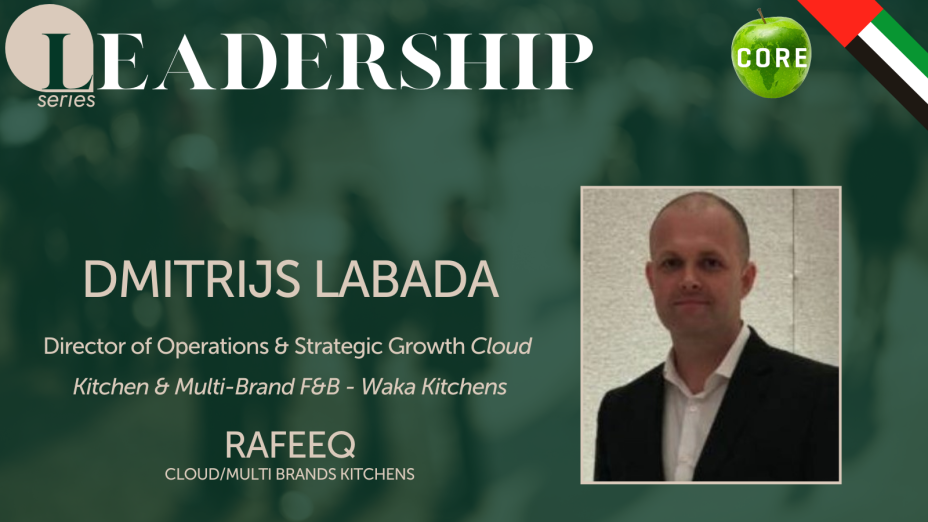
Through our CORE Leadership Series, we celebrate inspiring industry leaders by sharing their stories in depth.
In this interview, we are talking with Dimirijs Labada, Director of Operations & Strategic Growth Cloud - Kitchen & Multi-Brand F&B - Waka Kitchens
Tell us a little about yourself and your business
I began my career in traditional hospitality, working across restaurant operations and management in multiple countries and cultural environments before transitioning into the cloud kitchen operational model. Today, I lead a delivery-first food business operating multiple virtual brands, which I built and managed from the ground up. The business combines strong hospitality principles with technology-driven efficiency.
What initially inspired you or sparked your interest in pursuing this career?
My background in hospitality gave me a deep appreciation for guest experience; however, I was drawn to cloud kitchens by the opportunity to reimagine how food businesses operate. The ability to eliminate front-of-house limitations and optimize kitchen space into a revenue-generating operation—while maintaining a strong focus on quality, speed, and scalability—sparked my interest.
What motivates you in your work and what do you find most fulfilling about being a business leader?
I am motivated by building fully optimized business models that maximize efficiency within the cloud kitchen framework. My focus is on turning every square meter into a revenue-generating asset—typically operating one concept within 3 to 5 square meters—by aligning menu design, kitchen layout, equipment selection, and customer behaviour. By removing unnecessary layers from business models, training structures, kitchen setups, and daily operations, we create systems that are simple, effective, and scalable.The most fulfilling aspect of leadership for me is developing teams, building efficient systems, and seeing concepts grow from idea to successful execution.
What do you see as the biggest challenges currently facing the landscape where you are, and how should a business like yours respond?
Rising costs, evolving consumer expectations, and heavy reliance on delivery platforms present significant challenges. Aggregator commission structures, in particular, have a major impact on profitability in the cloud kitchen model. The key to overcoming these challenges lies in maintaining a clear, simple, and disciplined business model supported by smart menu engineering, strong cost controls, and clear brand positioning.
How do you stay updated on industry trends, customer expectations, and regulatory changes?
I stay informed through a combination of operational data, customer feedback, industry publications, social media trends, food bloggers, peer networks, and ongoing dialogue with delivery platforms and suppliers.
Where do you think the most promising investments should be focused on and/or made on?
Investments should focus on kitchen efficiency, technology, staff training, and brand development. Long-term success is driven by systems that improve consistency and profitability rather than rapid footprint expansion. Staff training, supported by clear and simple procedures, remains one of the most critical drivers of sustainable performance.
What skills or mindsets do you think will be most important for the next generation of hospitality leaders?
Adaptability, digital fluency, people leadership, and strong financial understanding will be essential. Future leaders must successfully bridge traditional hospitality values with modern, technology-driven operations. Leading by example and maintaining a hands-on approach will be critical.
What is or are your biggest career achievement(s)?
Successfully transitioning from traditional hospitality into building and scaling a profitable cloud kitchen operation has been a defining achievement. Additionally, developing virtual brand concepts that operate within just 3 to 5 square meters of kitchen space and achieving nationwide recognition has been a significant milestone in my career.
What’s the most important leadership lesson you’ve learned?
Strong leadership is built on clarity, trust, and consistency. When teams understand the “why” and feel supported, performance naturally follows. Effective leadership, training, and coaching must be grounded in personal professional experience, mutual respect, and strong people skills.
Are you expecting consumer expectations to shift this year?
Yes. Consumers are becoming increasingly value-conscious while still expecting high quality, transparency, and fast delivery. Brands that consistently deliver reliability and trust will stand out.
How do you balance the demands of commercial performance with staff well-being, retention, and culture building?
This balance is achieved through efficient systems, realistic performance targets, and a culture built on respect and development. Investing in people reduces turnover, strengthens engagement, and ultimately improves operational results.
Looking back, what has been the most pivotal moment in your career?
The decision to transition from traditional hospitality into the cloud kitchen sector was a pivotal moment. It reshaped my perspective on scalability, leadership, and innovation.
Who or what has had a major influence on your approach to leadership?
My leadership approach has been shaped by years of hands-on experience and exposure to different leadership styles. I firmly believe in people development, trust, consistency, and clearly defined goals supported by a structured and transparent path to achievement.
What advice would you give emerging leaders who want to shape the future of hospitality?
Build a strong operational foundation, remain curious about technology, listen closely to your customers, and lead with empathy. The future of hospitality belongs to leaders who can adapt while preserving the human element. Lead by example, stay hands-on, and always be present for your team.
Author
Date Published: 3rd January 2026
