
Leadership Interview Series: Igor Ruge
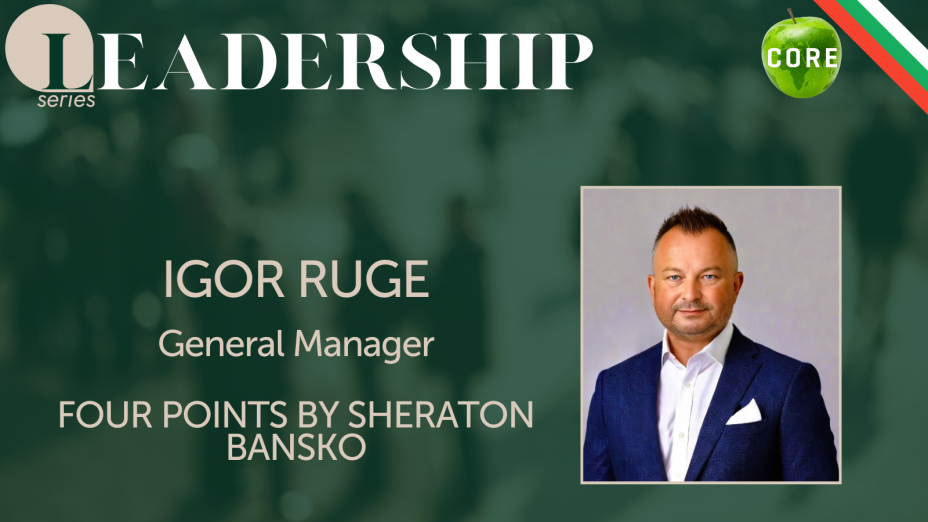
Our CORE Leadership Series features leading figures from across the industry, explored through in-depth interviews.
We are interviewing Igor Ruge, General Manager at Four Points by Sheraton Bansko.
Four Points by Sheraton Bansko is a four‑star hotel in Bansko, Bulgaria, part of the international Four Points by Sheraton brand operated by Marriott International.
It’s located in the heart of the popular mountain resort, within walking distance of the gondola lift and town centre, and serves both leisure and business travellers. The hotel offers stylish rooms and suites, multiple restaurants and bars, spa and wellness facilities, indoor and outdoor pools, a fitness centre, conference spaces and other guest amenities.
The property has been renovated and is known for its comfortable accommodation, panoramic mountain views, and convenient access for ski and outdoor activities, making it a popular all‑seasons destination.
Tell us a little about yourself and your business.
I am a German national with thirty years of experience in the hotel industry, having worked in over ten countries across three continents. Currently, I am based in Bulgaria, where I hold the position of Multi-Property General Manager for two Four Points by Sheraton hotels—one situated in the Pirin Mountains and the other on the Bulgarian Black Sea Riviera. Both hotels commenced operations between December 2023 and June 2024, representing the inaugural Four Points by Sheraton properties in the Bulgarian market.
What initially inspired you or sparked your interest in pursuing this career?
My parents owned restaurants in Germany for several decades, and it was generally anticipated that I would uphold the family tradition. However, I was eager to explore the world—or, as the saying goes, to work where others vacationed—and therefore decided not to manage a restaurant in Germany but to pursue a career in the hotel industry instead.
What motivates you in your work and what do you find most fulfilling about being a business leader?
Hospitality is an ever-evolving industry, influenced by a variety of factors—economic, political, and natural. Each day brings new challenges and experiences. Working with and for people keeps the job exciting, and the feedback you receive is immediate and rewarding.
What do you see as the biggest challenges currently facing the landscape where you are and how should/will a business like yours respond?
Similar to numerous other industries, the hospitality sector faces significant challenges in recruiting a qualified workforce. Historically, the industry has been slow to adjust compensation structures. The COVID-19 pandemic marked a critical turning point, leading many hospitality professionals to pursue alternative career opportunities, with a substantial number not returning to the field. Additionally, younger generations tend to prioritize work-life balance over additional earnings from tips and show reluctance to work during weekends and public holidays. To attract young talent, it is imperative to offer flexible working hours, enhanced work-life balance, clear career advancement opportunities, and competitive remuneration.
How do you stay updated on industry trends, customer expectations, and regulatory changes?
Employment with the world's largest hotel chain offers significant advantages, including access to a comprehensive extranet that supplies all necessary information for daily operations. Furthermore, I frequently participate in both local and international fairs and exhibitions. Additionally, the internet and social media serve as crucial sources for identifying trends, shifts, and changes.
Where do you think the most promising investments should be focused on and/or made on?
The human and personal elements in hospitality remain fundamental and indispensable to industry. Nevertheless, given the considerable challenges in recruiting an adequate workforce, the sector must invest in both human capital and innovative technologies that streamline tasks and increase job attractiveness. Employees should, as they did in previous decades, take pride in their roles within hospitality rather than perceiving themselves as mere servants.
What skills or mindsets do you think will be most important for the next generation of hospitality leaders?
Flexibility and multitasking are crucial skills and mindsets. In today's hospitality industry and many others, there is no place for attitudes like not my job or not my responsibility. The more languages you speak, the more valuable you become, and the more departments you can work in, the more distinctive your contribution is.
What is or are your biggest career achievement(s)?
The opening of the Four Points by Sheraton Sunny Beach Hotel, which comprises 359 rooms and five food and beverage outlets, within six months of an almost initial stage and with a completely new team, represented a significant milestone.
What’s the most important leadership lesson you’ve learned?
During our conversation, we repeatedly emphasized the importance of the workforce. Consequently, the most significant leadership lesson I have learned pertains to the workforce. I would like to cite Mr. J. Willard Marriott's well-known philosophy: "Take care of the associates and they will take care of the customers, and the customers will come back again and again. This fundamental principle, which prioritizes people, continues to be a cornerstone of Marriott's organizational culture. It underscores that investing in employees enhances customer service and loyalty, thereby constituting an effective business strategy within the hospitality industry.
Are you expecting consumer expectations to shift this year?
We anticipate a significant shift in consumer expectations in 2026 due to Bulgaria's entry into the Eurozone. For international travelers from Europe, it will be easier to recognize the excellent value for money we offer, whereas local consumers will require time to adapt to the new currency, which may temporarily slow down spending.
How do you balance the demands of commercial performance with staff well-being, retention, and culture building?
It is imperative to cultivate a supportive environment, promote collaboration, and reduce conflicts. Comprehending team dynamics and fostering trust are fundamental. Each member should take pride in belonging to the team. Furthermore, encouraging the personal and professional development of every team member is essential, ensuring that all individuals feel valued.
Looking back, what has been the most pivotal moment in your career, a turning point that shaped how you lead today?
Who or what has had a major influence on your approach to leadership?
I would like to address the last two questions by reflecting on the period of 2003 during the Gulf War and my experience at the JW Marriott Kuwait City. Shortly before the onset of the war, the hotel underwent rebranding and was operating at full occupancy despite missiles flying overhead. We spent nights in the basement shelters and attended to our guests during the day. This experience demonstrated the remarkable outcomes achievable through motivated team members and diligent care.
What advice would you give emerging leaders who want to shape the future of hospitality?
I would like to reference the quotation, theory without practice is empty, and practice without theory is blind. knowledge requires application, and application demands understanding; together, they form a symbiotic relationship where theory gives purpose to action, preventing blindness, and practice validates theory, preventing emptiness. This highlights that true wisdom arises from combining conceptual knowledge with real-world experience, making learning meaningful rather than mere abstract speculation or aimless activity. Moreover, it is crucial to embrace new ideas and technologies while also valuing the insights of experienced colleagues.
Author
Date Published: 2nd January 2026
