Leadership series: Hana Gray
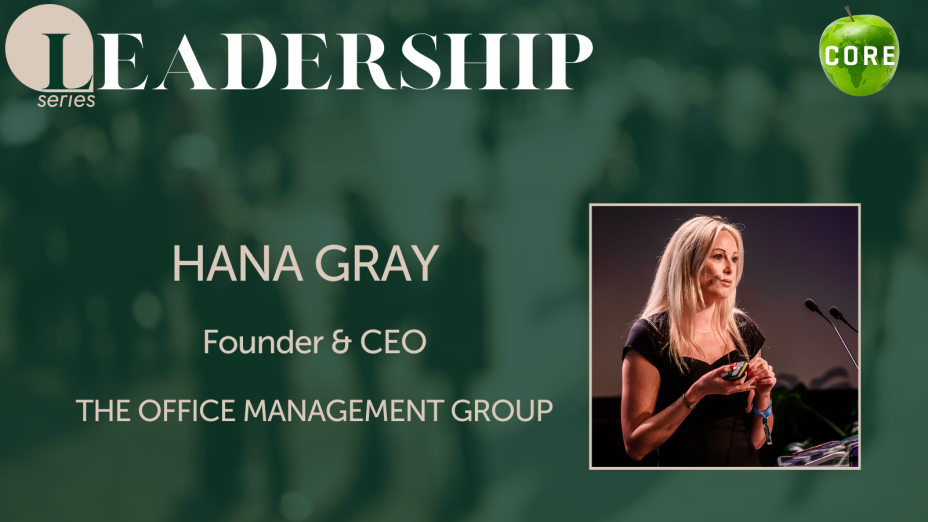
Showcasing industry-leading talent through powerful interviews in our CORE Leadership Series.
We are here talking to Hana Gray, Founder and CEO of The Office Management Group.
Tell us a little about yourself and your business
I’m Hana Gray, Founder and CEO of The Office Management Group. I’ve spent over 20 years working in Office Management, workplace operations and facilities across a range of fast-paced, complex environments, before setting up the business to support, train and elevate Office Managers and workplace professionals across the UK.
What started as consultancy quickly grew into a wider ecosystem – including training courses, events, a membership platform and practical tools – all designed to help people in these roles feel more confident, recognised and equipped to do their jobs well. At its core, the business is about raising standards, sharing real-world experience and giving people the structure and language to demonstrate the value they bring to organisations every day.
What initially inspired you or sparked your interest to pursue this career?
While many people fall into Office Management, my path was more intentional. Early in my career, I worked in PA and management roles and was often asked to train others, organise teams and put structure around how things were done. I saw Office Management in action at an asset management company when I was in my mid-20s and loved the look of it. I thought I understood the scope and actively went after it.
What appealed to me was the breadth of the role – the mix of people, operations, problem-solving and responsibility. I could see how influential a good Office Manager could be in shaping how a business actually runs day to day. That combination of trust, autonomy and impact really stuck with me, and it’s what’s kept me in the profession ever since.
What skills or mindsets do you think will be most important for the next generation of industry leaders in the UK?
Adaptability, emotional intelligence and commercial awareness will be absolutely critical. The world of work is changing quickly, and leaders need to be comfortable navigating uncertainty while still providing clarity and direction for their teams.
I also think the ability to communicate impact – not just activity – is essential. Future leaders need to understand how their work connects to wider business objectives and be confident articulating that. Finally, strong listening skills and empathy will continue to separate good leaders from great ones, particularly in people-centred industries like FM and workplace services.
What’s the most important leadership lesson you’ve learned?
That you don’t need to have all the answers – but you do need to take responsibility.
Early in my career, I felt pressure to appear in control at all times. Over the years, I’ve learned that good leadership is about asking better questions, being open to feedback and owning decisions, even when they’re uncomfortable. People respect honesty and consistency far more than perfection.
How do you prioritise tasks when everything feels like a priority?
I focus on impact rather than urgency, and on what will genuinely move the needle. Operational roles are full of noise, and it’s very easy to spend all your time reacting rather than progressing anything meaningful.
I also talk a lot about motivation. We all have tasks we procrastinate on – often because we don’t enjoy them or because imposter syndrome creeps in, which is incredibly common in broad, behind-the-scenes roles like Office and Facilities Management. I encourage people to consciously balance those tasks with work they enjoy or feel confident in. Momentum matters.
Clear lists, realistic deadlines, managing expectations and being comfortable saying “not right now” are essential. Prioritisation isn’t about doing more – it’s about doing the right things, in the right order, for the right reasons.
How has your leadership philosophy evolved, especially over the past few years of rapid change?
The past few years have reinforced the importance of flexibility, boundaries and trust. I’ve become much more intentional about protecting energy – mine and my team’s – and recognising that sustainable performance matters more than constant availability.
I’ve also learned that leadership doesn’t have to be loud or rigid. Calm, clarity and consistency go a long way, especially during periods of uncertainty. Creating space for people to do their best work has become a bigger priority than trying to control every outcome.
How do you balance the demands of commercial performance with staff wellbeing, retention and culture building?
I don’t see them as separate priorities – they’re deeply connected. Culture and wellbeing are shaped by how a company actually operates day to day, and a huge part of that sits within the office and facilities environment.
The workplace is the lifeblood of an organisation. How people experience their space, the systems that support them, and the consistency between what a business says it values and how it actually operates all have a direct impact on performance, retention and engagement. When the office and facilities function align with the company’s vision, mission and culture, everything feels more joined up.
Strong culture isn’t created through perks – it’s created through thoughtful structure, clear expectations and environments that support people to do their best work. When that’s in place, commercial performance follows naturally.
What does the industry need more of (or less of) to continue thriving?
We need more honesty about the scope and value of operational roles, and less reliance on outdated assumptions about what these jobs involve.
There’s also a real need for better development pathways, clearer role definitions and more investment in people who sit at the heart of organisations keeping things running. When we empower those individuals properly, the whole business benefits.
What advice would you give emerging leaders who want to shape the future of the sector?
Be curious, ask questions and don’t underestimate the value of your experience. You don’t need to wait for a title to start leading – leadership shows up in how you think, communicate and take responsibility.
I’d also encourage people to document their impact, build confidence in talking about their achievements and seek out mentors or communities where they can learn from others. The sector needs fresh thinking, and there’s plenty of space for people willing to step up thoughtfully and authentically.
Author
Date Published: 2nd March 2026
