
Leadership series: Lucienne Mavlian
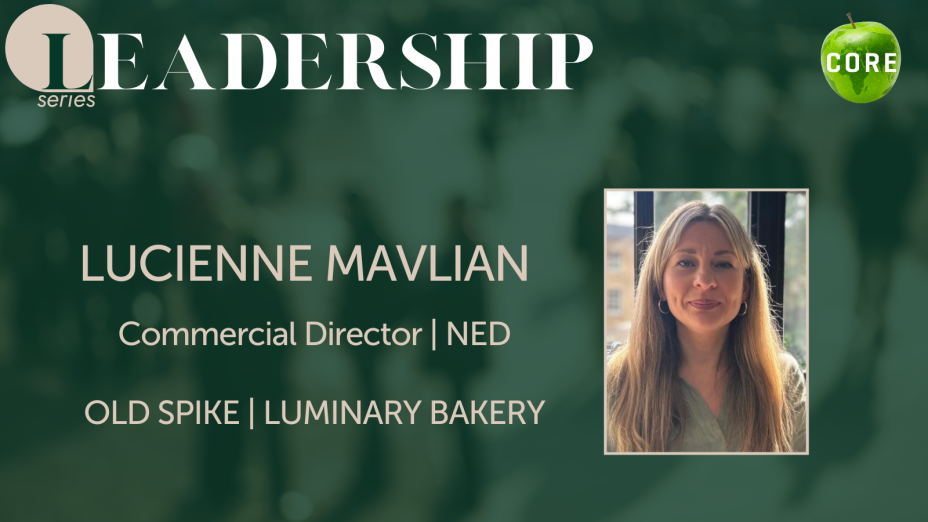
We celebrate remarkable industry leaders by sharing their stories through our CORE Leadership Series.
Tell us a little about yourself and your business.
My name is Lucienne Mavlian. I currently work at two brilliant, purpose-driven social enterprises that intersect hospitality and social impact.
I am Commercial Director for Old Spike, a coffee roastery and CIC, where we roast and supply specialty coffee to some of the UK’s best hospitality operators, alongside running seven of our own branded cafés. We also run a dedicated training and employment programme for people who have experienced homelessness, equipping them with skills, confidence, and support.
I also sit on the board of Luminary Bakery as a Non-Executive Director, a London-based social enterprise that creates employment, training, and long term support for women who have experienced social disadvantage, including homelessness, domestic abuse, violence, and sexual exploitation. Luminary combines craft, community, and wraparound support to help women build sustainable futures.
Supporting either of these organisations, through purchasing their products online, in-store or via b2b channels, directly contributes to the mission and helps to fund the programmes and placements.
What initially inspired you or sparked your interest in pursuing this career?
I’m hospitality through and through - I’ve worked in the industry since I was 15, and those early experiences have shaped both my career and my leadership philosophy. I believe that social impact and commercial success can - and should - coexist.
Commercial strength is what gives organisations the freedom to create meaningful, long-term change. That's what drew me to the businesses I work with today. I was inspired by their purpose, and equally motivated by the opportunity to use my experience to drive growth and profitability, ensuring their impact can scale sustainably.
What motivates you in your work and what do you find most fulfilling about being a business leader?
Starting on the front line taught me early on that hospitality is ultimately about people. For me, leadership is about creating environments where individuals feel valued, supported, and seen for their potential.
It’s particularly important to me to create opportunities for people to build meaningful careers through less conventional paths. Our industry is full of extraordinarily talented individuals who may not have come from traditional backgrounds - myself included - yet have gone on to thrive when given the right support, trust, and opportunity.
What’s the most important leadership lesson you’ve learned?
One of the most important leadership lessons I’ve learned is that trying to do everything yourself serves no one. It leads to burnout for you and limits growth for your team. I’ve learned that good leadership is about creating space for others to step up. Trusting your team with responsibility, and allowing them the freedom to occasionally make mistakes, is one of the most important development tools you can offer.
What do you believe will distinguish the leading service providers over the next decade?
Trends will always influence hospitality - they come and go, and to some extent the industry will continue to be shaped by them. But what will truly distinguish leading operators over the next decade is discernment - knowing which trends to embrace and which core principles to remain unwavering on.
Consistency and quality will always outperform short term trend following. Businesses that endure are those that evolve and innovate without losing sight of their identity.
Growth should feel authentic and aligned to core values, so that it doesn't become reactive.
Internal culture will also be a defining differentiator. Organisations that invest in their teams - in development, wellbeing, and long-term career pathways - will consistently outperform. Culture drives performance and when teams feel valued and aligned with purpose, that energy translates directly into customer experience and loyalty.
How do you prioritize tasks when everything feels like a priority?
I ask myself three questions: will this meaningfully contribute to our mission, will it drive the business forward commercially, and will it elevate and strengthen trust in our brand? If it doesn’t do at least one of those things, it’s not a priority, just a distraction.
Are you expecting consumer expectations to shift this year?
I expect the trend of reduced frequency to continue this year, as ongoing economic pressure means consumers are likely to visit less often but with greater intention. Increasingly, consumers are making values-based decisions. In a world that feels economically and socially uncertain, people want their spending to matter. They are looking to support organisations that contribute positively to society - whether through meaningful sustainability practices, responsible sourcing, strong ESG commitments, or community impact.
Author
Date Published: 3rd March 2026
