
Leadership series: Muhammad Tanveer
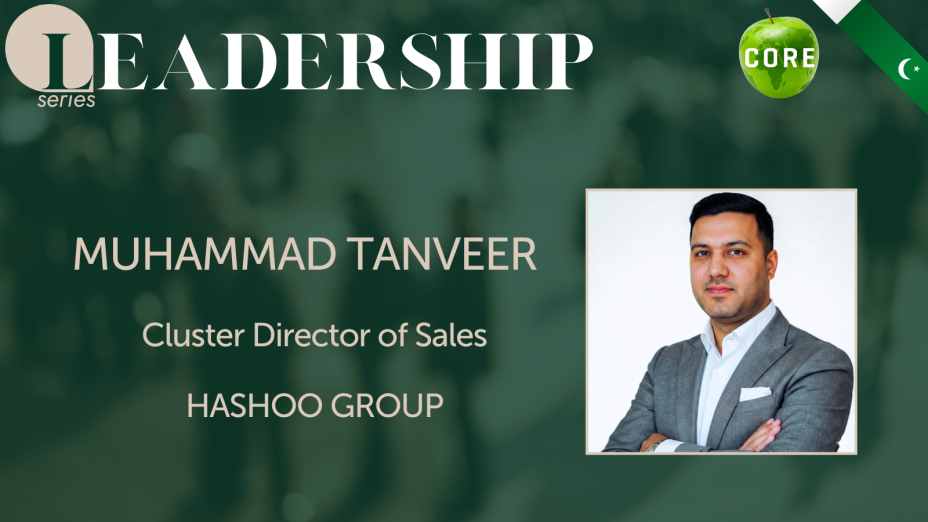
Through the CORE Leadership Series, we share the stories, insights, and journeys of inspiring worldwide industry leaders.
We are here talking to Muhammad Tanveer, Cluster Director of Sales – Hashoo Group.
Tell us a little about yourself and your business.
I’ve built my career in hospitality sales, but over time the role has evolved far beyond just selling rooms or meeting targets. Today, as a Cluster Director of Sales, I’m responsible for driving overall commercial performance across multiple properties, which means aligning strategy, distribution, pricing, and people in a way that delivers consistent results.
What I enjoy about this role is that it sits at the intersection of strategy and execution. On one side, you’re looking at market trends, segmentation, and positioning; on the other, you’re working closely with teams to make sure the strategy actually translates into revenue. I’ve always believed that success in this business comes down to understanding your market deeply and then staying disciplined in how you respond to it.
What initially inspired you or sparked your interest to pursue this career?
To be honest, it wasn’t a single moment. Early in my career, I was drawn to the pace and unpredictability of hospitality. It’s an industry where things change quickly, and you’re constantly dealing with people, clients, teams, stakeholders, each with different expectations.
Sales, in particular, appealed to me because it’s very outcome-driven. There’s a clear link between what you do and the results you achieve. Over time, that turned into a deeper interest in the commercial side of the business, not just closing deals, but understanding demand patterns, pricing strategy, and how to position a product in a competitive market.
What motivates you in your work and what do you find most fulfilling about being a business leader?
What keeps me engaged is the ability to influence outcomes. When you identify an opportunity early, build a strategy around it, and then see it deliver results, that’s a very satisfying process.
At this stage in my career, though, it’s not just about numbers. A big part of the satisfaction comes from building and mentoring teams. When you see someone develop confidence, take ownership, and start delivering independently, it reflects well beyond just one individual, it strengthens the entire organisation.
What shifts do you believe will redefine “success” for our sector in the coming years?
The definition of success is already shifting. Earlier, the focus was heavily on occupancy and topline revenue. Now, profitability and efficiency are becoming equally important.
With rising operational costs, pressure on margins, and a more price-sensitive customer base, businesses will need to be far more disciplined. At the same time, customer expectations are evolving — guests want value, but they also expect a certain level of experience and personalisation.
So going forward, success will be about balance: strong revenue, controlled costs, clear positioning, and the ability to adapt quickly to market changes.
How do you stay updated on industry trends, customer expectations and regulatory changes?
I rely heavily on staying close to the market itself. Direct interaction with clients, corporate accounts, and travel partners gives you real-time insight that no report can fully capture.
Alongside that, I keep an eye on global trends, what international brands are doing, how distribution channels are evolving, and how customer behaviour is shifting. Platforms like LinkedIn also help in understanding broader industry conversations.
But ultimately, the most reliable source of insight is your own data combined with market feedback.
Where do you think the most promising investments should be focusing on?
Technology is an obvious area, but it needs to be practical. Systems that improve forecasting, pricing decisions, and customer insights can make a significant difference.
Another critical area is talent development. The industry often underestimates how much impact a well-trained, commercially aware team can have on performance.
And finally, asset improvement, but only where it directly supports revenue growth. Investments should be aligned with market demand, not just aesthetics.
What will distinguish the leading service providers over the next decade?
The leaders will be those who can combine consistency with adaptability. It’s not enough to offer a good product, it has to be delivered reliably every time.
At the same time, businesses that understand their niche and position themselves clearly will have an advantage. Whether it’s luxury, midscale, or experience-driven offerings, clarity in identity will matter more than trying to appeal to everyone.
If you could influence one thing about the future, what would it be, and why?
I would focus on creating a more supportive regulatory and policy environment for the hospitality sector. There’s a lot of potential in this industry, especially in markets like ours, but it’s often constrained by structural challenges.
A more aligned approach between policymakers and industry stakeholders could unlock growth, encourage investment, and create more stability.
What skills or mindsets will be most important for the next generation of leaders?
The ability to adapt quickly will be critical. Markets are changing faster than before, and leaders need to be comfortable making decisions without having perfect information.
Alongside that, strong commercial understanding and emotional intelligence will be essential. Managing people, understanding customers, and driving performance all require a balanced approach.
What is or are your biggest career achievements?
I tend to look at achievements over a period rather than a single milestone. Successfully managing different market conditions, building strong-performing teams, and consistently delivering growth across roles stand out for me.
Those are the things that reflect sustained performance, which in my view matters more than one-off successes.
Moreover, below are some achievements.
- In 2023, the International Hospitality Institute (USA) recognised me as a Global Top 100 Hospitality Leader.
- Favikon: Top 10% of Sales Creators globally.
- Finalist: Sales Person of the Year - Hotelier Express Awards 2018, Dubai.
- Editorial board member - hospitalityexecutive.com
- Author @ Hospitality net
What’s the most important leadership lesson you’ve learned?
One key lesson is that clarity and consistency matter more than complexity. A simple, well-communicated strategy will always outperform a complicated one that no one fully understands.
Have you achieved everything you wanted in your career so far?
Not really, and that’s part of the journey. There’s always more to achieve, whether it’s scaling operations, taking on larger responsibilities, or contributing more strategically to the industry.
How do you prioritise tasks when everything feels like a priority?
I focus on impact and timing. Not everything that feels urgent is actually important. The key is to identify what will drive the biggest outcome for the business and address that first.
Have there been any hard decisions you had to take as a business leader?
Yes, particularly around team structure and performance. Those decisions are never easy because they affect people directly, but sometimes they are necessary to maintain long-term stability and direction.
What do you see as the most significant challenges and opportunities currently shaping the sector?
Challenges include rising costs, talent retention, and increasing competition in a price-sensitive market.
On the opportunity side, there’s growth in domestic travel, better use of digital channels, and the ability to tap into new customer segments with the right positioning.
Are you expecting consumer expectations to shift this year?
Yes, and they already are. Customers are more informed and more selective. They expect better value for money and are less loyal to brands unless they consistently deliver.
How has your leadership philosophy evolved?
Earlier in my career, the focus was heavily on results. Over time, I’ve realised that sustainable results come through people. Now, the approach is more balanced, driving performance while also building a strong, stable team.
What values or behaviours do you consider essential for leadership teams today?
Accountability, transparency, and consistency. Without these, it becomes difficult to build trust or sustain performance.
How do you balance commercial performance with staff wellbeing and culture?
It comes down to being realistic and structured. High performance cannot be sustained without a stable and motivated team. You have to create an environment where expectations are clear, but support is also available.
What strategies have proven most effective for attracting and growing future talent?
Providing clear growth opportunities and exposure. People want to see a path forward. Recognition and consistent feedback also play a big role in retention.
What innovations excite you the most right now?
The use of data and technology to support decision-making. Tools that enhance forecasting, pricing, and customer insights are becoming increasingly valuable.
How are you embedding sustainability practices into your business?
By focusing on practical, measurable actions, improving operational efficiency, reducing waste, and making cost-effective choices that also benefit the environment.
Looking back, what has been the most pivotal moment in your career?
Handling a challenging business situation early on where quick decisions were required. That experience shaped my approach to pressure and problem-solving.
What’s a lesson you learned that still influences your decisions?
That short-term gains should never come at the expense of long-term positioning.
Who or what has had a major influence on your leadership approach?
A combination of mentors and real-world experience. You learn a lot by observing different leadership styles, both effective and ineffective ones.
What does the industry need more or less of to continue thriving?
More discipline and realism, less overpromising. Delivering consistently matters more than creating expectations that cannot be sustained.
What is your long-term vision for your organisation and your legacy?
To build a strong commercial structure that delivers consistent performance and develops future leaders. On a personal level, I’d like to be known for building teams that perform well and grow professionally.
What advice would you give emerging leaders?
Take the time to understand the fundamentals, especially the commercial side of the business. Stay patient, stay consistent, and focus on learning from every situation.
Author
Date Published: 5th March 2026
