
Leadership series: Terje Lovoll
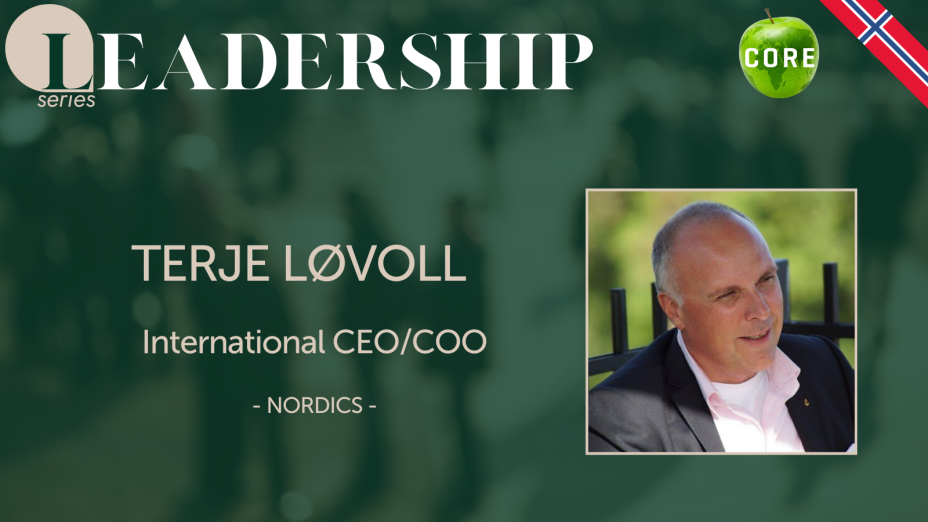
The CORE Leadership Series tells the stories of inspiring leaders making an impact across the industry, worldwide.
Terry Løvoll is an international CEO/COO with more than 20 years of experience leading operational turnarounds, industrial transformations and large‑scale P&L responsibilities across Europe, Africa, Asia and the Americas. He has held senior roles in energy, maritime, industrial and technology sectors, including leadership of OEM and engineering operations delivering directly to global operators such as Equinor, Shell, Technip, Aibel and Saipem. Known for his structured leadership style, cross‑cultural capability and ability to stabilise complex organisations, he brings a Nordic approach
Tell us a little about yourself and your business.
I am an international CEO/COO with more than two decades of experience leading operational turnarounds, industrial transformations and large-scale P&L responsibilities across energy, maritime, industrial and technology sectors. My work spans Europe, Africa, Asia and the Americas, often in environments where structure, governance and operational discipline must be rebuilt. I focus on stabilising organisations, strengthening performance and enabling long term operational resilience.
What motivates you in your work and what do you find most fulfilling about being a business leader?
I am motivated by creating clarity in complex environments and building organisations that perform reliably under pressure. The most fulfilling part of leadership is seeing teams grow in capability and confidence, especially when they realise, they can deliver far more than they initially believed.
Thinking about the current macro-economic and social environment, what shifts do you believe will redefine “success” in the coming years?
Success will increasingly be defined by operational resilience, workforce adaptability and the ability to execute consistently despite volatility. Cost pressure, sustainability expectations and talent scarcity will force organisations to simplify structures, strengthen leadership capability and invest in technology that enhances—not replaces—human performance.
What skills or mindsets do you think will be most important for the next generation of leaders?
The next generation must combine analytical discipline with emotional intelligence. They need the ability to lead through ambiguity, make decisions with incomplete information and maintain composure under pressure. Equally important is the ability to build trust quickly across cultures, functions and geographies.
What’s the most important leadership lesson you’ve learned?
That clarity is a form of respect. People perform best when expectations, priorities and decision-making frameworks are unambiguous. When leaders remove noise and create structure, organisations accelerate.
How do you prioritise tasks when everything feels like a priority?
I anchor decisions in three filters: impact, risk and time sensitivity. What protects the business, the people and the customer comes first. Everything else is sequenced. Prioritisation is not about doing everything — it is about doing the right things in the right order.
Have there been any hard decisions you had to take as a business leader?
Yes, restructuring teams, exiting underperforming operations and making rapid decisions in high-risk environments. Hard decisions become manageable when they are grounded in facts, fairness and transparency. People may not always agree, but they will respect the process.
How has your leadership philosophy evolved over the past few years of rapid change?
I have become more focused on psychological safety and structured communication. In volatile environments, people need leaders who are calm, predictable and transparent. Stability in leadership creates stability in performance.
What values or behaviours do you consider essential for leadership teams today?
Integrity, clarity and accountability. Teams that communicate openly, align quickly and execute consistently outperform those that rely on charisma or improvisation. Modern leadership is less about personality and more about disciplined behaviour.
What advice would you give emerging leaders who want to shape the future?
Develop range. Build competence across functions, cultures and industries. The leaders who will shape the future are those who can operate globally, think strategically, act decisively and communicate with clarity. And above all, stay curious!
Author
Date Published: 3rd March 2026
