
Business Leaders interview: Mario Alberto
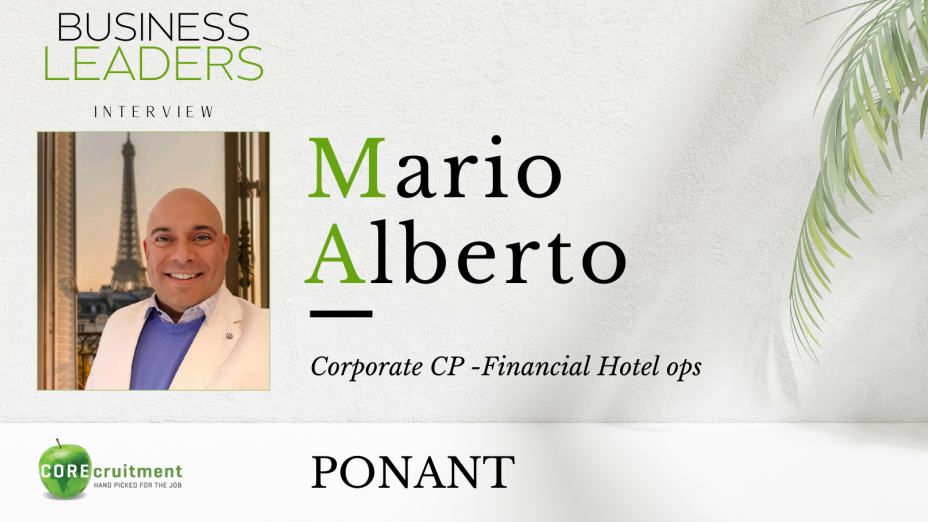
Tell us a little about yourself and your business.
I am originally from Costa Rica, and I have a deep passion for hospitality. After studying Strategic Hospitality Business Management in Cornell University, I have had the privilege of working with some of the world’s most influential and service-driven companies, including The Walt Disney Company, Cunard Line, Mandarin Oriental, and PONANT, to name a few. As the Corporate Chief Financial Officer for PONANT Ultra-Luxury Cruises, I take great pride in leading a team of dedicated, highly ethical hospitality professionals who consistently deliver exceptional service while making hard work look effortless and enjoyable.
What motivates you in your work and what do you find most fulfilling about being a business leader?
I am highly motivated by the end result of our hard work and dedication. Seeing our guests and crew highly satisfied as a direct outcome of our efforts fills me with pride. It is incredibly rewarding to witness the tangible, positive impact we create through our unwavering commitment to excellence, making a real difference in their experience.
How did you develop your leadership skills and how would you define your leadership style?
I have developed my leadership style from a wide range of experiences, learning from both exceptional and less-than-ideal managers I’ve encountered throughout my career. These experiences have shaped me into the hospitality leader I am today. I would describe my leadership style as firm but fair, with a genuine open-door policy that prioritizes listening to understand, rather than just to respond. I firmly believe that my approach to business is grounded in the principle that both customers and employees are, above all, human beings. This "Human to Human" approach is key to how I conduct my leadership and interactions.
Innovating is crucial in our very diverse industry. How do you stay ahead of trends and incorporate them into your global strategy?
Innovation is a critical component of success for both leaders and companies. Continuous personal innovation is essential, requiring us to stay informed through reading, staying engaged, and remaining alert to the latest industry trends and developments that impact the business community. These are just a few of the steps necessary to stay ahead of the curve. Additionally, participating in forums, conferences, and updated training programs plays a vital role in ensuring we remain at the forefront of our field, driving growth and maintaining a competitive edge.
What do you consider to be the key component(s) of effective business operationaldevelopment?
We live in a highly technological era, where it can be easy to overlook the fact that business remains deeply emotional. Building emotional connections with our employees, teams, external customers, and business partners is essential for effective operational success. While the transactional aspects of business will always exist, creating a special, unique, and emotionally engaging experience fosters a deeper attachment to our brand. This connection strengthens loyalty, enhances team morale, and ensures long-term relationships with both internal and external stakeholders.
How do you approach identifying areas for improvement within a company's operations?
Change is inevitable, and continuously reviewing our Standard Operating Procedures (SOPs) is essential to staying ahead in today’s dynamic business environment. It's crucial to assess what is working, or not, based on the company’s current needs and conditions. We must approach our business with fresh eyes, as if seeing it for the first time. What was effective five years ago may now be outdated, and adapting to the present demands ensures we remain competitive and innovative.
Where do you think the most promising investments should be focusing on and/or made on?
Innovation, employee training, branding and onboarding, consistent product delivery, customer service experience, communication, and quality assurance audits.
What is or are your biggest career achievement(s)?
I have learned how to lead my self.
Do you have examples where your leadership made a difference? If so, what were they?
I have been fortunate to lead many individuals throughout my career, and receiving an email or letter from them expressing gratitude and explaining how I have helped guide them is something that fills me with pride. These moments reaffirm the impact of effective leadership and the importance of supporting others in their professional growth.
What’s the most important leadership lesson you’ve learned?
Humbleness
How did you identify and seize opportunities for advancement in your career?
Recently, I was offered the position of Director of Hotel Operations for an outstanding brand—one I had been eager to join for several years. However, the timing of the transition was not ideal. My integrity and ethics would not allow me to leave my current employer in a difficult situation, as I am fully aware of the level of responsibility I hold and the time required for a proper handover. It is essential to me that I honor my commitments and ensure a smooth transition before moving on to new opportunities.
Have you achieved everything you wanted in your career so far?
Still a work in progress!
How important is personal development to your success, and how do you approach it?
Personal development is incredibly important to me. Every day, I dedicate time to learning and practising, guided by the saying, "Every day we win or we learn." Growth is an ongoing process with no endpoint, and I approach it naturally, ust as I need to nourish my body to live, I need to feed my mind to grow. Continuous learning is essential for both personal and professional success.
How do you prioritise tasks when everything feels like a priority?
I am very methodical in my approach to work. Each day, I prepare my agenda in advance, clearly highlighting my priorities. I categorize my tasks into critical, urgent, and important items, ensuring that I focus on what truly matters while effectively managing the rest of my responsibilities. This structured approach allows me to maintain productivity and stay organized.
What was the hardest decision you have taken as a leader?
People are at the heart of any organization. Whether hiring the next manager or letting go of an employee, these decisions are crucial. While other aspects of the business can be challenging, dealing with personnel is particularly significant, as individuals in leadership positions have the power to build or dismantle a team. Ensuring that the right person is in a leadership role is essential for fostering a positive and productive work environment.
What steps do you take to measure your own performance?
I ensure that my teams have all the necessary tools and training and are knowledgeable about all Standard Operating Procedures (SOPs) related to their roles. From day one, I set clear expectations and offer any support needed to clarify any uncertainties. We hold regular one-on-one meetings to identify any obstacles that may arise during our journey, allowing us to address and resolve them promptly.
When issues occur, I first assess whether the SOP has been followed precisely. If it has, the problem may lie with the SOP itself rather than the employee. If I notice a drop in an employee's performance, I make it a point to check in with them to see if everything is okay on their end. Personal challenges, such as a sick family member or a difficult marriage, can significantly impact an employee's emotional well-being. While I may not be able to resolve these issues, understanding the employee's situation helps inform my decisions and support them better.
What does success mean for you as a business leader?
Success is a delicate balancing act that involves delivering a service or product to customers in a way that fosters a strong desire for more. It requires cultivating a community of employees who come to work happily and are committed to providing superb quality products and services that they take pride in.
A successful environment is one where employees fall in love with the brand even before the customers do. When customers return home, sharing their experiences with friends and family, they create a ripple effect that brings others to witness our teams in action. This word-of-mouth enthusiasm is the essence of a business leader’s success!
Author
Date Published: 8th October 2024
