Leadership series: Nikki Taylor
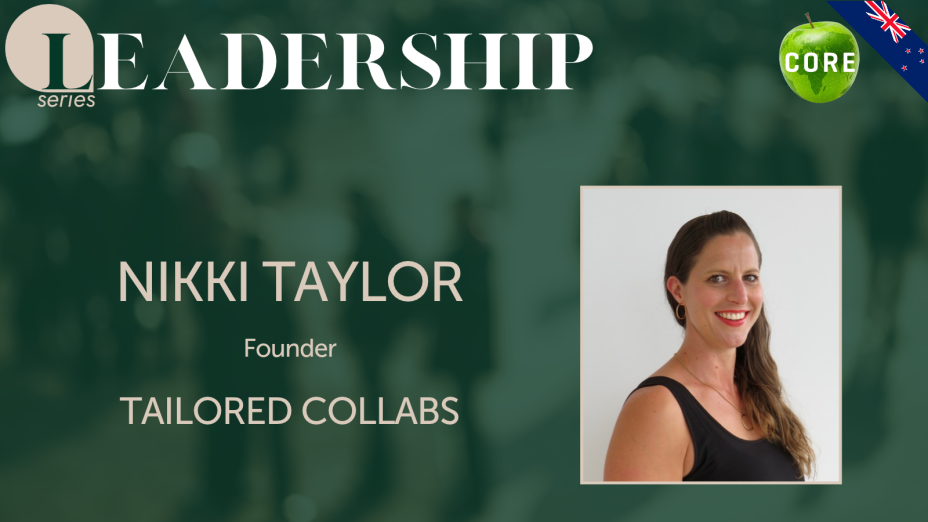
In our Leadership interviews Series, we feature exceptional and inspiring industry leaders.
We are here speaking with Nikki Taylor, Founder of Tailored Collabs
Tell us a little about yourself and your business.
I'm the founder of Tailored Collabs, helping organisations and individuals successfully navigate change through growth, new leadership, restructure and other major transitions. I deliver Sustainable Leadership keynotes and workshops, manager capability development, strategic people and culture consultancy, and coaching on leadership, burnout, and life and career crossroads.
I've spent more than 20 years in people leadership, 17 of them working internationally across hotels, restaurants, bars, members' clubs and retail. I was part of the pre-opening team for four five-star Mövenpick hotels in Dubai and the task force that opened the brand's first hotel in India, led people and development at Wahaca as it grew from 4 to 21 sites, and ran HR for COYA across the UK, the UAE, Europe and the US. Back home, I built AS Colour's People and Culture function across New Zealand, Australia, the US and the UK.
Curiosity has always outweighed comfort for me. I've usually arrived in a new country without a job and knowing very few people, so I understand change from the inside. That shaped my Notice, Name, Navigate approach: noticing what we carry into change, naming what's happening and what we need, and navigating it through connection. I recently used it in a How We Show Up in Change workshop with the People team of a large tertiary education provider operating across New Zealand and Australia. They called it one of the most thought-provoking sessions they'd had together.
Looking back, what has been the most pivotal moment in your career, the one that changed how you lead today?
Finally learning a lesson I'd been nudged to learn several times.
Burnout has shown up at different points in my career. The most recent was my third, and the most severe. I've always cared a lot about the people and organisations I work with, but continually giving more and putting everyone else first eventually comes at a cost.
After that third time, I stepped back. I took time off, travelled, and worked part time while I wrote my first book, Is This It? Essential Lessons to Navigating Midlife Confusion with Confidence, about change, personal and professional, whether we choose it or it chooses us.
That's when I realised sustainable leadership isn't about caring less or lowering your standards or ambition. It's about achieving without depleting yourself. I've made significant changes to how I live and work. Now, before saying yes, I ask whether I can add value, whether it's the right fit, and what the opportunity cost is.
What's the most important leadership lesson you've learned, and where did you learn it the hard way?
That your work doesn't always speak for itself.
For a long time, I believed that if I delivered, the results would be noticed. They often were, just not always as mine. I wasn't in the meetings, on the golf courses or at the after-work drinks where others shared their results with leaders, and more than once someone else took the credit.
Learning to back my own work with confidence was hard-earned. It isn't self-promotion. It's making sure decision-makers have the full picture, and it's something I now work on with the leaders I coach. It has also shaped how I lead: good leaders make sure credit lands where it belongs.
What's surprised you most about building Tailored Collabs, moving from shaping culture inside a business to advising several from the outside?
How much value an outside view brings. The people inside bring context I don't have. I bring experience across countries and industries, which helps me spot patterns that are easy to miss from within, and the independence to raise them honestly.
For one client, I gave the CEO evidence-based feedback on several leaders' capability, including how to get the best from each person and options where someone wasn't in the right role. In some businesses, tenure can become confused with performance, and the feedback helped the CEO see their leadership team’s capability differently.
Alongside that, I hired 15 people in 10 weeks while improving the recruitment process and coaching leaders to hire for the skills their teams were missing, rather than people like themselves or whoever could start soonest. We halved the time to hire from six weeks to three, excluding notice periods, and the standard of talent coming into the business rose.
AI cut administrative tasks such as adverts, interview notes and reference checks from around 30 minutes to three, giving me more time with candidates and hiring managers. I still reviewed qualified candidates' CVs myself, because AI can miss the transferable skills that make great hires.
What distinguishes the businesses that genuinely retain and grow talent from those that just talk about culture?
They deliver on what they promise.
The employee experience starts long before someone's first day, which is why your recruitment team matters so much: they're helping choose the people you build your business with. Once someone joins, their experience needs to match what they were promised, or trust quickly erodes.
Development is where retention is really won: investing in people and having honest career conversations while they're with you. At Wahaca we cut staff turnover by 50% in two years through training, structured career paths and culture, and at AS Colour 35% of roles were filled through internal promotion.
Businesses that blame their people or the talent market without examining their own employee experience will keep repeating the cycle.
Frontline manager capability keeps coming up as the biggest lever for culture and retention in hospitality and retail. What's the one thing most organisations still get wrong about supporting their managers?
They promote brilliant operators and assume the title makes them great people leaders.
Then we hand them a team, targets and a P&L, and expect them to handle difficult conversations and performance issues without ever being shown how. That's where culture is won or lost, because managers shape hundreds of everyday interactions that HR never sees, and poor management stops capable people doing their best work.
I've built training and career pathways from operational roles through to senior leadership in several businesses, because leadership development should start before someone receives the title, not afterwards.
Managers also need to lead the whole person. We talk about leaving our personal lives at home, but there's only one of us. Great managers notice when someone is navigating a difficult season and know how to support them while still enabling them to contribute. Many organisations don't teach these skills, yet they can be taught, and it's a big part of my manager capability work with clients today. Organisations that invest in these skills will have a competitive edge.
Wellbeing and mental health have moved from a policy on paper to something businesses are expected to act on. How do you help leaders build that into daily operations rather than a once-a-year initiative?
Wellbeing changes as people's lives do, whether they're raising children, caring for parents, navigating health changes or questioning what's next. Those people are often your most experienced and hardest to replace.
It starts with how work actually happens. If someone is given another project, what's coming off their list? Are we respecting people's time on leave, or sending the "sorry to bother you" email anyway? EAPs have their place, but they can't compensate for unsustainable ways of working. In one business, the wellbeing initiatives we introduced improved engagement and reduced sick leave across our head offices.
That's the heart of my Sustainable Leadership keynotes and workshops: designing sustainable performance into how work happens. I recently spoke on wellbeing and burnout at a joint conference for three medical organisations. The organiser described the talk as integral to what they wanted to achieve and said the interactive elements helped turn insights into actions they'll now put into practice in the coming weeks.
What's the one thing you wish every CEO understood about the connection between culture and commercial performance?
Culture isn't only HR's responsibility. It belongs to the whole business, and it has a very real commercial impact.
HR provides the frameworks, expertise and challenge, and has to earn its credibility commercially. But managers and leaders create the everyday interactions that shape someone's experience of work. It's difficult to hold any function accountable for an outcome if it has little influence over the decisions that determine it.
Businesses underestimate the invisible cost of getting people decisions wrong. When a good person leaves, productivity drops, knowledge walks out the door, others absorb the workload, and then you pay to replace them. When margins are tight, few businesses can afford that.
Investing in people and managing costs aren't opposites. Throughout my career, I've reduced costs and improved productivity by helping people feel valued, because people who feel valued deliver more. At AS Colour we cut recruitment costs by over 50% and time to hire by 21 days, and at COYA we reduced the cost of hiring by 90% through open days and internal development. How you hire, lead and develop people isn't separate from commercial performance. It is commercial performance.
Have you achieved everything you set out to in your career so far, or is there still an unfinished chapter?
I've achieved far more than my younger self imagined, but I definitely don't feel finished.
There have been some real pinch-me moments: walking to work in Mayfair and realising I was working on the Monopoly board, being on the task force that opened Mövenpick's first hotel in India, seeing people from my HR teams now running their own, and having Is This It? become an Amazon #1 bestseller across multiple categories. Becoming an author reminded me how exciting it is to be a beginner again.
Today, through Tailored Collabs, I work with leadership teams across New Zealand and Australia, and I'd love to take more of that work into the UK and the UAE, where so much of my career was built.
There are definitely more chapters to write. Quite literally.
Author
Date Published: 2nd October 2026
