
Leadership series: Sebastian Moritz
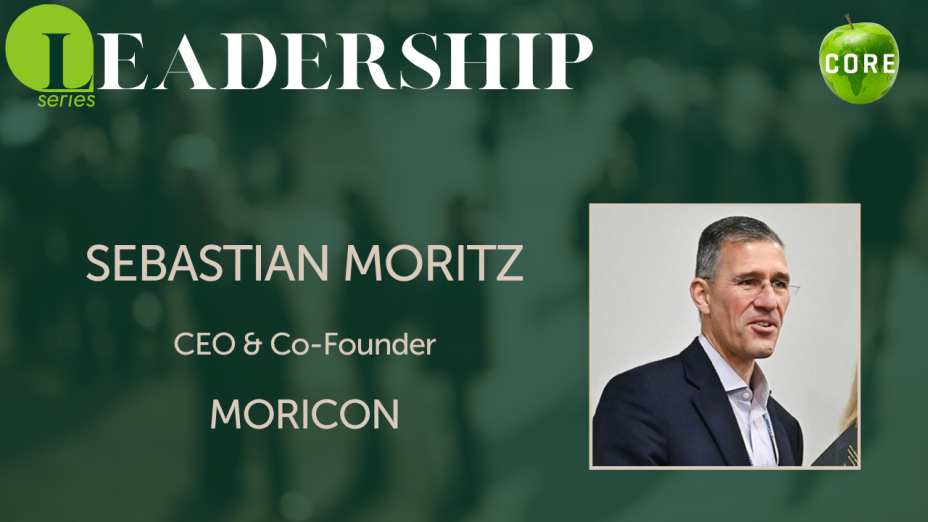
Our CORE Leadership Series showcases leading figures in the industry through detailed, insightful interviews.
We are here interviewing Sebastian Moritz, CEO & Co-Founder of Moricon, a UK-based boutique consultancy firm specialising in bringing hospitality-grade service standards to the residential property sector.
Tell us a little about yourself and your business.
I spent years in luxury hotel operations, working through pre-opening programmes for major international brands — the process of building a service operation from nothing, establishing standards, training teams, and measuring performance before a single guest arrives. That work gave me a deep understanding of what it actually takes to deliver consistent, high-quality service at scale. What I noticed, and what led to MORICON, was the gap. The residential sector — particularly BTR and branded residences — had borrowed the language of hospitality. 'Hotel-style living.' 'Five-star service.' Concierge amenities. But the operational infrastructure that makes those promises real in a hotel wasn't present. The standards, the training frameworks, the measurement systems — they weren't there. MORICON exists to close that gap. We work across the full residential lifecycle: from the planning and design stage, where operational decisions are made that will shape service delivery for years, through pre-opening, and into live operations. Our three service lines — consulting, learning-as-a-service, and independent mystery shopping — work together as a single system. Diagnose, design, develop. That's how we work.
What do you see as the biggest challenges currently facing the landscape and how will a business like yours respond?
The single biggest challenge is the gap between what the sector promises and what residents actually experience. The physical product in BTR has improved dramatically. Buildings are better designed, better specified, better marketed. But operational delivery hasn't kept pace. Our mystery shopping programme — with over 300 audits across the sector — consistently reveals this. The most striking finding isn't the gap between good operators and poor ones. It's the variation within a single property: the same building, the same team, the same documented standards. Tuesday morning, a prospect receives a polished, consultative experience. Thursday evening, a transaction. One lettings consultant personalises the tour. Their colleague goes through the motions. Residents don't compare you to a competitor they've never visited. They compare today to last week. The Renters' Rights Act creates a compliance moment. Our view is that compliance is the floor, not the ceiling. The operators who respond well won't just meet the legal minimum — they'll use this as the catalyst to build the service infrastructure that should have been there from the start. The response from MORICON is the same as it's always been: measure accurately, design specifically, develop continuously. Not one-off interventions. A system.
Are you expecting consumer, or in your sector resident, expectations to shift this year?
The honest answer is that expectations have already shifted — the sector is still catching up. We've been telling prospective residents for years that they're choosing a lifestyle, not just a flat. Hotel-style living. Concierge service. A sense of genuine welcome. That marketing has raised the bar that operators now have to clear every day, in every interaction, with every team member on every shift. What I expect to see accelerate in 2026 is the commercial consequence of falling short. With the Renters' Rights Act increasing security of tenure, residents stay longer. Longer residency means more touchpoints, more opportunities to experience the gap between the promise and the reality, and ultimately more motivation to leave when the service doesn't match what was sold. The operators who understand this are already investing in operations. The ones who don't are going to find that a beautiful building and a competitive rent aren't enough. Residents talk. Reviews accumulate. And the cost of replacing a departing resident — marketing, void periods, administrative overhead — is significant. Retention isn't a soft metric. It sits directly in the NOI calculation. Expectations will keep rising. The question for every operator is whether their service operation is set up to rise with them.
What do you believe will distinguish the leading service providers over the next decade?
The distinction will be operational. Not the quality of the building — that's becoming table stakes. Not the amenity offering — the market has broadly converged. The differentiator over the next decade will be the ability to deliver consistently, at scale, across an entire portfolio, regardless of which team member is on shift. This sounds straightforward. It isn't. Consistency requires infrastructure: clear behavioural standards, not vague principles. Structured development programmes, not one-off inductions. Regular independent measurement, not annual tick-boxes. And leadership that treats service quality as a commercial priority, not a soft one. The operators I expect to lead the sector are those who build this infrastructure now, before competitive pressure forces them to do so. The ones investing in pre-opening operational readiness. The ones measuring consistency alongside averages. The ones who understand that 30–40% staff turnover isn't a labour market problem — it's a culture and standards problem — and that solving it has a direct return on the P&L. The hospitality sector learned all of this decades ago. The best residential operators are learning it now. The ones who learn it fastest will lead.
Where do you think the most promising investments should be focused on and/or made?
The most underleveraged investment in this sector is operational infrastructure. Not the physical building — that gets enormous attention and capital. The systems, standards, and training that determine whether the building delivers on its promise once residents are living in it. Our mystery shopping data is instructive here. The gap between a building's physical quality and its service quality is often significant — and it's the service quality that drives retention and referrals, not the gym's specifications. Closing that gap is not expensive relative to the returns it generates. Reducing annual churn by even a few percentage points in a 200-unit scheme represents a material improvement in NOI. For developers, the most valuable investment is pre-opening operational readiness. The decisions made at the planning and design stage — how teams are structured, what standards are set, how training is designed, how service is embedded before handover — determine the operational baseline that will take years to shift if it's wrong. Bringing in operational expertise at that stage, rather than after problems emerge in operations, consistently yields the best return on investment. For operators, the case for continuous independent measurement is similarly strong. You cannot manage what you don't accurately see. Internal assessment doesn't give you that. An independent programme that measures consistently gives you the data to intervene early and track whether interventions are working.
What is or are your biggest career achievement(s)?
The work I'm most proud of sits at the intersection of scale and specificity. The Accor One Living project is the clearest example — building the operational standards framework for a global brand's residential division from the ground up. That project required us to do something genuinely difficult: take the principles of luxury hotel operations and redesign them for a residential context where guests become residents, where relationships are measured in years rather than nights, and where the standards need to work for a team member in their first week as much as a senior manager with a decade of experience. What made it significant wasn't just the scale. It was the rigour. Understanding not just what standards should look like, but how they need to be communicated, trained, embedded, and measured in a residential operation. That process sharpened everything MORICON does. The other achievement I'd point to is the audit programme. Over 300 mystery shops across the sector have given us something rare: an evidence base. The 18% finding — that nearly one in five prospective residents receives no follow-up after a viewing — came directly from that data. It's not a theoretical problem. It's a measurable, quantifiable revenue leak. When you can show an asset manager that number and connect it to their yield model, the conversation changes.
What's the most important leadership lesson you've learned?
The most important lesson, and the one I find myself returning to most often with clients, is that operational excellence is a design problem before it is a people problem. When service is inconsistent, the instinct is to look at individuals — who isn't performing, who needs coaching, who needs to be managed. Sometimes that's right. But more often, when you examine what's actually happening, the root cause is upstream. Standards that sound clear but prove ambiguous in practice. Training is delivered once at induction and never reinforced. Management attention that tracks presence rather than behaviour. A measurement system that reports averages and conceals the variation that's actually damaging trust. The people on the front line are usually trying. What they lack is the infrastructure to perform consistently. And that infrastructure is a leadership responsibility, not a team member's. The practical consequence of this is a discipline I've tried to build into everything MORICON does: diagnose accurately before prescribing. Understand what is actually happening, and why, before deciding what to do. That requires independent measurement — because internal observation doesn't give you an accurate picture. And it requires the willingness to accept that the gap between how you think your operation performs and how residents actually experience it might be larger than you expect. The operators who accept that and act on it are the ones who improve.
What does the industry need more of (or less of) to continue thriving?
More of: operational honesty. The sector needs to close the gap between what it says it delivers and what an independent observer actually experiences. That requires more investment in third-party measurement — not because operators are being dishonest, but because internal assessment is structurally limited. You cannot accurately measure your own service when your teams perform differently because they know they're being watched, and when leadership sees what it expects to see rather than what's actually there—more of: pre-opening operational discipline. The residential sector invests heavily in design. The building arrives at practical completion, beautifully specified and often very well thought through from architectural and interior design perspectives. The operational framework — standards, training, team structure, measurement systems — is frequently either absent or generic. That's the investment the sector needs to make earlier in the development cycle. Less of: hospitality as aesthetic. The language of hotel-style living has become so common in the sector that it's almost meaningless. What the best operators are starting to understand is that the differentiator isn't the lobby finish or the gym specification. It's whether the team member at reception knows a resident's name, whether a prospect gets a follow-up call after a viewing, whether the service on Thursday evening matches the service on Tuesday morning. That's hospitality. That's what the sector needs more of — and it comes from investment in people, systems, and measurement, not from the specification sheet.
What is your long-term vision for your organisation, and what legacy would you like to leave within the industry?
The long-term vision is a sector that takes operational quality as seriously as it takes physical quality. Buildings in this country are getting better. The design, specification, and sustainability standards are improving year on year. The operational side — the training, the standards, the measurement — needs to catch up. For MORICON, that means becoming the recognised home for that expertise across the full residential lifecycle. Not the business you call when something has gone wrong in operations, but the partner you bring in from the planning stage, who helps shape how a building will be operated before a single resident moves in, and who stays engaged through the operational life of the asset. That whole-lifecycle, whole-asset-class proposition is what we're building towards. The legacy I'd want to leave is simpler than that. It's that the operators we worked with didn't just improve their mystery shopping scores — they changed the way they think about their teams, their residents, and what it means to deliver on a promise. That the people who live in the buildings we've worked with have a genuinely better experience of being at home. That's what 'bringing hospitality home' means in practice. Not the aesthetics. The experience.
Author
Date Published: 10th June 2026
