
Leadership interview series: Tiago Castro
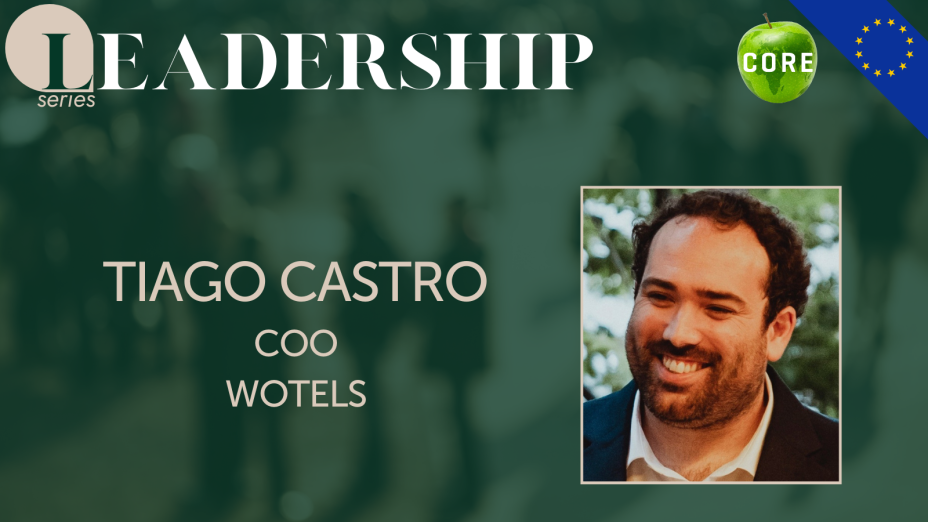
Our CORE Leadership Series showcases leading figures in the industry through detailed, insightful interviews.
We are here featuring Tiago Castro, Chief Operating Officer at WOTELS.
Could you briefly introduce yourself, your role, and the core mission of your organization within the hospitality landscape?
I’m a hospitality operator with a background in building and scaling hotels and hybrid hospitality concepts across different markets and formats. Today, as COO at Wotels, my role is to translate vision into day-to-day execution, ensuring that our teams, systems, and standards work together to deliver consistent results while preserving the soul of each property.
The core mission of our organization is to create places that feel genuinely welcoming and inclusive, where people from all walks of life feel a sense of belonging. We believe great hospitality is not defined by star ratings, but by the experience people take with them when they leave, and by how strongly they feel connected to a place long after checkout. Our focus is on combining strong operational discipline with thoughtful design, convenient locations, technology, and, above all, great teams who take pride in what they do.
What initially inspired you or sparked your interest in pursuing this career?
What drew me to hospitality was the human exposure. From very early on, I was fascinated by the idea of working in an environment where you interact daily with people from different cultures, backgrounds, and life stories. That constant exchange opens your perspective and forces you to remain curious, adaptable, and empathetic.
Over time, what kept me in the industry was the impact hospitality can have when it’s done well. Seeing guests check out knowing they’ve had a genuinely meaningful experience is incredibly rewarding. Great hotels don’t just provide a service; they create memories and a sense of connection that stays with people long after they leave.
What do you see as the biggest challenges currently facing the landscape where you are, and how should a business like yours respond?
One of the biggest challenges today is maintaining quality and identity while operating in an environment of rising costs, labour shortages, and a rapidly increasing supply that is not always matched by demand. Many businesses are under pressure to standardize and cut back, which often leads to experiences that feel interchangeable and disconnected from their original purpose.
The response has to be intentional. Businesses need to be disciplined with data, costs, and processes, while at the same time protecting what makes their offering distinctive. That means investing in leadership, embracing technology that genuinely supports teams, and being very clear about priorities. Trying to do everything usually results in doing very little well. Focus, consistency, and strong execution will be critical to navigating the current landscape.
Thinking about the macro-economic and social environment, what shifts do you believe will redefine “success” for our sector in the coming years?
Success in hospitality is moving away from purely short-term financial metrics toward a more balanced and resilient model. Cost pressure, labour scarcity, and changing guest expectations are forcing the industry to rethink what sustainable performance really looks like.
In the coming years, the businesses that succeed will be those that invest in their people, use data and technology intelligently, and design experiences that feel authentic rather than standardized. Guests are increasingly sensitive to value, but value today is not about luxury or scale. It’s about relevance, consistency, and emotional connection. At the same time, employee experience will become a leading indicator of business performance (it is actually one of our main priorities at Wotels in 2026), not a secondary consideration. Organizations that manage to align commercial discipline with strong culture and clear standards will be the ones best positioned to grow in an increasingly complex environment.
What do you believe will distinguish the leading service providers over the next decade?
The leading service providers will be those that manage to combine operational excellence with a strong sense of identity. Scale and efficiency will remain important, but they won’t be enough on their own. What will truly differentiate brands is their ability to create experiences that feel human, relevant, and consistent across locations without becoming generic.
Hybrid models will continue to grow for sure, blending accommodation, work, social spaces, and community, but only if they need to be supported by clear standards and well-trained teams. Technology will play a critical role, not as a replacement for hospitality, but as an enabler that removes friction for both guests and employees. Ultimately, the winners will be organizations that understand that experience, culture, and performance are deeply interconnected and must be managed together, not in silos.
What’s the most important leadership lesson you’ve learned?
The most important lesson I’ve learned is that clarity is one of the greatest forms of respect. Clear expectations, clear standards, and clear feedback (even when conversations are difficult) create far more trust than trying to protect people from discomfort.
Early in my career, I believed strong relationships alone could carry teams through challenges. Over time, I’ve learned that high-performing environments require fairness and consistency above all else. When people understand what is expected of them and know that standards apply equally to everyone, they feel safer, more empowered, and more committed to delivering their best work.
How has your leadership philosophy evolved, especially over the past few years of rapid change?
My leadership philosophy has become more focused on outcomes, trust, and prioritization. I’ve moved away from the idea that leaders need to be everywhere or involved in everything. The more responsibility I’ve taken on, the more aware I’ve become that there’s always more to learn from teams, from data, and from the mistakes you make along the way. Instead, I believe strongly in setting a clear direction, providing the right data and tools, and then trusting teams to execute.
Especially over the last year, I’ve been reminded of the importance of speed and decisiveness. When you have reliable data, delaying decisions usually comes from fear rather than strategy. I’ve also become much more intentional about where I invest my time and energy, focusing on what truly moves the business forward and letting go of noise. This shift has made me a more effective leader and has helped create teams that are more autonomous, accountable, and resilient.
What advice would you give emerging leaders who want to shape the future of hospitality?
Take the work seriously, but don’t take yourself too seriously. Hospitality is demanding, fast-paced, and often unforgiving, so it’s important to enjoy the process and stay connected to why you chose this industry in the first place.
Be ambitious but protect your energy and your time. Learn to prioritize early, make decisions with the data you have, and don’t be afraid of accountability. For yourself (especially for yourself!) and for others. And finally, remember that success at work means very little if it comes at the expense of the people, you’re building it for, both inside and outside the organization.
Author
Date Published: 12th January 2026
