
Leadership series: Victor Simmons
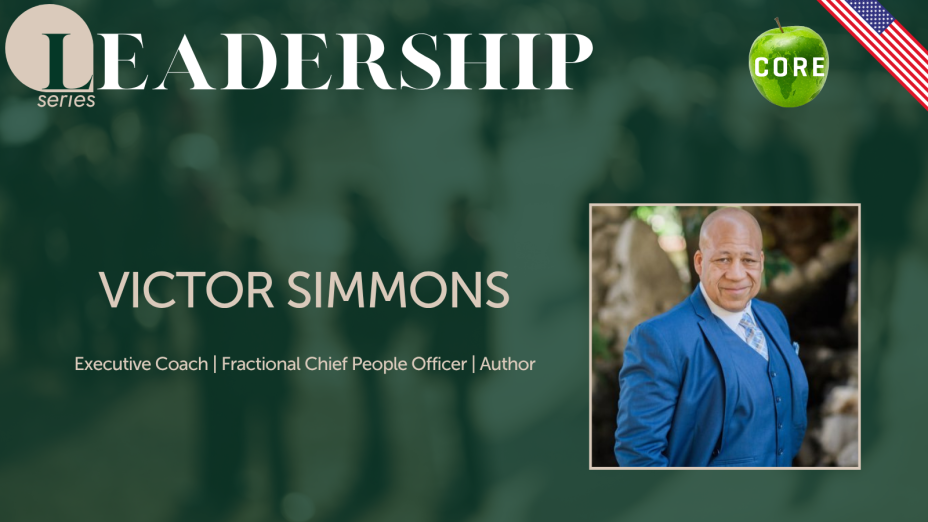
In our CORE Leadership Series, we explore the people behind industry leadership through in-depth interviews.
In this interview, we speak to Victor Simmons, Executive Coach| Fractional Chief People Officer | Author
Tell us a little about yourself and your business.
I’ve spent my career in hospitality working my way from frontline roles to executive HR leadership across multi-property hotel groups. That journey shaped how I see leadership. It is not about title. It is about presence.
Today, I lead Victorious Endeavors, where I work with organizations on leadership development, workplace culture, and building systems that actually support performance. My focus is helping leaders operate with clarity, accountability, and consistency in environments that are often high-pressure and fast-moving.
I am also the author of The Presence-Driven Leader, which reflects the core belief behind my work: the way a leader shows up determines what a team is willing to say, do, and ultimately achieve.
What do you see as the biggest challenges currently facing the landscape and how should a business respond?
The biggest challenge is not labor. It is leadership consistency.
Most organizations are still trying to solve today’s problems with outdated leadership habits. In hospitality, especially, there is a gap between expectations and execution at the management level.
The response has to be operational, with clear standards and consistent accountability. Leaders who are trained not just to manage tasks, but to manage behavior and performance in real time.
The companies that win will be the ones with the most disciplined leadership practices.
What shifts will redefine success in the coming years?
Success is shifting from growth at all costs to sustainable performance through people systems.
Margins are tighter, expectations are higher and talent is more selective. What will redefine success are leaders who can build repeatable culture, organizations that treat manager effectiveness as a business priority and a stronger link between culture, accountability, and financial performance. Culture is no longer a soft concept. It is an operating system.
What skills or mindsets will be most important for the next generation of leaders?
The next generation will need, the ability to have real conversations, not avoid them, comfort with accountability without apology and emotional awareness paired with performance standards. A lot of emerging leaders have been taught to prioritize being liked. In my opinion that will not scale. The leaders who stand out will be those who can build trust while still holding the line.
What’s the most important leadership lesson you’ve learned?
Your behavior teaches your team how to operate. If you overreact, they will hesitate if you ignore issues, they will lower the standard and if you avoid hard conversations, they will do the same. Leadership presence is not about being perfect. It is about being consistent enough that your team knows what to expect.
How has your leadership philosophy evolved over the past few years?
Earlier in my career, I focused heavily on support and development. Over time, I realized that support without structure creates confusion. Now my philosophy is simple, clarity first then ensure they know the standards and then provide support. People perform better when they understand exactly what is expected and know that those expectations will be upheld consistently.
How do you balance commercial performance with staff well-being and culture?
There is no balance, they are directly connected. When leaders treat well-being as separate from performance, both suffer. Strong culture is built through, clear expectations, fair accountability and consistent leadership behavior. When those are in place, engagement improves, turnover stabilizes, and performance follows. The mistake is trying to fix culture with perks instead of leadership discipline.
What advice would you give emerging leaders?
Stop waiting to feel ready and start leading with intention now. Say what needs to be said, address issues early and be clear about expectations. Also understand that leadership is not about being the most knowledgeable person in the room, it's about creating an environment where the truth can show up. If your team feels safe being honest, you have a chance to lead effectively and if they don’t, nothing else matters.
Author
Date Published: 6th May 2026
