
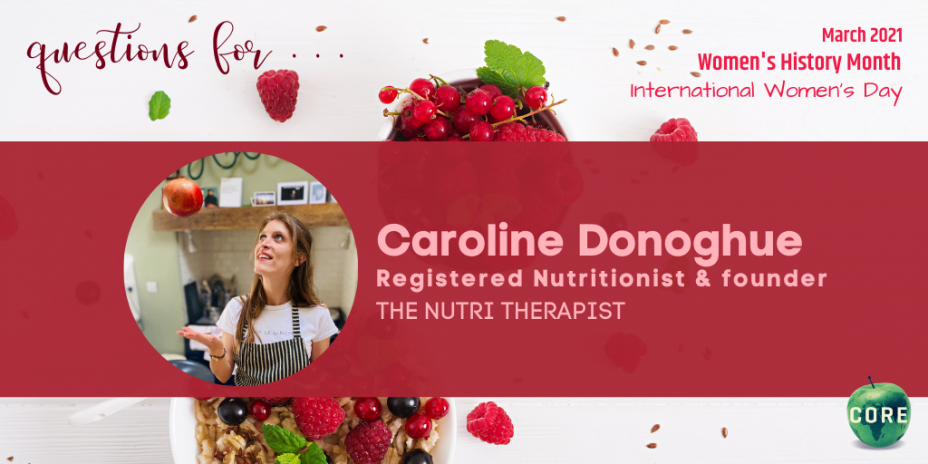
Questions to Caroline Donoghue, Registered Nutritionist and founder, The Nutri Therapist
What does IWD mean to you?
A celebration, a time for recognition. It’s also a time for society and companies to do better for women.
How would you address the cultural issues that form the background of the gender pay gap?
To answer this fully would be to solve an issue which dates back way before my time!
Fair and open assessment processes for all roles would make a huge difference. Organisations must ensure that women have an equal opportunity when going forward for senior roles. Historically this hasn’t always been the case. Cross-gender mentoring schemes can also be highly effective in removing ‘glass ceilings’ for women and breaking down gender stereotypes.
Why haven't we achieved equality, despite legislation in place regarding pay?
Again, it’s a combination of factors but salary reviews should be more regulated and HR departments should rectify pay gaps as soon as possible.
How would you advise young women leaders on how to build confidence in their ability as a manager and leader?
Trust your instincts - there is no failure, only learning opportunities.
What advice would you give to the next generation of female leaders?
Support other women. We will be stronger if everyone can recognise each other’s strengths.
What initiatives should companies invest in to promote women in leadership?
Too often, women lose an opportunity to get promoted because they’re on maternity leave or because they have asked for flexible/part time work to look after their children. Companies should always make sure new mums are informed during their maternity leave and more support is needed for when women decide to come back to work.
Who/what has motivated you to become what you are now?
My mother who managed to have a successful career whilst looking after 3 children on her own. I still don’t know how she did it!
If you could choose one recommendation for HR leaders to help promote women in the workplace, what would it be?
Most people know that hormonal changes happen throughout the whole menstrual cycle but understanding the power of hormones and helping women to be in sync with their body may be the key to increasing productivity and helping women thrive in the workplace.
Empowering men and women with the knowledge of the women’s cycle could help everyone to reach their full potential.
For instance, during the follicular phase it is a good time for women to embrace brainstorming with colleagues and engaging with mentally challenging assignments. During the ovulatory phase, communication skills are at their highest point so important meetings or talks could be organised then.
However, during the luteal phase, a woman may need more comfort and would want to focus more on administrative tasks. She may want to be less social and if she suffers from Premenstrual Syndrome - like 80% of women at some point in their life - then they might need to rest at home to make sure they’re more productive.
Of course, there will be times when meetings or social events can’t be rescheduled but knowledge is power and an opportunity to support women in the workplace.
Without sounding like a ‘feminist’ I can’t help but thinking that if men had to go through the menstrual cycle, there would already be a period policy!
What advice will you give to your younger self?
Don’t be afraid of feeling uncomfortable. Challenge yourself. This is when growth and opportunities happen.
Name an inspiring woman who has inspired you and why?
I mostly had managers who were men, but I had the pleasure to work with Sarah Hills who was the Regional Director of Wagamama at the time. She was an impressive leader and people listened to her. She then became the Managing Director.
Author
Date Published: 23rd March 2021
