
Leadership series: Antriksh Khurana
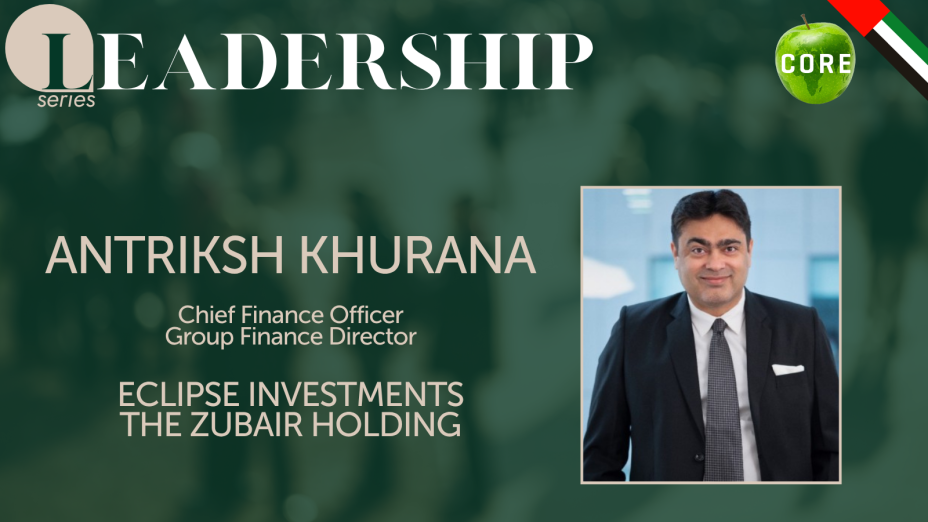
Discover exceptional industry leaders through powerful, in-depth interviews in our Leadership Series.
Here, we are talking to Antriksh Khurana, CFO at Eclipse Investments and Group Finance Director at The Zubair Holding.
Could you share a brief overview of yourself, your career journey and how it has brought you to your current role?
My career has taken me across India, Africa, Southeast Asia and the Middle East. I started with a Chartered Accountancy background and spent much of my career in hospitality with Taj, Marriott and Shangri-La. I now work across a diversified group through my roles at Eclipse Investments and The Zubair Holding. Each move has added something different, but staying close to the people running the business has remained important throughout.
What motivates you in your work and what do you find most fulfilling about being a business leader?
I enjoy solving problems and seeing things move forward. It could be finding funding for a good project or helping a team work out why a business isn’t performing as expected. What I find most rewarding is seeing people grow in confidence and take ownership. When someone who used to bring you a problem starts bringing you a well-thought-out solution, that’s a good day.
What initially sparked your interest in pursuing this career?
I was drawn to the way finance helps you understand what’s happening inside a business. The numbers give you a starting point, and then the interesting part is finding out why. Over time, I’ve enjoyed the variety more and more. One discussion might be about a hotel, another about a factory or a funding proposal. There’s always something new to learn, even after many years in the profession.
Not every day is a sunny day. What is your biggest failure and what did you learn?
I’d approach this through a lesson about knowing when to change course. It’s easy to become attached to a plan, especially when you’ve put a lot of effort into it. But effort alone doesn’t make it the right plan. For me, the lesson is to keep testing your assumptions and be willing to act when the facts change. You can be patient with a business without ignoring what the results are telling you.
What is or are your biggest career achievement(s)?
I’m proud of helping businesses secure funding and get through difficult periods. Those achievements take a lot of teamwork, and it’s satisfying when everyone’s effort comes together. Receiving the Hotelier Middle East Finance Person of the Year award in 2018 was also a special moment. But some of the most rewarding achievements are quieter ones, like seeing a team become stronger or a business get back on a more stable footing.
Have there been any hard decisions you had to take as a business leader?
Yes, especially decisions about where to invest and when to stop supporting something that isn’t working. Those are difficult because there are people and years of effort behind every business. I try to listen, look at the facts and explain the options clearly. You won’t always get everyone to agree, but you owe them a fair discussion and a clear reason for the decision.
What is the most important leadership lesson you’ve learned?
Be someone people can rely on, especially when things are difficult. It’s easy to communicate when the news is good. The real test is how you handle a problem or a promise that’s becoming difficult to keep. I believe in speaking early, being honest about the situation and following through. That builds trust with your team, your shareholders and your bankers over time.
What has been the most pivotal moment in your career?
Moving from hospitality finance into a diversified family group was a big turning point. Suddenly, I was looking at businesses with very different customers, risks and investment needs. It pushed me to ask more questions and learn quickly. Hospitality had given me a strong grounding in operations, but the new role widened my perspective on where to invest and how to balance the needs of different businesses.
How has your leadership philosophy evolved, especially over the past few years of rapid change?
I’ve become more comfortable with the fact that you can’t plan for everything. You still need a clear direction, but you also need people who can respond when things change. I put more emphasis now on open conversations and giving teams room to make decisions. I want people to tell me early when something isn’t working. It’s much easier to help with a problem while it’s still small.
if you could give your younger self one piece of advice, what would it be?
I’d say: spend as much time understanding the business as you do understanding the numbers. Get out of the office, talk to people and ask questions. My hospitality years taught me a lot about that, and moving into a diversified group reinforced it. I’d also tell myself not to wait until I had every answer before joining the conversation. A thoughtful question can be just as useful.
What skills or mindsets will be most important for the next generation of hospitality leaders?
Curiosity would be high on my list. Spend time in different departments and understand how the whole hotel works. Learn the numbers, get comfortable with technology, and pay attention to what guests and colleagues are telling you. People skills will remain essential. You can have excellent systems, but it’s your team that delivers the experience. Being able to support and lead that team will always matter.
What do people often misunderstand about the role of a CFO?
People sometimes think the CFO is the person who says no to spending! I see the role as helping the business work out how to make a good idea happen. That means asking questions, understanding the risks and making sure we can afford the commitment. The best conversations happen when finance is involved early, while there’s still room to shape the idea.
What has hospitality taught you that still helps you today?
Hospitality teaches you to stay close to the operation. A spreadsheet can tell you that something has changed, but you often need to speak to the team to understand why. It also teaches you that small details matter. I’ve carried that into other sectors: understand what happens on the ground before deciding what should happen in the boardroom.
What do you look for when building a team?
I value people who are curious, dependable and willing to speak up. Technical skills matter, but so does being comfortable saying, “I don’t know yet, but I’ll find out.” I also like people who take an interest beyond their own responsibilities. In finance, you become much more useful when you understand what your colleagues in operations are trying to achieve.
Author
Date Published: 4th November 2026
