
Leadership series: Florian Niessing
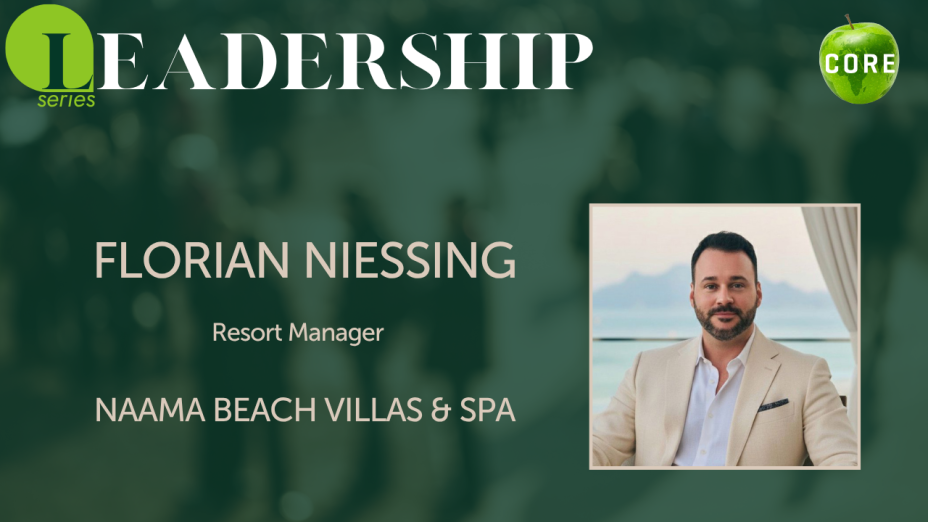
Through the CORE Leadership Series, we share the stories, insights, and journeys of inspiring industry leaders.
We are here interviewing Florian Niessing, Resort Manager at Naama Beach Villas & Spa.
Tell us a little about yourself and your business.
My name is Florian Niessing, and I am a luxury hospitality leader with an international background across resort operations, guest experience, service culture, and team leadership.
I currently work within the luxury resort space, where my focus is on creating experiences that feel personal, refined, and deeply human. For me, hospitality is not simply about beautiful rooms, restaurants, or facilities. It is about how people feel when they arrive, how they are cared for while they are with us, and what they remember long after they leave.
I believe the best hospitality is built through a balance of operational discipline, emotional intelligence, commercial awareness, and genuine care for both guests and teams.
What initially inspired you or sparked your interest in pursuing this career?
I was attracted to hospitality because it is one of the few industries where you can directly influence how people feel every single day.
A guest may arrive tired, excited, stressed, celebrating something special, or simply needing to pause. We have the opportunity to change their day through presence, kindness, attention to detail, and thoughtful service.
That human element always inspired me. Hospitality felt alive, international, emotional, and meaningful. It gave me the chance to build a career around people, culture, service, and moments that matter.
What motivates you in your work and what do you find most fulfilling about being a business leader?
What motivates me most is seeing people grow.
Of course, results matter. Revenue, reputation, guest satisfaction, and operational excellence are all important. But the most fulfilling part of leadership is watching a team member gain confidence, seeing a department become stronger, or knowing that someone has developed because they were supported properly.
Leadership gives us the opportunity to create environments where people feel seen, trusted, and capable. When that happens, the guest experience naturally becomes stronger as well.
Thinking about the current macro-economic and social environment, what shifts do you believe will redefine “success” for our sector in the coming years?
I believe success in hospitality will be redefined beyond the traditional metrics.
Occupancy, revenue, market share, and profitability will always matter. But the strongest businesses will also be measured by team stability, guest trust, emotional connection, sustainability, and the ability to create experiences with real meaning.
Luxury guests are becoming more selective. They still appreciate beauty and comfort, but they are also looking for privacy, authenticity, wellness, responsibility, and a sense of belonging.
The future winners will be commercially strong, but also culturally strong. They will understand that long-term success depends on people, place, purpose, and performance working together.
5. What do you believe will distinguish the leading service providers over the next decade?
The leading service providers will be those who combine excellence with humanity.
Over the next decade, I believe luxury will become less about excess and more about relevance. Guests will not only ask, “Is it beautiful?” They will ask, “Does it feel personal? Does it feel authentic? Does it respect my time, my privacy, my wellbeing, and the destination?”
The best hospitality brands will know how to blend intuitive service, sustainability, wellness, local culture, technology, and emotional intelligence without losing warmth.
That is where I see the future: not colder, not more automated, but more thoughtful.
What skills or mindsets do you think will be most important for the next generation of hospitality leaders?
The next generation of hospitality leaders will need emotional intelligence, resilience, financial understanding, adaptability, and cultural awareness.
But above all, they will need humility.
Hospitality changes quickly. Guest expectations evolve. Teams become more diverse. Technology moves fast. The leaders who succeed will be those who remain curious, listen carefully, and understand that leadership is not about status. It is about responsibility.
The best leaders will combine discipline with kindness, ambition with self-awareness, and high standards with genuine care.
What’s the most important leadership lesson you’ve learned?
The most important lesson I have learned is that people need to feel seen before they can give their best.
You can have standards, SOPs, KPIs, strategies, and systems. All of these are necessary. But if people feel invisible, disconnected, or unappreciated, the culture will eventually suffer.
A simple greeting, remembering someone’s name, listening properly, giving honest feedback, and following through — these things matter more than many leaders realise.
Hospitality is built on human energy. Leadership is responsible for protecting and directing that energy.
How do you balance the demands of commercial performance with staff well-being, retention, and culture building?
I do not see commercial performance and staff well-being as separate. They are connected.
If teams are exhausted, unsupported, or constantly changing, the guest experience will suffer. If the guest experience suffers, commercial performance eventually follows.
The balance comes from clear expectations, smart planning, strong communication, fair accountability, training, recognition, and creating a culture where people want to stay.
A healthy culture is not soft. It is one of the strongest commercial advantages a hospitality business can have.
Sustainability is a growing priority. How are you embedding meaningful, long-term sustainability practices into your business?
For me, sustainability must be practical, consistent, and embedded into daily operations. It cannot only exist in marketing language.
That means looking honestly at energy, water, waste, sourcing, biodiversity, community partnerships, and team awareness. It also means designing guest experiences that connect people more respectfully with the destination.
I have been exploring this topic deeply through my writing, including my LinkedIn series on Regenerative Luxury, where I look at how hospitality can move beyond simply reducing harm and begin contributing positively to nature, culture, communities, and long-term value creation.
The future of sustainability in hospitality should feel less like a checklist and more like a responsibility.
What innovations — technological, experiential, or operational — excite you the most right now?
I am most excited by innovations that make hospitality more personal, more efficient, and more human — not less human.
Technology can be powerful when it removes friction, supports teams, improves guest recognition, and allows service to feel more intuitive. But technology should never become the experience itself. It should support the people delivering it.
Experientially, I am very interested in wellness, longevity, regenerative travel, emotional luxury, and more meaningful guest journeys. I have also explored these themes through creative projects and writing, including my work on The Unhurried Body with Agnes Fluet, a book centred on presence, wellbeing, and returning to oneself.
I am also currently involved in another book project with Carolina, which continues this interest in human transformation, emotional depth, and the inner journey. These projects influence how I think about hospitality because I believe the future guest is not only looking for service. They are looking for restoration, meaning, and connection.
What does the industry need more of or less of to continue thriving?
The industry needs more humanity, more mentorship, more long-term thinking, and more respect for the people behind the service.
It needs less ego, less copy-paste luxury, and less focus on appearance without substance.
Guests can feel when something is genuine. Teams can feel when leadership is genuine. The future of hospitality will belong to businesses that understand that beauty alone is not enough. The soul of the experience matters.
What advice would you give emerging leaders who want to shape the future of the service industry?
Stay curious. Stay humble. Learn the operation properly. Respect every department. Understand the numbers. Listen to your teams. Care deeply about the guest.
Do not rush to look like a leader before you have learned how to serve like one.
The future will need leaders who are emotionally intelligent, commercially sharp, culturally aware, and courageous enough to build better ways of working. Hospitality is a beautiful industry, but it requires heart, discipline, resilience, and respect.
If you can keep your standards high and your humanity intact, you can build a meaningful career.
Personal closing statement
Hospitality has shaped how I see people, leadership, and life. It has taught me that every person carries dreams, fears, hopes, pressure, and stories we may never fully know.
That is why I believe luxury hospitality should never become cold or mechanical. At its best, it reminds people that they matter.
That is the kind of hospitality I want to continue building.
Author
Date Published: 5th August 2026
