
Leadership series: John Foy
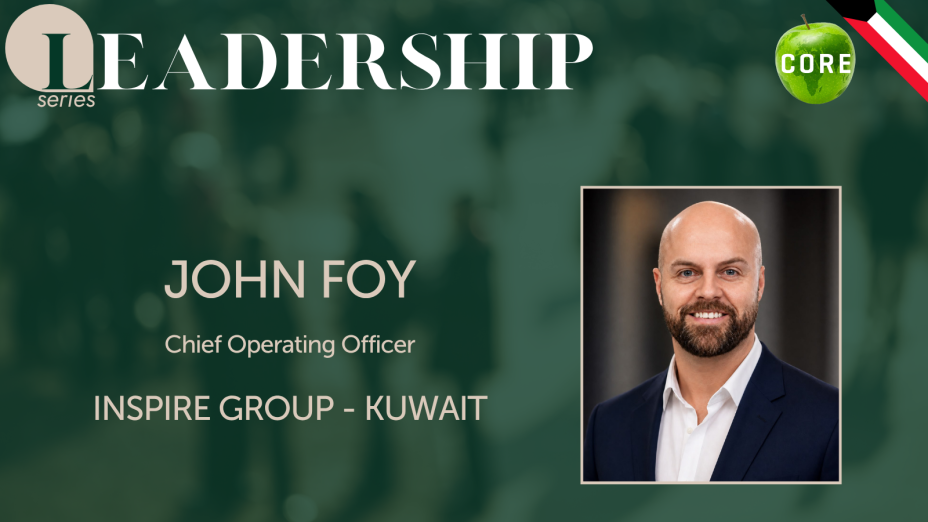
Our Leadership series puts inspiring industry leaders in the spotlight through exclusive interviews.
In this episode, we speak to John Foy, Chief Operating Officer at Inspire Group and Founding CEO of Kuwait Active
Tell us a little about yourself and your business.
I’m from Liverpool and started my career as a lifeguard in Runcorn. More than 25 years later, I’m Chief Operating Officer at both Inspire Group and Aura Wellness Club in Kuwait, having worked across the UK, UAE, Saudi Arabia and Kuwait with businesses including The Gym Group, David Lloyd, Fitness First, PureGym, and Kun Sports.
My work has covered quite different parts of the industry, from affordable fitness at scale to premium health clubs. At Inspire, that includes Sahara, our corporate club at NBK, and the development of Aura Wellness Club resort at Ras Al Ardth. Aura brings together fitness, wellness and family leisure in a beachfront setting with the goal of creating the most iconic health club in the world. There’s a lot to get excited about, but my job is to make sure the operation can deliver on the ambition.
I’m also the Founding CEO of Kuwait Active, which brings people in the sector together to share knowledge and help move the industry forward. I’ve spent most of my working life in this industry, and I still care a great deal about making it better.
What initially inspired you or sparked your interest in pursuing this career?
I didn’t start out with a grand plan to become a COO. I started as a lifeguard and worked my way through the business: fitness instructor, personal trainer, duty manager, sales, club management and then regional and senior operational roles.
What kept me interested was that you could see the difference you were making. Someone would join a club feeling uncomfortable or unsure of themselves, and a few months later they’d be training regularly, making friends and carrying themselves differently. That’s a good thing to be part of.
As I progressed, I realised I enjoyed helping teams improve just as much. I wanted more responsibility because I could see things I wanted to build or do better. That’s still what drives me.
What motivates you in your work and what do you find most fulfilling about being a business leader?
I’m competitive. I enjoy taking a business forward, improving the numbers and seeing a team deliver something they weren’t sure they could do. I’d be pretending if I said the results didn’t matter to me.
But the part that stays with you is watching people grow into bigger roles. Someone starts taking responsibility, makes better decisions and eventually becomes a leader you can trust with a business. Knowing you’ve played a part in that is hugely rewarding.
I’ve had people work with me across different businesses and countries. I’m proud of that. Moving your life for a role is a big decision, and when someone chooses to work with you again, it means something. It also puts a responsibility on you to make that trust worthwhile.
What’s the most important leadership lesson you’ve learned?
Before you decide someone is underperforming, make sure you’ve actually given them a fair chance to succeed.
Do they understand what’s expected? Have they been trained properly? Do they have the tools, time and authority to do the job? Are they getting useful feedback, or just being told the result isn’t good enough? Those are leadership questions, and they need answering before you put everything on the individual.
That doesn’t mean lowering standards. I have high expectations, and there comes a point where people have to take responsibility for their performance. But accountability has to work both ways. If a whole team is struggling with the same thing, I’d be looking very closely at how that team is being led.
How do you balance the demands of commercial performance with staff well-being, retention, and culture building?
In a service business, the way you treat your people eventually reaches the customer. If your team is constantly short-staffed, poorly trained or afraid to make a decision, members will feel it.
I’m very comfortable with KPIs. I want to know what’s happening with sales, retention, revenue and profitability. But I also want to understand staff turnover, absence, development and internal progression. If good people keep leaving a particular manager, that needs the same attention as a poor sales result.
Day to day, it means sensible staffing, clear expectations and managers who spend time coaching their teams. It also means dealing with poor behaviour, including from people who deliver good numbers. You can lose a lot of good staff by protecting one difficult high performer.
You still have to make hard commercial decisions. People generally understand that. What they struggle with is being kept in the dark or being asked to meet standards their leaders don’t follow themselves.
What strategies have proven most effective for attracting and growing future talent?
Give people a reason to believe they can build a career with you. Most businesses say they offer progression. The useful question is whether the team can point to people who have actually progressed.
I’m a big believer in developing from within. There are excellent future managers working on reception, selling memberships and coaching on the gym floor. You need managers who notice them and give them opportunities to learn. That might mean leading a meeting, owning a small project or covering part of a more senior role with proper support.
Training also needs follow-through. A course is a start, but someone needs to watch them apply it, give feedback and help them improve.
And when they’re ready, you have to let them take responsibility. You can’t keep saying you want strong leaders and then insist that every decision comes back to you.
What is or are your biggest career achievements?
Being involved in the growth of The Gym Group was a significant part of my career. It gave me experience of opening clubs and building operations at scale, where getting the detail right repeatedly really matters.
Working across the Middle East then broadened that experience considerably. You learn a lot when you move into a market where you can’t assume everything will work the way it did in your previous role.
Publishing my three books, particularly ICM Sales Mastery was another achievement I’m proud of. It gave me a way to put practical experience into something other people could use, particularly around how we train teams to understand prospective members and help them make a decision.
But I wouldn’t describe any business result as mine alone. The teams do the work. I’m proud of the people I’ve helped develop and the results we’ve delivered together. Seeing them go on to succeed without needing me involved is a particularly good feeling.
What innovations, technological, experiential, or operational, excite you the most right now?
AI interests me because it can make useful information available much more quickly. An operator can spend less time pulling reports together and more time deciding what to do about what those reports show.
In fitness, there are practical opportunities around following up enquiries, spotting members whose attendance is dropping and helping teams communicate at the right time. Done well, that gives staff more time for the conversations that need a person.
I’m also interested in how we bring fitness, recovery, wellness and family activities together in a way that people actually use. That’s part of what makes Aura such an exciting project.
I do think we need to be honest about technology, though. Buying a platform doesn’t fix an unclear process. You still need someone responsible for making it work, a team who know how to use it and a clear idea of what improvement you expect.
What do you believe will distinguish the leading service providers over the next decade?
The ability to deliver consistently after the initial excitement has worn off. We’re good at promoting new facilities, equipment and concepts. What matters to a member six months later is whether the club is clean, the equipment works, the classes are good and someone sorts things out when there’s a problem.
For a premium club, the service has to justify the price throughout the membership. An impressive building helps get people through the door, but it won’t carry a disappointing experience for very long.
I think the strongest operators will also get better at helping people feel they belong. That starts quite early: does someone notice when a new member looks lost? Does an instructor learn their name? If they stop attending, does anyone care enough to contact them?
Have you achieved everything you wanted in your career so far?
No, definitely not. I’m proud of how far I’ve come, but I still have a lot I want to do.
I started as a lifeguard, and I want to keep progressing towards leading a business as CEO. I enjoy the responsibility of bringing the commercial and operational sides together, building the team and being accountable for the direction of the whole business.
I also want to contribute more beyond whichever organisation I’m working in. Kuwait Active and writing are part of that. There’s a lot of useful experience in this industry, and I think we could do a better job of sharing it.
Ultimately, I want to look back and see businesses that are stronger because I was involved, and people who went further in their careers because of the opportunities we created. There’s plenty left to get on with.
Author
Date Published: 3rd November 2026
