
Leadership series: Rob Keeping
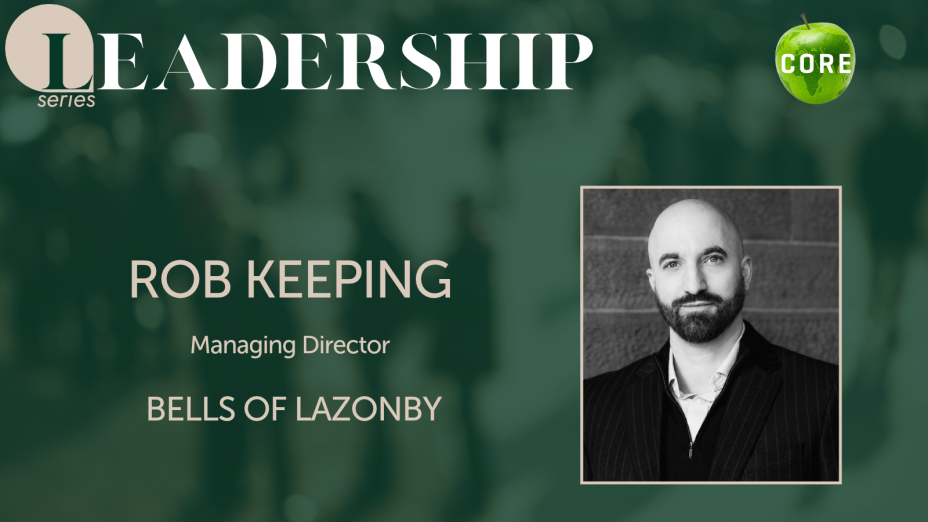
Our CORE Leadership Series showcases leading figures in the industry through detailed, insightful interviews.
We are here talking to Rob Keeping, Managing Director at Bells of Lazonby
Tell us a little about yourself and your business.
I’m Rob, an Army veteran and now a board-level executive director in food manufacturing. After leaving the military, I built my career in food operations with businesses including Caprice Holdings and Bread Holdings, which owns GAIL’s Bakery and The Bread Factory. I went on to become a shareholder and managing director, a journey that strengthened both my commercial ambition and my understanding of what it takes to lead a business.
London was an inspiring place to build my career. It was also where I met my now wife, travelling on one of the city’s many train networks, a sliding door moment, so to speak. After the birth of our daughter, Pearl, we began looking for a different balance: somewhere I could continue to grow professionally while we built the family life we wanted for her.
That search brought me to Cumbria and the managing director role at Bells of Lazonby. The business has an exceptional reputation and a rich legacy, celebrating its 80th year in 2026. What attracted me was not simply its history, but its determination to keep innovating and growing. I wanted to help shape its next chapter.
What motivates you in your work and what do you find most fulfilling about being a business leader?
My motivation starts from within. I hold myself to high standards and keep looking for opportunities to learn, grow and take on difficult challenges. For me, leadership means moving towards challenge with a clear head, not waiting for it to pass.
Beyond that, my strongest motivation is developing people and bringing them on the journey. I have always said, “I want my team to want my job, and I will support them in achieving it.” A leader’s role is not to protect their own position; it is to grow others and build a business that is stronger because of them.
I am ambitious about growth and results. I enjoy setting a clear direction, building the strategy to get there and unlocking the potential of the business and its people. Targets matter, but so does the discipline with which we pursue them.
Few things are more fulfilling than setting a demanding objective and seeing the team deliver it. I want us to win, and I want that success to be shared by recognising, celebrating and rewarding the people who made it possible.
What do you see as the biggest challenges currently facing the landscape where you are and how should/will a business like yours respond?
As we approach the end of 2026, food manufacturing, like many sectors, faces considerable uncertainty. My message to our teams is straightforward, we cannot wait for someone else to solve our challenges. We must take ownership, bring solutions and make difficult decisions with the clarity and agility to adapt and overcome.
Our industry depends on a complex chain of moving parts, from raw-material supply through to the consumer. Manufacturing is energy-intensive, and pressure at any point in that chain can affect the whole business. That calls for sound judgement, disciplined execution and a clear understanding of what we can control.
I put preparation before reaction. We need to anticipate where we can, build resilience into the business and remain ready to act. When a response is required, it should be measured, decisive and fast, not rushed or driven by panic.
Innovation is central to that approach, in our products, our processes and our thinking. As AI becomes more present, for example, we need to assess where it can offer practical support and open opportunities that were not previously available. The aim is not to follow every new development, but to apply the right ones well. It’s not about being perfect, just better.
Thinking about the (current) macro-economic and social environment (cost pressures, labour market, changing customer expectations, sustainability), what shifts do you believe will redefine “success” for our sector in the coming year or years?
Technology and the intelligent use of data will help redefine success. In manufacturing, a single source of truth is essential, reliable performance data gives us the clarity to identify opportunities and make better decisions. AI can support that, but technology alone is not enough. We also need the curiosity and creative thinking to challenge established practices and carry what works into a new era.
For me, success has several dimensions. I want Bells of Lazonby to lead through service, innovation and purpose, while acting responsibly and sustainably. Becoming carbon neutral in 2026 and being shortlisted for Manufacturer of the Year are important milestones. But I am equally encouraged by a marginal gain in a process, or someone thinking outside the box to solve a problem, however big or small.
Sustained success comes from balancing bold strategic ambition with continuous improvement in the things we can control. We need the confidence to pursue the bigger prize and the discipline to make progress every day.
What skills or mindsets do you think will be most important for the next generation of hospitality leaders?
Hospitality is an industry built on resilience, stamina and some of the most creative minds in business. The next generation will need those qualities. Above all, my advice is to remain curious. Curiosity drives learning, challenges assumptions and strengthens judgement. Whatever the industry, it is an essential foundation for leadership.
Another less often talked about trait would be, not being afraid to listen and follow your gut. Removing doubt and sometimes going with that gut feeling can not only lead to results but learnings.
What values or behaviours do you consider essential for leadership teams today?
The military gave me a distinctive foundation in leadership. I have since developed that perspective through learning at the University of Oxford and Harvard, alongside the practical experience of leading businesses. Together, those experiences have reinforced the importance of clear purpose, sound judgement and personal accountability.
Two questions remain central to the way I lead, how do we march forwards together around the same “why”, and how does each of us take accountability for our part? A leadership team needs shared direction, the confidence to challenge constructively and the discipline to follow through.
There is a saying I often return to: ‘if you want to go fast, go alone. If you want to go far, go together’. It captures a fundamental leadership principle. Individual drive matters, but lasting success depends on people working together with trust and purpose.
I am fortunate that we share that commitment at Bells of Lazonby, but like any business we also need to continue to accept we won’t always get everything right, and that’s okay, as long as we have zero blame and fast improvement. It gives us a strong foundation to be ambitious, make clear decisions and deliver together.
Are you expecting consumer expectations to shift this year?
Yes. In food manufacturing, consumer behaviour is evolving quickly, with campaigns and trends gathering momentum at pace. Our task is twofold: to deliver products consumers want today, while anticipating what they will want tomorrow. We need to understand the market without allowing every passing trend to dictate our direction. In 2021, we were the first free-from bakery in the UK, recognising the opportunity and
future demand for more allergen-free products. That part of our business now accounts for 50% of the business and continues to grow and innovate as a leader in its field.
Who or what has had a major influence on your approach to leadership?
No leader gets to where they are alone. I have been fortunate to learn from many mentors, from my first Army instructor to the owners of businesses I have worked for. Their guidance has shaped my judgement and reminded me of the value of investing in others. The owner of Bells of Lazonby, Michael, is a great example of someone with compassion yet expectations, I really admire his balance of these two things.
Ernest Shackleton has also been a significant influence. I have no plans to explore Antarctica, but his approach to leading people through uncertainty resonates with me: understanding risk, maintaining resolve and recognising that leadership is tested as much on the journey as at the destination.
He once said, ‘difficulties are just things to overcome, after all’. I value the calm conviction in those words. Difficulties deserve our attention, not our panic.
Being a leader is a balance between being in the trenches when needed, but also ensuring you have the time and space to step back, for reflection on what the next big decision needs to be. This mitigates the risk of making big mistakes due to missing the detail.
The military taught me to be a realist; Shackleton helped me understand the power of optimism. I try to bring both to my leadership.
What is your long-term vision for your organisation, and what legacy would you like to leave within the industry?
My long-term vision for Bells of Lazonby is to protect what makes the business special while strengthening its position as an industry leader. Its legacy is a foundation, not a finish line. I want us to build on that history with clear purpose, continued innovation and the ambition to keep growing.
I am less concerned with leaving a personal legacy than with the impact I have on the people I lead. I would hope they felt empowered, trusted and supported, and that their time working with me helped them grow in confidence and ambition.
And I would want to have delivered on my commitments; to have met that ever-evolving target.
Author
Date Published: 2nd November 2026
