
Leadership series: Mladen Vuckovic
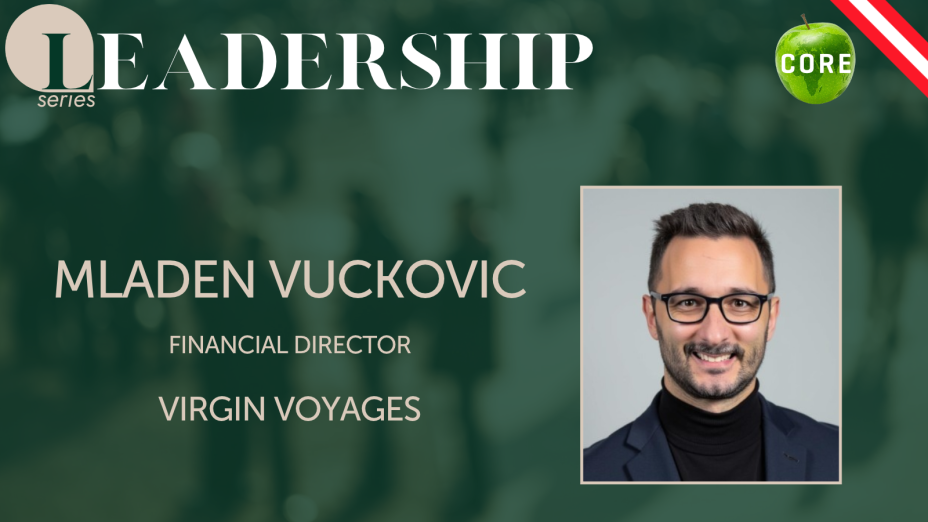
Through our Leadership interview series, we are spotlighting exceptional leaders worldwide.
In this episode, we talk to Mladen Vuckovic, Financial Director at Virgin Voyages.
Tell us a little about yourself and your work.
My name is Mladen Vuckovic, MBA. I am from Montenegro and I am currently leading Financial Operations onboard Virgin Voyages, responsible for accounting, treasury, inventory and payroll for casino and concession operations. Previously I held Guest Facing leadership roles on Princess Cruises. Simultaneously to my operating role I have been studying for MBA at University of Illinois at Urbana-Champaign and I am also a candidate for ACCA qualification. Alongside hotel valuation for investment purposes, M&A and venture investing, I see hospitality as a business to be operated and also invested in.
What motivates you in your work, and what do you find most fulfilling about being a business leader?
The complexity of a small city on water has to be turned into decisions. Every single pricing decision, every single control and every single system has a huge impact on the margin and the guest experience. This is what makes me most happy: finding out where value is hiding or leaking and fixing it. And also building the financial discipline of a business to be able to spend money on excellent guest experiences.
What’s the most important leadership lesson you’ve learned?
Good decisions need good information and as a leader it is your job to uncover the truth as early as possible. Reliably good numbers, clear accountability and staying calm in crisis are more important than any strategy. With good data that people trust you can move faster and your decisions will have a better track record.
How do you balance commercial performance with staff well-being, retention and culture building?
Performance and staff well-being are linked. I set clear targets that need to be met in order to develop and retain staff. I lead a multicultural team of 15 or more across different ships and I deliver against budget and profit targets whilst creating an environment where staff trust the leadership and take ownership of their work when they understand the numbers behind their role.
What do you see as the most significant challenges and opportunities shaping the sector?
There are number of challenges within the hospitality sector at present such as cost of products increasing, staff shortages and customers expecting high-quality service at fair prices. I believe the greatest opportunity for operators within the sector is data. I have recently reconciled core systems on board Virgin Voyages, including POS which has greatly reduced transaction errors and improved audit readiness. The ability for operators to unify data and price dynamically, identify areas of loss quickly as well as provide personal experience to guests at scale will be key to gaining competitive advantage in the future.
What skills or mindsets will matter most for the next generation of hospitality leaders?
It will be important for future hospitality leaders to develop the commercial and financial skills needed to operate a successful business in an evolving hospitality landscape, to become confident using data and AI to support decision-making and to manage diverse teams of people based all over the world. So long as future hospitality leaders are able to read a P&L as easily as they can read a guest’s needs then they will be well-equipped to succeed in business. For me that has involved formal finance training as part of my MBA as well as ACCA and other financial skills training, plus practical application of the skills I have learned to complete a number of valuations as well as to begin to develop some machine learning skills.
What are the best ways to attract future talent for your business and help them grow within it?
Hospitality should be perceived as a serious business career path, with financial, analytical, technical, strategic and general management roles available to talented leaders. Give them meaningful responsibility, rotate them through departments, functions and even regions and tie their development to business outcomes. Give them a career path and ensure that work has value and the opportunity to make a greater difference as they grow and develop.
What innovations excite you the most right now?
Innovations in AI and advanced analytics. I have been playing around with demand forecasting using ML and how this can be linked to dynamic pricing on a ship. In onboard retail in particular I have seen how SKU-level performance analysis and demand-based pricing can deliver real revenue and margin gains. Currently I am also getting a lot of hands-on experience with ML and therefore I believe that as finance leaders we need to get familiar with these types of tools and start to understand how they work rather than just purchasing off the shelf software.
What are some examples of the toughest decisions you have had to make while leading a company or business?
I have had to make a number of very difficult decisions as a business leader. The majority of these have been cutting something which was generating revenue but not truly adding value. By way of example, in regular audit reviews of onboard retail I have identified on occasion certain credit leakages and, following the data, made certain pricing adjustments to prevent such ‘leakages’ in future. Not always popular with certain teams but the end result has been to create a far more profitable business with less variability in revenue between periods.
What advice would you give emerging leaders who want to shape the future of the service industry?
My advice to emerging business leaders is to seek out to experience as much as possible, i.e. “build range”. This means learning the inner workings of an operation first and then also become familiar with the financial, analytical and technical aspects of said business. Moreover, go on international assignments, get exposed to various departments, find a mentor and study other industries as well. The service industry, including hospitality, rewards people who have strong guest sense but are also commercially oriented and open to technology.
Author
Date Published: 29th October 2026
