
Leadership series: Carla Nokes
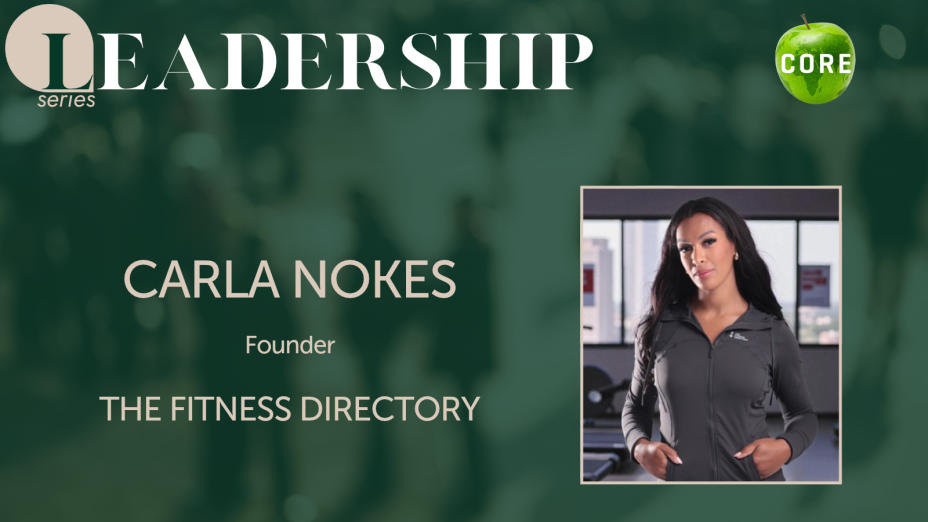
In our Leadership Series, we showcase leading figures in the industry through detailed, insightful interviews.
In this interview, we speak to Carla Nokes, Founder of The Fitness Directory.
Tell us a little about yourself and your business.
I’m Carla Nokes, founder of The Fitness Directory, a fitness technology and workforce solutions platform designed to connect fitness professionals with gyms, studios, leisure centres and businesses looking for talent.
My background is quite varied. I started out as a competitive tennis player, later becoming a personal trainer, tennis coach, sports massage therapist and fitness educator. Having worked across different areas of the industry, I experienced first-hand how fragmented recruitment and employment opportunities could be.
The Fitness Directory was born out of that experience. We are building more than a recruitment platform. Our ambition is to create an interconnected fitness network where professionals can find work, develop their careers, collaborate, access education and build meaningful industry relationships.
Alongside the commercial business, I’m also developing The Fitness Directory CIC, which focuses on social impact, particularly helping young people and those facing barriers to employment access fitness qualifications, training and career opportunities.
Ultimately, I want to build infrastructure that helps the entire fitness industry work better together.
What initially inspired you or sparked your interest in pursuing this career?
My journey started through sport. I was a competitive tennis player from a young age and spent much of my childhood training and competing. Sport has always been a huge part of my identity.
After experiencing significant shoulder injuries and undergoing surgery, my sporting journey took an unexpected direction. I had to reassess what I wanted from my future and eventually moved into the fitness industry as a personal trainer.
It was while working across five different gyms within a relatively small geographical area that I noticed a recurring problem. Finding work, covering shifts, connecting with other professionals and managing employment opportunities was unnecessarily complicated.
A lot of recruitment was happening through WhatsApp groups, Facebook communities and word of mouth. There was no centralised system that properly connected the workforce with businesses.
I remember thinking that the industry needed something similar to what Uber had achieved in transport: a more accessible, efficient way to connect supply and demand.
That was the initial idea behind The Fitness Directory in 2019. What started as a personal frustration gradually developed into a much bigger business vision.
What motivates you in your work and what do you find most fulfilling about being a business leader?
What motivates me most is knowing that something I’m building could genuinely change opportunities for other people.
I understand what it feels like to have ambition but not necessarily have the network, opportunities or resources to progress. I’ve experienced setbacks personally and professionally, so creating a platform that helps other people move forward is incredibly important to me.
As a founder, I find it particularly fulfilling when an idea moves from being something discussed on paper into something tangible that people can actually use.
Seeing fitness professionals join the platform, businesses recognise the potential and partnerships begin to develop makes the challenges worthwhile.
I also love the fact that entrepreneurship allows me to challenge existing ways of working. I don’t believe something should continue being done a certain way simply because that’s how the industry has always operated.
What do you see as the biggest challenges currently facing the landscape where you are and how should/will a business like yours respond?
One of the biggest challenges facing the fitness industry is workforce fragmentation.
There are thousands of talented fitness professionals, but opportunities are often difficult to access. Recruitment remains heavily dependent on personal networks, social media groups and traditional job advertising.
For operators, finding reliable, appropriately qualified professionals at short notice can be equally challenging. Staffing shortages, administrative pressures and retention all affect operational performance.
Another significant challenge is the lack of clear career progression for many fitness professionals. People enter the industry with enthusiasm but often struggle to build sustainable long-term careers.
The Fitness Directory aims to address these challenges by creating one connected ecosystem. We want to make recruitment more accessible, simplify workforce management and provide professionals with opportunities beyond simply finding their next shift.
Our response is to use technology to remove friction, improve connections and create more sustainable employment opportunities.
Thinking about the current macro-economic and social environment, what shifts do you believe will redefine success for our sector in the coming year or years?
I think success will increasingly be defined by efficiency, accessibility, technology and the ability to retain good people.
With rising operating costs, businesses cannot afford inefficient recruitment processes or unnecessary administrative overheads. They need smarter ways to manage their workforce and maximise productivity.
At the same time, consumer expectations are changing. People increasingly expect convenience, personalisation and flexibility. This applies not only to how they access fitness services but also to how they expect to work within the industry.
I also believe the workforce will become more fluid. Freelance professionals, self-employed instructors and portfolio careers will continue to play an important role.
Businesses that embrace technology while maintaining strong human relationships will be best positioned to succeed.
For me, the future is about building systems that make it easier for people to work, businesses to operate and consumers to access quality experiences.
How do you stay updated on industry trends, customer expectations and regulatory changes?
I believe the best way to understand an industry is to remain actively involved in it.
Having worked as a fitness professional myself, I regularly speak with gym operators, personal trainers, instructors, coaches, education providers and other industry stakeholders.
These conversations are invaluable because they provide insight into the challenges people are experiencing on the ground, rather than simply relying on industry reports.
I also follow developments in fitness technology, recruitment, artificial intelligence, workforce management and education.
Building a technology business means constantly looking outside your immediate sector for inspiration. Some of the most interesting opportunities come from understanding what other industries are doing well and considering how those innovations could be applied to fitness.
I also recognise the importance of regulatory developments around professional qualifications, safeguarding, insurance, employment and data protection. These are essential considerations when building a platform that connects businesses and professionals.
Where do you think the most promising investments should be focused on and/or made?
I believe the biggest opportunities lie in technology, workforce infrastructure, professional development and preventative health.
The fitness industry has invested significantly in facilities, equipment and consumer-facing experiences, but there is still considerable room for improvement in the systems supporting the people who deliver those services.
Investment in recruitment technology, workforce management, AI-driven matching and professional verification could transform how the industry operates.
Education is another important area. We need to make it easier for people to access recognised qualifications, ongoing professional development and clear career pathways.
I also see significant potential in the integration of fitness, health and wellness, particularly as more people recognise the importance of physical activity in long-term health.
My view is that investment should not only focus on attracting more consumers into fitness, but also on building a stronger, more sustainable workforce capable of supporting that demand.
What do you believe will distinguish the leading service providers over the next decade?
I think the strongest businesses will be those that combine technology with genuine human experiences.
Technology should make services more efficient, but it should never remove the personal connection that makes the fitness industry so valuable.
The leading providers will understand their customers, invest in their people, embrace innovation and build communities rather than simply selling services.
Personalisation will also become increasingly important. Consumers want experiences that reflect their individual goals, preferences and lifestyles.
I also believe businesses that collaborate will have a competitive advantage. The traditional mindset of competing for everything is becoming less sustainable.
There is enormous opportunity for gyms, independent professionals, education providers, wellness businesses and technology companies to work together.
If you could influence one thing about the future of hospitality, policy, regulation or business models, what would it be, and why?
I would change the way we approach access to employment, education and professional development.
There is so much untapped talent within society, particularly among young people who may not have the financial resources, connections or opportunities to enter industries like fitness.
I would like to see stronger collaboration between education providers, employers and industry organisations, creating clearer pathways from training into meaningful employment.
Through The Fitness Directory CIC, I want to contribute to that change by helping young people and individuals facing employment barriers access recognised fitness qualifications and opportunities to build careers.
We should be creating industries where talent and potential are not restricted by someone’s financial background or existing network.
What skills or mindsets do you think will be most important for the next generation of hospitality leaders?
Adaptability, emotional intelligence, commercial awareness and the ability to embrace technology will be essential.
I think the next generation of leaders must be comfortable challenging established processes and questioning whether there are better ways of doing things.
They also need to understand people. Regardless of how advanced technology becomes, businesses are still built around relationships, trust and communication.
Another important quality is resilience. Leadership isn’t about having all the answers. It’s about being able to make decisions, learn from mistakes and continue moving forward when things don’t go to plan.
I would also encourage future leaders to develop a collaborative mindset. The businesses that succeed will not necessarily be those that try to do everything themselves, but those that understand how to build strong partnerships.
What is or are your biggest career achievements?
One of my biggest achievements has been taking The Fitness Directory from an idea based on my own experiences as a personal trainer and turning it into a technology business.
The journey has involved developing the original concept, building an app, navigating the challenges of entrepreneurship and bringing together a growing network of fitness professionals and industry businesses.
We’ve built a database of more than 3,000 fitness professionals and are continuing to develop relationships with operators, education providers and industry organisations.
I’m particularly proud of reaching the point where we have been able to relaunch the platform with a much bigger vision than the original recruitment concept.
Personally, returning to competitive sport after significant shoulder injuries and surgery is another achievement I hold close to me. Sport taught me resilience long before I became an entrepreneur.
For me, both journeys demonstrate that setbacks don’t necessarily define the outcome. Sometimes they create the foundation for something completely different.
What’s the most important leadership lesson you’ve learned?
You cannot build something meaningful by trying to do everything yourself.
As a founder, it’s easy to feel that every decision, every problem and every responsibility sits with you. But sustainable growth comes from building relationships, surrounding yourself with people who bring different skills and learning when to delegate.
I’ve also learned that leadership requires accountability.
You have to be willing to make difficult decisions, admit when something isn’t working and take responsibility for the direction of the business.
Perhaps most importantly, I’ve learned that you need to believe in the vision even when other people cannot see it yet.
Have you achieved everything you wanted in your career so far?
Not even close, and I actually think that’s a positive thing.
I’m still at the beginning of what I want to achieve with The Fitness Directory. The platform has the potential to become a much larger piece of industry infrastructure, connecting professionals, operators, education providers and businesses internationally.
I have ambitions to expand beyond the UK and explore opportunities across international markets, including Africa.
I also want to develop the social-impact side of the business so that more people can access qualifications and employment opportunities.
Personally, I have sporting ambitions that I still want to pursue.
I don’t measure success by reaching one particular milestone. I see it as an ongoing journey of development, impact and creating opportunities that didn’t previously exist.
How do you prioritise tasks when everything feels like a priority?
I try to distinguish between what is urgent and what will genuinely move the business forward.
As a founder, there are always more things to do than there are hours in the day. You can spend an entire day responding to messages and dealing with small operational issues without necessarily progressing the bigger vision.
I prioritise activities based on their potential impact, particularly those connected to product development, revenue generation, partnerships and user acquisition.
I also break larger objectives into smaller, achievable milestones.
One thing I’ve learned is that being busy and being productive are two very different things.
Have there been any hard decisions you had to take as a business leader?
One of the hardest decisions has been knowing when to step back, reassess and change direction.
The original concept for The Fitness Directory was much more focused on providing an on-demand recruitment solution. However, as I spent more time speaking with professionals and operators, I realised that the underlying problem was much bigger.
The industry didn’t just need a way to fill shifts. It needed better connections, career opportunities, professional development and workforce infrastructure.
That meant questioning the original business model and investing time into developing a much broader platform.
It can be difficult to move away from something you’ve spent years building, but leadership requires you to recognise when the opportunity has evolved.
I’ve learned that staying attached to your original idea can sometimes prevent you from seeing what the business could become.
What do you hope your legacy will be both for your organisation and for the industry?
I want The Fitness Directory to become a platform that genuinely improves the way the fitness industry works.
I’d like to be remembered as someone who helped create a more connected, accessible and collaborative industry.
I want fitness professionals to have more opportunities to earn, develop their skills and build sustainable careers. I want operators to have better access to talent and more efficient ways of managing their workforce.
Through the CIC, I also want to create opportunities for people who may otherwise have been excluded from the industry.
Ultimately, I want to build something that continues to create value long after my involvement in its day-to-day operations.
Could you briefly introduce yourself, your role, and the core mission of your organisation within the hospitality landscape?
I’m Carla Nokes, founder of The Fitness Directory, a technology business operating within the fitness, leisure and wellness sector.
My role involves leading the company’s strategic direction, developing partnerships, driving growth and overseeing the evolution of our technology platform.
Our core mission is to connect the fitness workforce with the businesses that need them, while creating a more accessible and collaborative professional network.
We want to simplify recruitment, improve access to work and support the development of long-term careers.
Although our primary focus is fitness, we recognise that our work sits within the wider service economy, where people, experiences and workforce quality are central to business success.
What do you see as the most significant challenges and opportunities currently shaping the service industry?
The biggest challenges are workforce shortages, rising operating costs, recruitment inefficiencies and changing consumer expectations.
Businesses are being asked to deliver more personalised and convenient experiences while managing increasingly complex operational demands.
However, I think these challenges create enormous opportunities for technology-led businesses.
Artificial intelligence, automation and better workforce management systems can help businesses operate more efficiently and make better use of available talent.
There is also an opportunity to rethink how we develop and retain people. Rather than constantly recruiting new employees, businesses should be investing in professional development, career progression and creating environments where people want to stay.
Are you expecting consumer expectations to shift this year?
Absolutely. Consumers are increasingly expecting convenience, flexibility and personalised experiences.
In fitness, people want services that fit around their lifestyles. They are no longer necessarily looking for a traditional gym membership or a fixed weekly routine.
We’re seeing the importance of hybrid fitness experiences, specialist studios, personal training, community-led activities and more personalised approaches to health and wellness.
I also think consumers will increasingly value credibility and trust. They want to know that the people delivering their services are qualified, experienced and professional.
For businesses, this means the quality of the workforce and the overall customer experience will become even more important.
How has your leadership philosophy evolved, especially over the past few years of rapid change?
Initially, I approached entrepreneurship with a very hands-on mindset. I wanted to be involved in everything and felt that I needed to understand every aspect of the business.
Over time, I’ve realised that leadership is less about controlling every detail and more about creating the right environment for growth.
I’ve become more strategic in how I approach decisions, particularly around partnerships, investment, product development and long-term positioning.
I’ve also learned to become more comfortable with uncertainty.
Building a technology business means operating in an environment where things change constantly. You have to be prepared to adapt without losing sight of the bigger vision.
I now see leadership as a combination of having a clear direction while remaining flexible about how you get there.
What values or behaviours do you consider essential for leadership teams today?
Integrity, accountability, transparency, adaptability and collaboration.
I strongly believe in collaboration over competition. Businesses and individuals can achieve much more when they share knowledge, build relationships and recognise the value that others bring.
I also think leaders need to demonstrate consistency between what they say and what they do.
Trust is built through actions, not simply words.
Another important quality is curiosity. Leaders should never assume they know everything. They should be willing to listen, challenge their own thinking and learn from the people around them.
How do you balance the demands of commercial performance with staff well-being, retention and culture building?
I believe commercial performance and people should not be treated as competing priorities.
A business is only as strong as the people delivering its services. If professionals feel undervalued, disconnected or unable to progress, retention will inevitably suffer.
One of the reasons behind The Fitness Directory is that I believe professionals deserve more control and visibility over their careers.
Our platform aims to give them access to opportunities, professional connections, development and additional income streams.
I also believe businesses need to move beyond viewing recruitment as simply filling vacant positions. Building a positive workforce culture means investing in people, recognising their contribution and creating opportunities for progression.
What strategies have proven most effective for attracting and growing future talent?
I believe we need to make industries more accessible and demonstrate that there are genuine long-term career opportunities available.
Within fitness, there is sometimes a misconception that becoming a personal trainer or instructor is simply a short-term job rather than the beginning of a professional career.
We need to change that perception.
Education providers, employers and industry organisations should work together to create clear pathways from qualifications into employment.
Through The Fitness Directory, we’re looking to bridge that gap by connecting qualified professionals with businesses and providing opportunities to develop their networks.
Through our CIC ambitions, we also want to help young people and individuals facing employment barriers access recognised qualifications and routes into the industry.
Attracting talent is important, but creating an environment where people can grow and build sustainable careers is equally important.
What innovations, technological, experiential or operational, excite you the most right now?
Artificial intelligence is probably the biggest area of opportunity.
Within The Fitness Directory, we’re particularly interested in AI-driven location matching, helping operators find suitable professionals based on their skills, qualifications, availability and geographical location.
I also see huge potential in automating administrative processes, particularly around recruitment, document verification, communication and workforce management.
Another exciting development is the ability to build professional communities through technology.
We want The Fitness Directory to become a place where professionals can connect, share knowledge, collaborate, access opportunities and build relationships rather than simply search for jobs.
I think the biggest opportunity is moving away from disconnected systems towards one integrated digital ecosystem.
Sustainability is a growing priority. How are you embedding meaningful, long-term sustainability practices into your business?
For me, sustainability is not just about environmental responsibility. It also means building a business model that is economically and socially sustainable over the long term.
Our digital-first approach has the potential to reduce reliance on fragmented, paper-heavy recruitment and administrative processes.
Better geographical matching can also help reduce unnecessary travel for professionals and improve the efficiency of workforce allocation.
Social sustainability is particularly important to me.
Through The Fitness Directory CIC, I want to help create opportunities for people who face barriers to employment, particularly young people who may not have access to the financial resources or professional networks needed to enter the fitness industry.
I believe a sustainable industry is one that develops its people, creates opportunities and builds systems that can continue to deliver value for future generations.
Looking back, what has been the most pivotal moment in your career, a turning point that shaped how you lead today?
I would say the period when I had to step away from competitive tennis following significant shoulder injuries and surgery.
Sport had been a huge part of my life, and having to rethink my future was difficult.
However, it taught me something incredibly valuable: your identity and potential are not defined by one particular path.
Moving into the fitness industry introduced me to a completely different world. Working as a personal trainer allowed me to see the industry from the inside and identify problems that I might never otherwise have noticed.
That experience eventually led to the creation of The Fitness Directory.
Looking back, what initially felt like a setback became one of the most important turning points in my life.
What’s a lesson you learned that still influences your decisions?
Don’t confuse progress with perfection.
When building a business, particularly a technology business, there is always something that could be improved or developed further.
If you wait until everything is perfect, you risk never launching anything.
I’ve learned the importance of testing ideas, listening to feedback and being prepared to adapt.
The Fitness Directory has evolved considerably since its original concept, and that evolution has been driven by understanding what the market actually needs.
I’d rather build something, learn from it and improve it than spend years trying to create something perfect in isolation.
Who or what has had a major influence on your approach to leadership?
My sporting background has probably had the biggest influence.
Competitive tennis teaches you discipline, accountability, resilience and the importance of consistency.
You learn that success rarely comes from one outstanding performance. It comes from the work you put in every day, particularly when nobody is watching.
I’ve also been influenced by the challenges I’ve experienced personally and professionally.
Entrepreneurship has taught me to become comfortable with taking responsibility, making decisions and finding solutions when things don’t go to plan.
I also take inspiration from people who challenge traditional ways of working and build businesses that solve genuine problems.
What does the industry need more of, or less of, to continue thriving?
I think the industry needs more collaboration, better workforce infrastructure and greater investment in professional development.
There is so much talent within fitness, but too many professionals are operating in isolation.
We need to make it easier for people to connect, share opportunities and support one another.
I also think we need less reliance on fragmented recruitment methods and outdated processes.
The industry has embraced technology in areas such as equipment, training experiences and consumer engagement, but workforce management still has considerable room for improvement.
We should be building an industry where businesses and professionals grow together rather than operating in separate silos.
If you could change one policy, trend or misconception about the sector, what would it be?
I would challenge the misconception that working in fitness is not a long-term or sustainable career.
There are so many different opportunities within the industry, from personal training and coaching to sports therapy, education, management, business ownership and technology.
However, people don’t always see the full range of possibilities when they enter the sector.
I would like to see greater recognition of fitness as a professional career pathway, with stronger access to education, employment and progression.
The industry contributes far more than simply helping people exercise. It plays an important role in physical health, mental well-being, community engagement and preventative health.
We need to recognise that value and invest accordingly.
What is your long-term vision for your organisation, and what legacy would you like to leave within the industry?
My long-term vision is for The Fitness Directory to become a global fitness workforce and professional network.
I want to build a platform that connects professionals, operators, education providers, brands and organisations through one integrated ecosystem.
The ambition goes beyond recruitment. We want to support every stage of a fitness professional’s career, from accessing their first qualification and finding employment to building professional relationships, developing skills and creating new income opportunities.
I also see opportunities to expand internationally, particularly into markets where access to professional training, employment networks and fitness infrastructure could make a significant difference.
The social-impact side of the organisation is equally important. Through The Fitness Directory CIC, I want to help create pathways into the industry for young people and those who may otherwise be excluded.
Ultimately, I want to leave behind an organisation that has helped make the fitness industry more connected, accessible and sustainable.
What advice would you give emerging leaders who want to shape the future of the service industry?
My advice would be to pay attention to the problems people experience every day. Some of the biggest business opportunities come from solving problems that have been accepted as normal for far too long.
You don’t necessarily need to invent something completely new. Sometimes you need to look at an existing industry, understand where things aren’t working and have the courage to approach them differently.
I would also encourage emerging leaders not to wait until they feel completely ready.
There will always be things you don’t know, challenges you haven’t experienced and decisions that feel uncomfortable. You learn by taking action.
Build relationships, remain curious, surround yourself with people who challenge you and don’t become too attached to the way things have always been done.
Most importantly, understand that leadership isn’t just about building a successful business. It’s about the opportunities you create for other people along the way.
For me, that’s what entrepreneurship is really about: identifying a problem, having the courage to do something about it and creating something that makes a difference beyond yourself.
Author
Date Published: 11th November 2026
