
Leadership series: Drew Chrurch
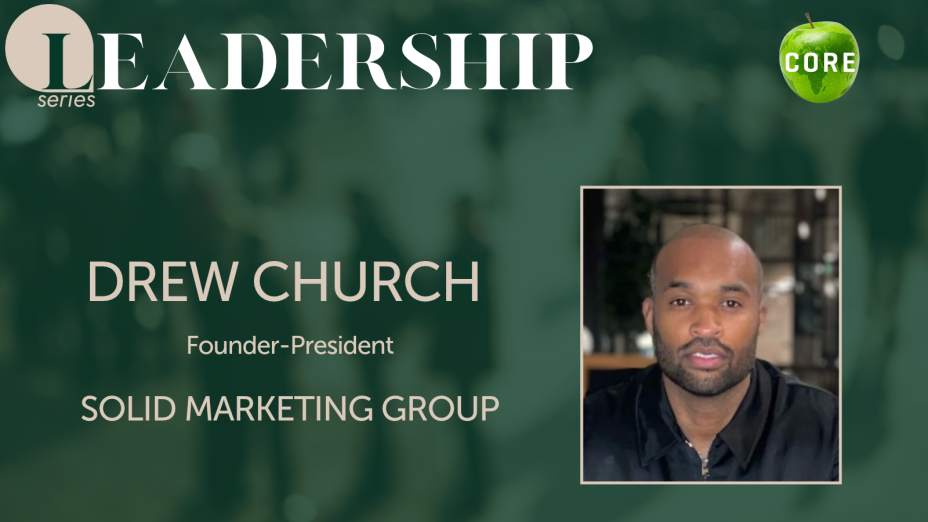
In our Leadership interview series, we spotlight exceptional industry leaders.
In this edition, we speak to Drew Church, Founder & President of Solid Marketing Group.
Tell us a little about yourself and your business.
I'm Drew Church, Founder and CEO of Solid Marketing Group, a culture-first creative and experiential marketing agency based in Atlanta, Georgia.
I founded Solid Marketing Group in 2017 with a vision to build an agency that understands the relationship between brands, culture, and people. I've always believed that the most effective marketing goes beyond selling a service. It's about creating genuine connections, understanding audiences, and developing experiences that people actually want to be part of.
At Solid, we specialize in experiential marketing, creative production, content development, and brand strategy. We work with brands and organizations to bring ideas to life through meaningful campaigns, live experiences, and culturally relevant storytelling.
Over the years, we've had opportunities to contribute to projects involving major brands, professional sports, entertainment, community organizations, and cultural platforms. What makes our agency different is our ability to combine cultural understanding with strategic thinking and strong execution.
But beyond the work itself, I've always viewed entrepreneurship as an opportunity to build something that creates opportunities for people that were looked over, the underdog. I want Solid Marketing Group to represent what's possible when you combine vision, relationships, consistency, and a willingness to take risks.
We're continuing to grow, evolve, and challenge ourselves, but the mission remains the same: create work that matters, build relationships that last, and leave a real impact.
What initially inspired you or sparked your interest in pursuing this career?
My journey into entrepreneurship really started with a desire to create opportunities for myself.
I've always been drawn to creativity, culture, sports, and the business behind how brands connect with people. What fascinated me most was seeing how a single idea, experience, or campaign could influence the way people think, feel, and engage.
But as I started navigating the industry, I realized that having talent, ambition, and ideas didn't necessarily mean opportunities would come your way.
There were doors I wanted to walk through that weren't opening. There were rooms I wanted to be in where I didn't necessarily have access. And I reached a point where I had to decide
whether I was going to continue waiting for someone to recognize my potential or create an opportunity for myself.
That's really where the entrepreneurial mindset started for me.
I didn't have everything figured out when I started Solid Marketing Group. I didn't have a long list of clients or all the resources that larger agencies had. What I did have was a vision, a
willingness to learn, and an understanding that relationships could take you places that traditional opportunities sometimes couldn't.
I started building genuine connections, putting myself in environments where I could learn, and finding ways to demonstrate what I was capable of.
Over time, those relationships and experiences helped shape the foundation of the agency.
Looking back, I think what initially inspired me was marketing and creativity, but what ultimately pushed me into entrepreneurship was the desire for legacy. I wanted to have a say in my future,
build something that reflected my values, and create the kinds of opportunities I once hoped someone would give me.
Looking back, what has been the most pivotal moment in your career, a turning point that shaped how you lead today?
The most pivotal moment in my career was realizing that I wanted success so badly that I couldn't afford to sit around and wait for an opportunity to come to me. I had to trust the
discernment from what God put into my heart.
I think a lot of people can relate to having a vision for their life but not necessarily having a clear path to get there. You know what you're capable of, you know what you want to accomplish, but
sometimes the opportunities in front of you don't reflect your ambition.
That was a defining realization for me.
I wanted to be part of major campaigns and moments. I wanted to work with global brands. I wanted to sit in rooms where creative and business decisions were being made. More importantly, I wanted to prove to myself that I could build something meaningful in an industry that can be difficult to break into.
At some point, I realized I was spending too much energy thinking about how to get an opportunity when I could be using that same energy to create one.
That's what led me to start the agency.
It wasn't about having the perfect business plan, the perfect timing, or every resource in place.
It was about making a decision that I was going to bet on myself.
And that decision changed everything.
Entrepreneurship has a way of teaching you lessons that no classroom or job description can fully prepare you for. You learn how to navigate uncertainty, handle rejection, build relationships, make difficult decisions, and keep moving even when the results aren't immediate.
There have been moments when things didn't go according to plan, opportunities fell through, or the next step wasn't clear. But those experiences taught me that leadership isn't just about knowing what to do when everything is going well. It's about how you respond when things aren't.
That mindset continues to shape how I lead today. I don't believe in waiting for the perfect conditions to take action. I believe in preparing yourself, putting in the work, and creating momentum wherever you can.
One of the biggest lessons I've learned is that sometimes the opportunity you've been waiting for is the one you're supposed to create.
And now, as I continue building my company, I want to make sure that the opportunities I create extend beyond myself.
What are your biggest career achievements?
One of my proudest achievements has been building Solid Marketing Group into an agency capable of working on projects involving globally recognized brands and delivering experiences
that connect with audiences in meaningful ways.
When I started the company, I had a vision of what it could become, but there's something special about seeing an idea that once existed only in your mind turn into actual work,
relationships, and opportunities.
One experience that stands out is our involvement with Mastercard's In Solidarity initiative, which focused on connecting with communities and supporting meaningful engagement through experiences, partnerships, and programming.
Being involved in work like that is particularly rewarding because it represents the intersection of business, culture, and community impact. It's a reminder that marketing can do more than generate attention. It can create access, spark conversations, and contribute to something larger.
We've also had opportunities to work across sports, entertainment, and cultural experiences,
including projects involving the NBA All-Star environment, community-focused programming,
and partnerships that bring together brands, athletes, creators, and audiences.
Those experiences have been meaningful because they demonstrate the range of what an independent creative agency can accomplish.
But I don't measure achievement solely by the names of the brands we've worked with.
I'm equally proud of the relationships we've developed, the trust we've earned, and the fact that we've continued building in an industry where competition is significant and opportunities aren't always guaranteed.
Every successful project represents people who trusted our vision and our ability to execute.
For me, one of the greatest achievements is knowing that something I started from the ground up has become a platform through which other people can contribute their creativity, develop their skills, and participate in meaningful work.
And while I'm proud of what we've accomplished, I genuinely believe we're still in the early chapters of what Solid Marketing Group can become.
What innovations, technological, experiential, or operational, excite you the most right now?
Artificial intelligence is one of the most exciting developments happening in our industry, but I think the bigger conversation is about how we choose to use it.
I'm a strong believer that AI should be viewed as a tool that enhances creativity rather than something that replaces it.
For years, agencies have been challenged to move faster, produce more content, operate more efficiently, and deliver increasingly personalized experiences. AI is creating opportunities to rethink how we approach those ideas.
Whether it's research, strategic planning, audience insights, or production workflows, technology is giving businesses of all sizes access to capabilities that previously required significantly more time and resources.
For independent agencies like ours, that's particularly exciting because it can help level the playing field.
But I also believe we're entering a period where human experience, cultural intelligence, and original thinking will become even more valuable.
As technology makes content easier to produce, the real differentiator will be the ability to create something that feels authentic and resonates with people.
That's where I think the future of experiential marketing becomes especially interesting.
Consumers are constantly exposed to digital content, advertisements, and branded messaging.
Creating an experience that genuinely captures someone's attention and makes them feel connected to a brand is becoming increasingly valuable.
I see the future being shaped by a combination of technology-driven efficiency and human-centred creativity.
I also think the industry will begin placing greater value on experienced professionals who understand how to connect strategy, culture, technology, and execution. Having access to tools is one thing. Knowing how to use those tools to solve meaningful business problems is another.
Ultimately, I don't think the future belongs to the companies that simply adopt the most technology. I think it belongs to the companies that understand how to combine technology with human insight and great ideas.
AI can help us move faster, but people are still responsible for creating something worth remembering.
What's the most important leadership lesson you've learned?
One of the most important leadership lessons I've learned is that relationships matter, but how you manage those relationships matters even more.
Early in my career, I understood the importance of networking and making connections. As I've grown as a business leader, I've realized that building a relationship is only the beginning. Trust, consistency, communication, and the ability to deliver are what keeps it solid.
You can have a great idea, a strong presentation, or an impressive portfolio, but people ultimately want to work with individuals they trust.
I've also learned that leadership requires a level of patience and emotional discipline that isn't always discussed.
When you're building a business, everything can feel urgent. There are financial responsibilities, client expectations, team needs, and opportunities that you're constantly evaluating. Not every decision is easy, and not every outcome is within your control.
I've had to learn that being a leader doesn't mean reacting to every situation immediately.
Sometimes it means listening more carefully, asking better questions, and understanding the bigger picture before making a decision.
Another important lesson has been recognizing that you can't build something significant entirely on your own.
As entrepreneurs, especially in the early stages, we get used to wearing every hat and being involved in every detail. But growth requires trusting other people, creating systems, and giving talented individuals the opportunity to contribute.
I want the people I work with to feel that their ideas are valued and that they have room to grow.
At the end of the day, I believe leadership is less about having authority and more about taking responsibility.
It's about how you show up for your team, your clients, your partners, and yourself, especially when circumstances are challenging.
And I've learned that your reputation isn't built by what you say you can do. It's built by what you consistently deliver.
What is your long-term vision for your organisation, and what legacy would you like to leave within the industry?
My long-term vision is to build Solid Marketing Group into one of the most respected independent creative and experiential agencies in the industry.
I want us to be known for producing exceptional work, developing innovative ideas, and helping brands create meaningful connections with audiences.
But I also want the company to represent something bigger than the services we provide.
As a Black entrepreneur, I understand the importance of representation, ownership, and access within industries where opportunities haven't always been distributed equally.
I want Solid Marketing Group to be an example of what's possible when diverse perspectives are given the resources, trust, and opportunity to lead.
One of my goals is to continue expanding our relationships with major brands while building an agency that creates meaningful career opportunities for creative professionals, strategists, producers, and emerging talent.
I want people to look at our company and see a place where their ideas can be heard, their skills can be developed, and their contributions can make a difference.
From a business standpoint, I'm focused on sustainable growth, strengthening our capabilities, expanding our client partnerships, and building the kind of infrastructure that allows us to compete consistently at a high level.
I don't want Solid Marketing Group to be defined by one successful campaign or one major client relationship. I want to build an organization that has staying power.
When I think about legacy, I think about impact.
Of course, I want the company to be financially successful and recognized for the quality of its work. But I also want to be able to look back and know that we helped open doors for people, introduced new perspectives into important conversations, and created opportunities that might not have existed otherwise.
For me, success isn't just about how far you go. It's about what you build along the way and who benefits from it.
I want to build a company that can outgrow me without losing the values that started it.
What advice would you give emerging leaders who want to shape the future of the service industry?
My biggest piece of advice is to stop waiting for someone else to validate your potential.
I think a lot of talented people spend years waiting for the right opportunity, the right introduction, the right title, or the right moment to pursue what they really want.
And while preparation and experience are important, there's also a point where you have to believe in your ability to figure things out along the way.
You don't have to have every answer before you start.
When I founded Solid Marketing Group, I didn't know exactly how every chapter of the journey would unfold. What I knew was that I had a vision and that I was willing to do the work necessary to pursue it.
I'd also encourage emerging leaders to invest in relationships, not just transactions.
Some of the most meaningful opportunities in my career have come through genuine conversations, introductions, and relationships that developed over time.
Don't approach every interaction thinking about what someone can do for you. Think about how you can add value, what you can learn, and how you can build something mutually beneficial.
Another important piece of advice is to remain a student of your industry.
Technology is evolving, consumer expectations are changing, and the ways businesses operate today will continue to look different in the years ahead.
Be willing to embrace new tools, challenge your own thinking, and learn from people who have different experiences and perspectives.
But don't lose your authenticity in the process.
Your background, your experiences, and the way you see the world can be some of your greatest competitive advantages.
Finally, understand that success rarely happens in a straight line. There will be setbacks, missed opportunities, and moments when you question whether you're moving in the right direction.
Those moments don't necessarily mean you're failing. Sometimes they're teaching you what you need to know for the next stage of your journey.
If there's one thing my experience has taught me, it's this: you can spend your entire life waiting for someone to open a door, or you can develop the courage to build one yourself.
And once you've built that door, don't forget to hold it open for someone coming behind you
Author
Date Published: 28th October 2026
