
Leadership series: Karim Abdelrazek
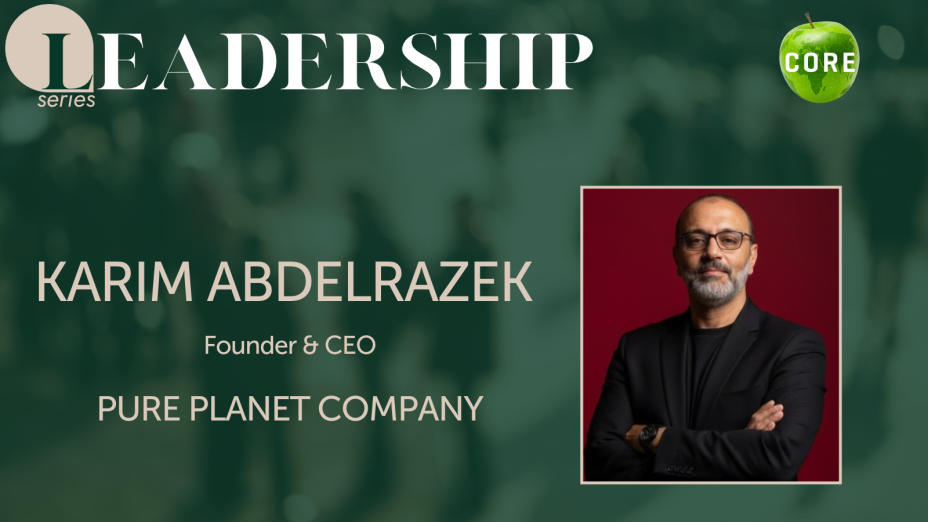
Our Leadership series puts inspiring industry leaders in the spotlight through exclusive interviews.
We are here talking to Karim Abdelrazek, Founder & CEO of Pure Planet Company
Tell us a little about yourself and your business.
I’m Karim Abdelrazek, Founder and CEO of Pure Planet Company and Co-Founder and Managing Director of Zad International United LLC in Oman. My background spans more than 20 years in food and beverage, retail, operations, and business development across the region.
At Pure Planet, we help businesses turn concepts into commercially sound brands, with the operational structure, franchise readiness, and governance needed to grow. We have created more than 65 brands and supported the development of 40 existing brands. Through Zad, I also bring an owner’s perspective to building and operating an F&B portfolio. That combination keeps my advice closely connected to the realities of running a business.
What motivates you in your work and what do you find most fulfilling about being a business leader?
What motivates me is seeing potential become a functioning business. A concept may begin with a founder’s ambition, but making it work requires hundreds of practical decisions about the product, people, costs, and customer experience.
The most fulfilling part is seeing a team gain the confidence and ability to deliver consistently. Opening a business is an important milestone, but watching it operate successfully without depending on one person is even more rewarding. For me, that is where leadership creates lasting value.
What do you see as the biggest challenges currently facing the landscape where you are and how should a business like yours respond?
From my perspective, one of the biggest challenges in the markets where we work is the gap between ambition and operational readiness. There is strong enthusiasm for new concepts and expansion, but businesses sometimes commit to growth before they fully understand their unit economics, staffing requirements, or supply chain.
Our responsibility is to challenge assumptions early. At Pure Planet, that means reviewing the commercial model, simplifying operations where necessary, and defining responsibilities before expansion begins. I would rather help a client strengthen one location first than encourage several openings that the organisation cannot properly support.
What skills or mindsets do you think will be most important for the next generation of hospitality leaders?
Future hospitality leaders need to understand both people and numbers. They should be comfortable discussing food cost, productivity, and cash flow while also understanding what their teams and customers experience every day.
Curiosity and adaptability are equally important. A successful approach in one market may need significant adjustment in another. Leaders must be willing to listen, test their assumptions, and change direction when the evidence supports it. I also believe they need operational humility: spending time on the floor teaches lessons that a management report cannot fully explain.
What is or are your biggest career achievements?
One achievement I value is the progression from leading operations to taking responsibility for wider business strategy, partnerships, and growth. Each stage gave me a broader understanding of how decisions at the top affect the people delivering the service.
Establishing Pure Planet has been a particularly meaningful milestone because it allows me to apply that experience to other founders and organisations. I’m proud of our work creating and developing brands, but the achievement I care about most is helping owners build businesses with stronger foundations and a clearer path to growth.
What’s the most important leadership lesson you’ve learned?
The most important lesson is that unclear expectations create avoidable problems. A leader can have a strong vision, but people need to understand what it means for their responsibilities, decisions, and daily work.
I have learned to place greater emphasis on clarity: who owns the outcome, what standard is expected, and when support or escalation is needed. Accountability becomes much fairer when those things are established. I also believe leaders must follow through themselves. Teams pay close attention to whether your actions match the standards you ask them to uphold.
How do you prioritise tasks when everything feels like a priority?
I start by looking at consequences and dependencies. What affects safety, business continuity, cash flow, or a commitment to a client? What decision is preventing other people from moving forward? Those questions usually reveal the real priorities.
I then separate decisions that require my involvement from work that should be owned by the team. Managing several projects has reinforced the importance of clear ownership and timely escalation. If everything continues to reach the leader as an emergency, the underlying process needs attention.
Prioritisation should help the organisation work more effectively, as well as help the leader manage time.
How do you balance the demands of commercial performance with staff well-being, retention, and culture building?
I see staff well-being as part of operational performance. Poor planning, unclear roles, and constant last-minute changes put pressure on people and eventually affect service, productivity, and retention.
My approach is to establish realistic staffing plans, clear expectations, and managers who communicate respectfully. Commercial discipline still matters, and teams should understand the results the business needs to achieve. But leaders must also give them the training, tools, and organisation required to deliver. A healthy culture includes listening to concerns and addressing recurring problems, rather than expecting people to compensate indefinitely for weaknesses in the system.
What innovations, technological, experiential, or operational, excite you the most right now?
I’m particularly interested in tools that improve visibility across purchasing, inventory, recipe costing, and sales. When those areas connect, operators can understand where margin is being lost and make more informed decisions about menus and purchasing.
I also see value in AI that supports analysis, forecasting, and routine administrative work. My test for any technology is practical: does it help the team make a better decision, reduce unnecessary work, or improve the customer experience? The business should define the problem first, then choose technology that fits its operations and that its people can use confidently.
What is your long-term vision for your organisation, and what legacy would you like to leave within the industry?
My vision for Pure Planet is to become a trusted partner for F&B businesses preparing for sustainable expansion across markets. I want our work to be recognised for practical execution, commercial understanding, and the ability to build structures that remain useful as a business grows.
Through Zad, my ambition is to build an F&B holding company with distinctive brands and disciplined governance. Personally, I hope my legacy includes capable leaders who can develop others, and businesses that continue to perform beyond my direct involvement. That would be a meaningful measure of the value I have contributed.
What advice would you give emerging leaders who want to shape the future of the service industry?
Learn the operation thoroughly before trying to transform it. Spend time with frontline teams, understand the customer journey, and learn how the business makes and loses money. That foundation will make your decisions more credible and useful.
Be careful about treating expansion as proof of success. First establish whether your business delivers consistently, generates a healthy return, and can train others to maintain its standards. Finally, protect your reputation by being clear about commitments and honest when something goes wrong. Hospitality depends on trust, and how you handle difficult situations will shape the opportunities people are willing to give you.
Author
Date Published: 28th October 2026
